 FREE LESSON
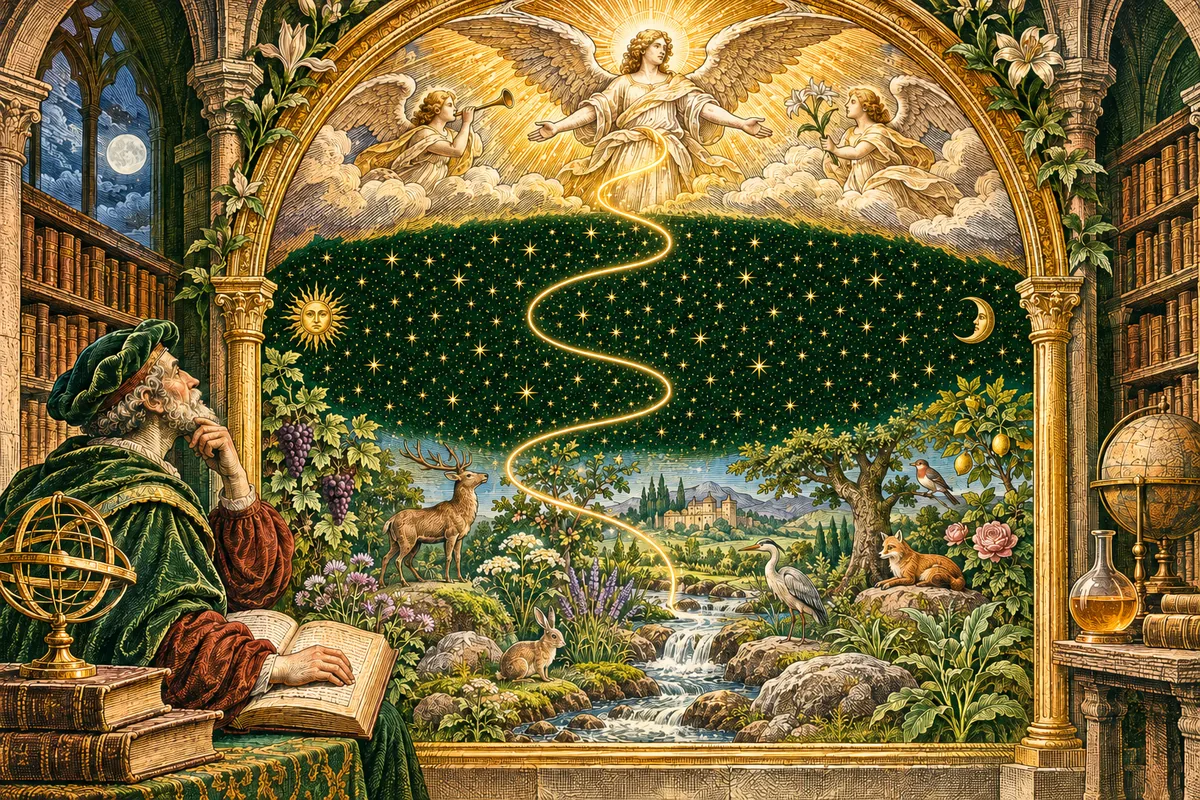
Agrippa
A map of the three worlds
Use the first page to draw Agrippa’s chain of causes, then turn the arrows around to see the course of study he proposes.
6 min readOpen lesson
A complete first lesson from every collection. Follow a question, meet the old books, and find the subject that draws you in.
Find your first readingChoose a subject, or wander through them all.
25 free lessons
Every reading is a beginning. FREE LESSONUse the first page to draw Agrippa’s chain of causes, then turn the arrows around to see the course of study he proposes.
 FREE LESSON
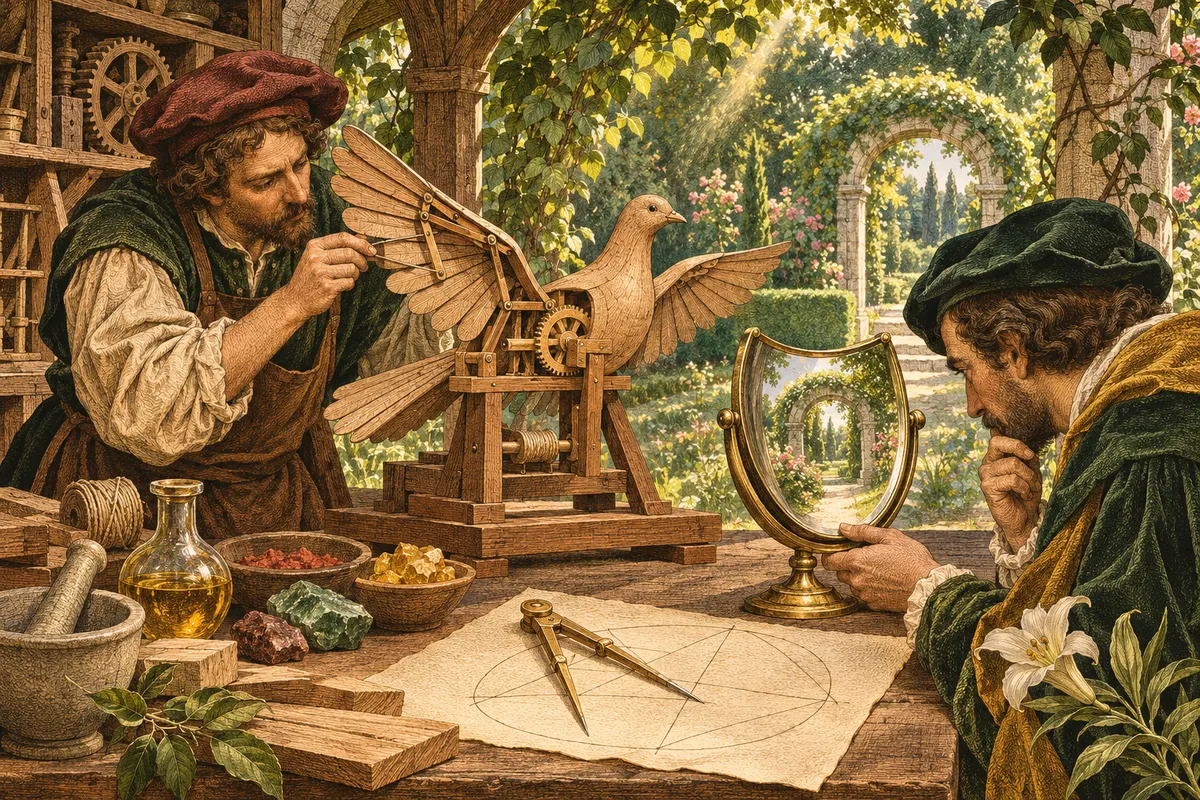
Follow the flying dove and the curved mirror through page 168 to see where Agrippa places mathematics among the magical arts.
 FREE LESSON
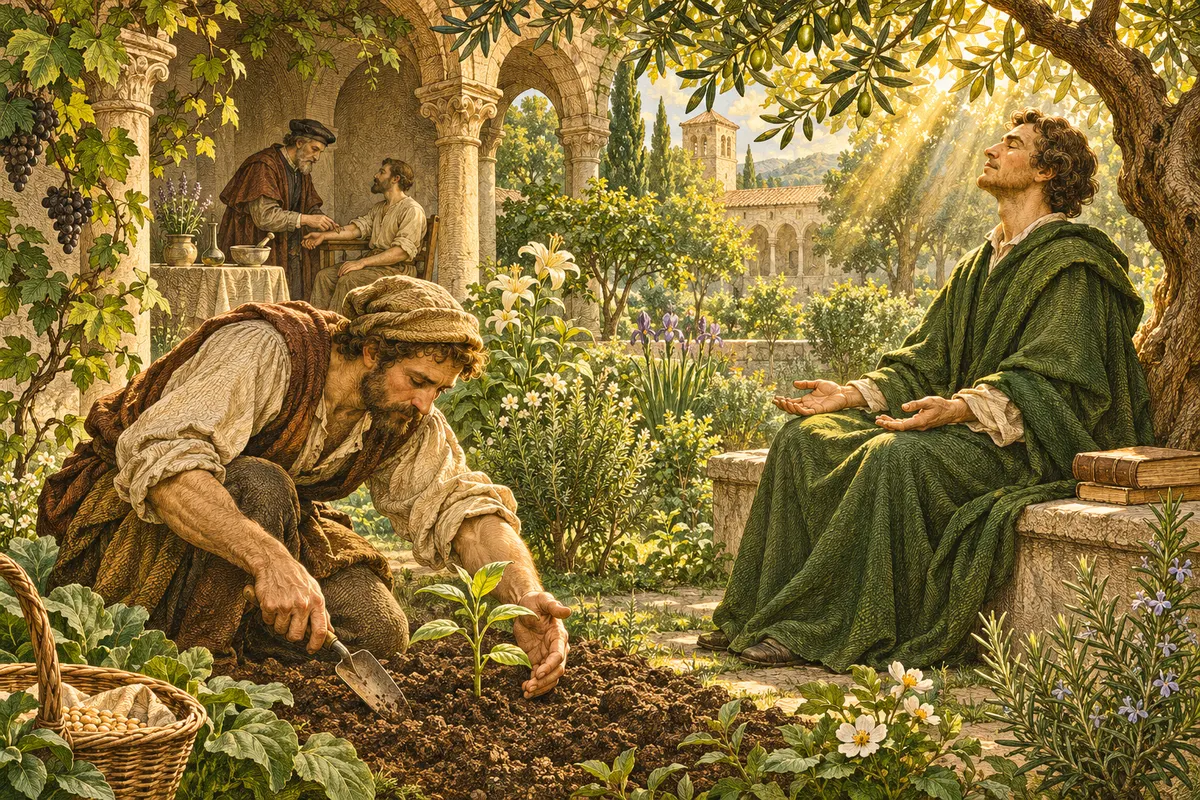
Read two everyday occupations on page 346 as an explanation of how Agrippa believes religious discipline prepares a person for knowledge.
 FREE LESSON
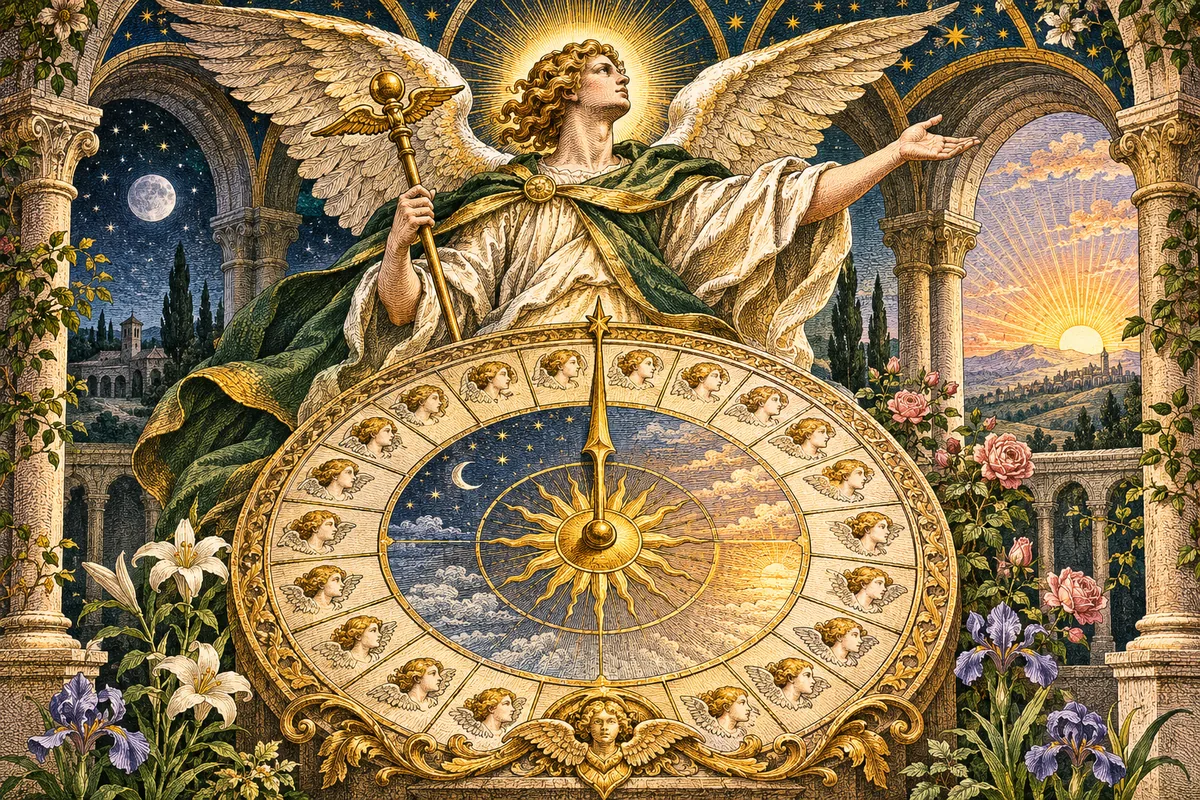
Explain how hourly and daily government work together.
 FREE LESSON
Reconstruct the planetary-hour sequence, explain its weekday pattern, and connect particular planets with the purposes assigned to them.
 FREE LESSON
Connect each governor with its planetary sphere and attributed offices, and explain how the work distinguishes a natural process from a miraculous intervention.
 FREE LESSON
Explain the key's parts and use the book's planetary and geometrical relationships to distinguish a general power from its changing condition.
 FREE LESSON
Explain how seer, questioner and recorder contribute different parts of an angelic conference.
 FREE LESSON
Explain how consecration, a visible appearance, a truthful answer and permission to depart form different parts of the glass-or-stone encounter.
 FREE LESSON
Explain why the guardian angel is first a guide and teacher, and how the promised conversation changes the practitioner’s relationship with the rest of the book.
 FREE LESSON
Read a Goetic entry as a structured profile rather than a single symbolic label.
 FREE LESSON
Explain how prayers 2, 4, 16 and 17 connect the speaker's reform, biblical deliverance and relief for souls beyond ordinary reach.
 FREE LESSON
Distinguish the surviving manuscript, its catalogue title, and the ritual voice that speaks within its pages.
 FREE LESSON
Explain why the opening character identifies an operator and depends on a relationship, rather than working as an isolated picture.
 FREE LESSON
Explain the opening three-part program and how characters, promised effects and conditions of access depend on one another.
 FREE LESSON
Identify the separate claims of antiquity, Solomonic authorship and practical reliability that authorize this printed grimoire.
 FREE LESSON
Explain how the first invocation transforms a vessel into a place of revelation, and distinguish the operator, witness and divine presence.
 FREE LESSON
Explain how the opening image places the manuscript’s promised power beneath a higher authority.
 FREE LESSON
Read the spirit catalogue through Weyer’s declared purpose, and distinguish the copied promises from the editor who exposes them.
 FREE LESSON
Explain how the Petit Albert connects ordinary desires with a theory of hidden natural powers.
 FREE LESSON
Identify the different subjects inside Fludd’s Temple of Music and distinguish a teaching diagram from a building plan.
 FREE LESSON
Read the Juggler as a diagram of Papus’s whole system, and distinguish its symbolic teaching from its later fortune-telling use.
 FREE LESSON
Explain why Saunders begins a book about hands with planets and the zodiac, and distinguish the observed hand from its proposed cosmic meaning.
 FREE LESSON
Distinguish astronomical calculation from Ptolemy’s conditional art of judging effects.
 FREE LESSON
Explain the five foundations and distinguish Basil’s main voice from Kerckring’s annotations.
Explore the full collections and continue where your first reading leaves off.