
Occult Hall
The great library
THE MINDS BEHIND THE MYSTERIES

Authors & books.
Voices of the library.

Meet the people who wrote, gathered, and imagined these worlds. From Agrippa’s connected cosmos to anonymous books of spirits, each volume has a story of its own.

Follow their stories
23collections
many ways of seeing
An imagined old library filled with books, warm light, and the instruments of study.
BETWEEN THE LINESA library of people, ideas, and inherited wonders.
A NAME ON A TITLE PAGE

Sometimes a person.
Sometimes a tradition.

Some books speak in an identifiable writer’s voice. Others collect generations of material, or claim the authority of Solomon, an angel, or a legendary master. Knowing which kind of voice you are hearing makes the reading richer.

The writer

A named author may also be a recorder, critic, or interpreter of older knowledge.

The attributed voice

A famous name can express a book’s claimed lineage without identifying its historical author.

The surviving edition

Copyists, translators, and editors shape the particular pages that reach us.

WRITERS, RECORDERS & INTERPRETERS

A world seen through one mind

Seven identifiable voices, from ancient astrology to the occult revival. Their books bring different questions to the invisible world.

An earthly garden, a starry middle realm, and an angelic realm form a layered Renaissance cosmos.Agrippa
Named author · Renaissance philosophy

Heinrich Cornelius Agrippa

Complete Latin edition, 1533 · English translation, 1651

Agrippa gathers natural philosophy, mathematics, astrology, sacred language, and religious learning into an ambitious account of a connected universe. His magician is a learned reader of relationships: between a plant and a planet, a number and a harmony, the human mind and the divine.

ON OUR SHELVES

Three Books of Occult Philosophy

The three books move from the elemental world to the celestial and then the intellectual world. Natural qualities, images, music, names, and prayer become parts of a larger argument about how knowledge and action might reach across those levels.

All three books are available in the 1533 Latin and 1651 English editions, alongside the guided course.
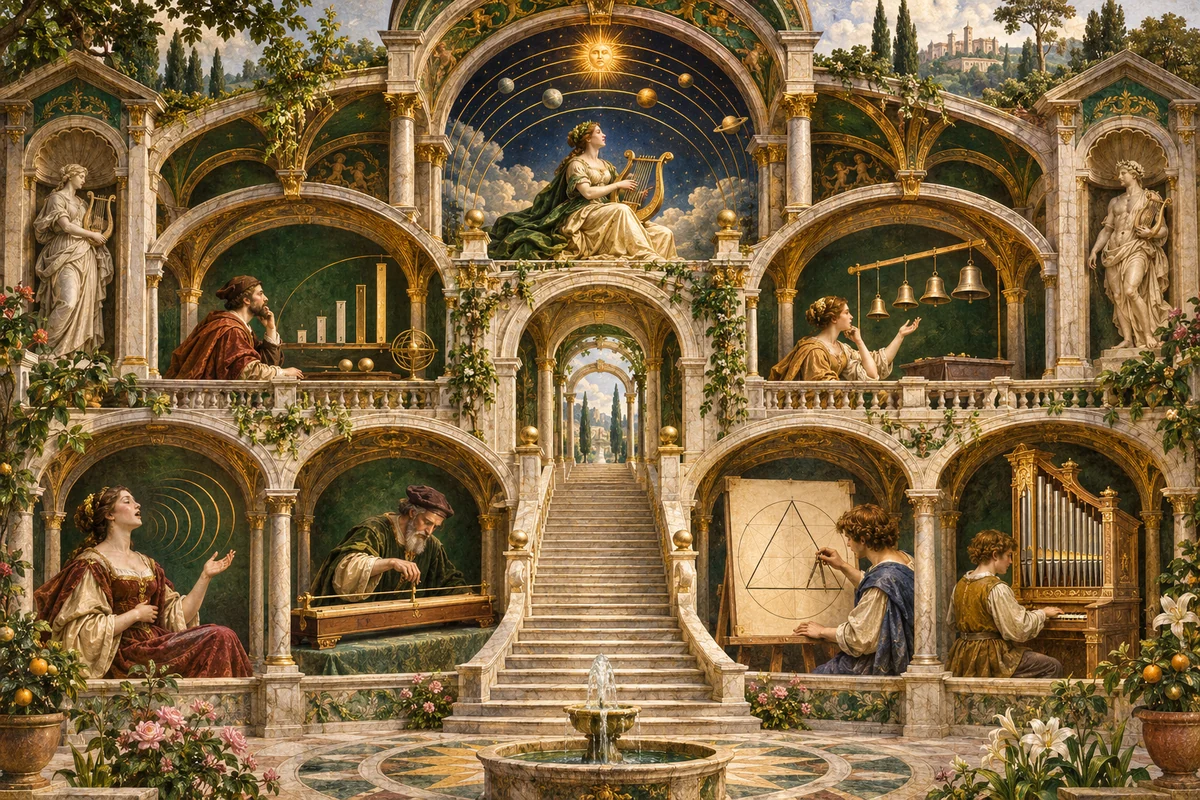
A Renaissance temple opens into seven distinct spaces for the study of sound.Fludd’s Harmonies
Named author · Cosmic philosophy

Robert Fludd

1574–1637 · Collected works, 1617–1626

Fludd gives his philosophy an extraordinary visual life. Cosmic diagrams, architectural music, the human body, and mechanical instruments all participate in his effort to relate the larger world to the smaller human world. A picture often carries part of his reasoning.

ON OUR SHELVES

Robert Fludd: Worlds, Arts & Hidden Harmonies

Our collection follows the history of the two worlds through arithmetic, music, geometry, optics, memory, divination, and sacred philosophy. Read the engravings beside the passages that explain what their proportions, spaces, and instruments are meant to show.

The Latin collection is arranged in thirteen reading parts; these are our divisions of the bound set, not thirteen original books.

One scholar observes an imagined figure in a crystal while another records the encounter in a book.Dee
Recorder & visionary collaborator

John Dee & Edward Kelley

Angelic records, 1581–1587 · Printed edition, 1659

Dee’s records make the search for angelic knowledge a conversation. Kelley reports what he sees and hears; Dee questions, writes, and compares. Their respective roles matter: the surviving pages record a developing inquiry rather than a finished system handed down in a single moment.

ON OUR SHELVES

John Dee's Angelic Diaries

The diaries bring visionary instruments, angelic names, letter tables, the Calls, and the thirty Airs into a changing account of creation. The course follows specific conferences and the distinctions made by their reported speakers.

Meric Casaubon’s 1659 edition is available in two reading parts. It contains later conferences, not every surviving early diary.

A Renaissance physician examines a small manuscript beside a large printed volume and a distant printing press.Weyer’s spirit catalogue
Named author · Critical compiler

Johannes Weyer

Pseudomonarchia daemonum, 1577

Weyer prints a spirit catalogue within a work concerned with demonic deception. His presentation is critical, which makes the catalogue’s later life especially interesting: a text preserved as part of an argument can also become a resource for readers with very different aims.

ON OUR SHELVES

Pseudomonarchia daemonum

The Pseudomonarchia describes ranks, retinues, appearances, and supposed offices. Music, learning, reconciliation, treasure, and transformation distinguish one entry from another; the surrounding critical framework helps explain why this catalogue was printed.

The entire 1577 De praestigiis daemonum volume is available in three reading parts; the catalogue appears within it.

Modern interpretive painting: Two kinds of foreknowledge.Tetrabiblos
Named author · Ancient astrology

Claudius Ptolemy

Ancient work · English edition, 1822

Ptolemy approaches astrology as an account of celestial qualities and their effects in a changing earthly world. His discussion distinguishes kinds of prediction and repeatedly asks how general conditions, individual circumstances, and the limits of judgment belong together.

ON OUR SHELVES

Ptolemy’s Tetrabiblos

The Tetrabiblos moves from planetary qualities and zodiacal relationships to weather, collective conditions, and birth charts. It offers a framework for comparing causes and circumstances, rather than simply a list of meanings for signs.

J. M. Ashmand’s 1822 English edition translates the Greek paraphrase attributed to Proclus.

Modern interpretive painting: The whole pack upon one table.The Tarot
Identified pen name · Occult interpretation

Papus · Gérard Encausse

The Tarot of the Bohemians · English edition, 1892

Writing as Papus, Gérard Encausse treats tarot as a symbolic language that can organize a great deal of occult learning. His historical claims and correspondences belong to his own interpretation of the cards; they are part of what the reader examines.

ON OUR SHELVES

The Tarot of the Bohemians

Figures, number patterns, court cards, and groups of seven form a system that leads toward divination. The course follows how Papus builds that system, then shows how his reading arrangements put it to work.

Read the 1892 English translation by A. P. Morton alongside the card and number studies.

Modern interpretive painting: The hand as a little cosmos.Palmistry
Named author · The arts of bodily signs

Richard Saunders

Physiognomie and chiromancie · 1653

Saunders places the hand within a wider study of bodily signs, planetary correspondences, dreams, and memory. His pages ask the reader to relate a visible mark to a larger scheme of interpretation. The hand becomes a small, densely organized world.

ON OUR SHELVES

The Hand of the Microcosm

Our Hand of the Microcosm course explores the palm’s lines, mounts, textures, and named regions. It keeps palmistry’s rules distinct from the related readings of faces and other bodily signs found in the same volume.

The hosted 1653 volume includes material beyond the hand; “The Hand of the Microcosm” is our course title.

COMPILERS, COPYISTS & INHERITED ARTS

The hands we cannot name

A book can preserve a vivid way of thinking even when its makers remain unknown. Read these collections through the work their pages perform.

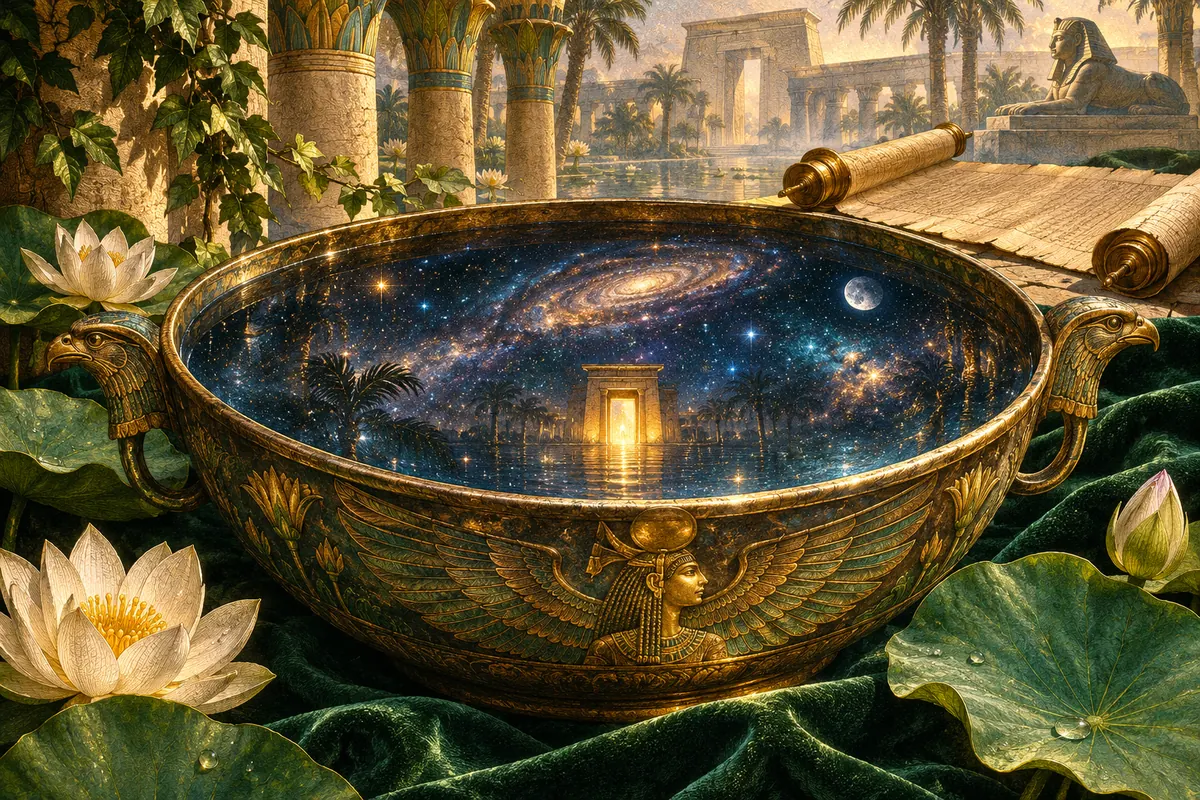
A bronze vessel reflects a luminous sky and doorway amid lotus leaves and an open papyrus.The Demotic Papyrus
Anonymous compilation · Ancient Egypt

The Egyptian compilers

Third century CE · Modern scholarly editions, 1904–1921

No single historical author can be named for this Egyptian handbook. Its varied passages preserve a world of divine names, imagined encounters, and material preparations. The different voices and formulas make the collection more informative than a single uniform doctrine would be.

ON OUR SHELVES

The Demotic Magical Papyrus of London and Leiden

Vessels of vision, lamps, dreams, hidden identities, and divine guests recur across the papyrus. Our lessons examine how a proposed encounter is made visible, how an answer is requested, and how sacred narratives authorize the request.

The collection includes the text, translation, hand-copy of the papyrus, and indices edited by F. Ll. Griffith and Herbert Thompson.

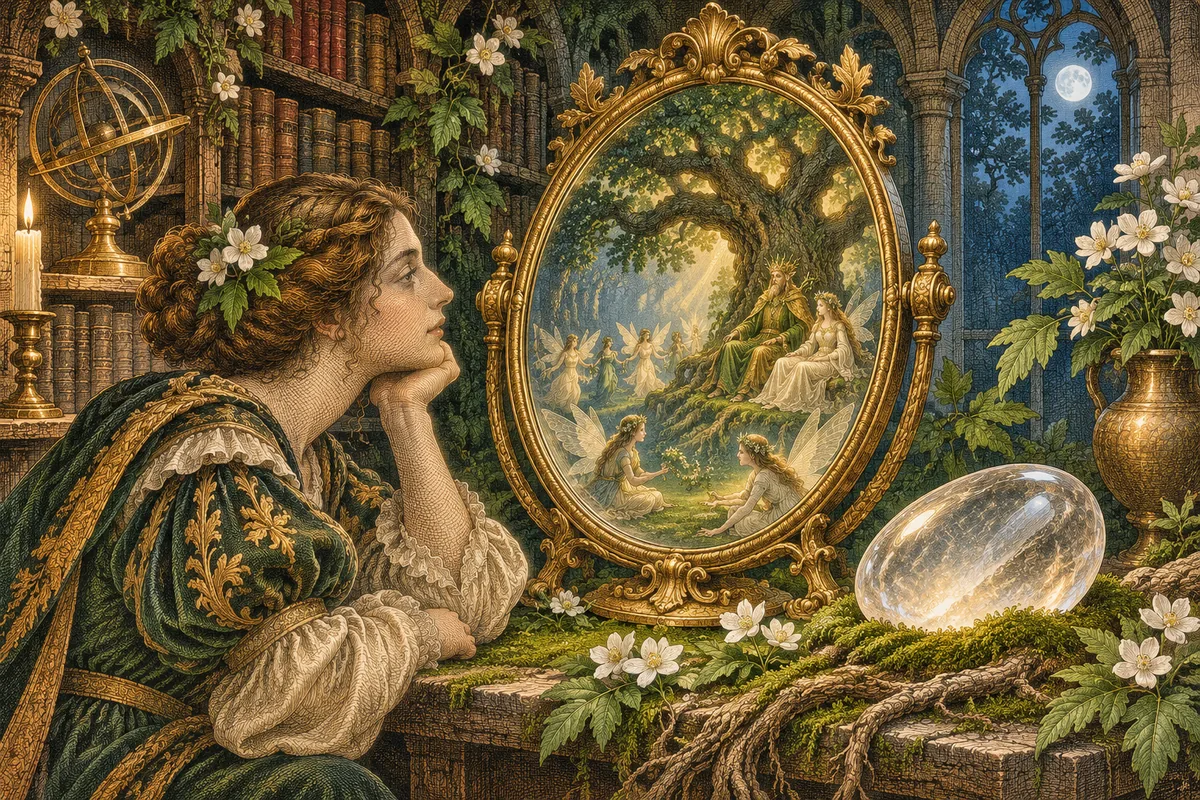
A woodland court appears within a scrying mirror beside a crystal amid moss and flowers.Oberon
Anonymous manuscript · English ritual magic

The Elizabethan compilers

The Book of Oberon · c. 1577–1583

The Book of Oberon is a working collection rather than the voice of one securely identified master. Prayers, spirit offices, fairy encounters, and practical requests gather on its pages. Its compilers connect Christian sacred authority with an unusually populated invisible world.

ON OUR SHELVES

The Book of Oberon

Follow visionary stones, the courts of Oberyon and Mycob, hidden treasure, directional kings, and the conduct of a ritual company. The text distinguishes seeing a visitor, identifying it, receiving a truthful answer, and allowing it to depart.

Two reading volumes contain the surviving historical manuscript. Its lost opening cannot be restored.

An archivist supports an old open manuscript with a worn binding beside a fern-lit window.The Munich Manual
Anonymous manuscript · Medieval ritual magic

The makers of Clm 849

Fifteenth century

The anonymous Munich manual brings together conjurations and extraordinary experiments without giving us a secure biography of its makers. Its organization reveals interests in instruction, spectacle, hidden knowledge, and control over an encounter’s beginning and end.

ON OUR SHELVES

The Munich Manual of Necromancy

Teachers, visionary mirrors, imagined feasts, aerial journeys, and dreams appear in a varied handbook. Reading their conditions closely reveals how the manuscript differentiates a compelling appearance from a useful or trustworthy result.

The manuscript facsimile accompanies lessons on specific passages and their surviving context.

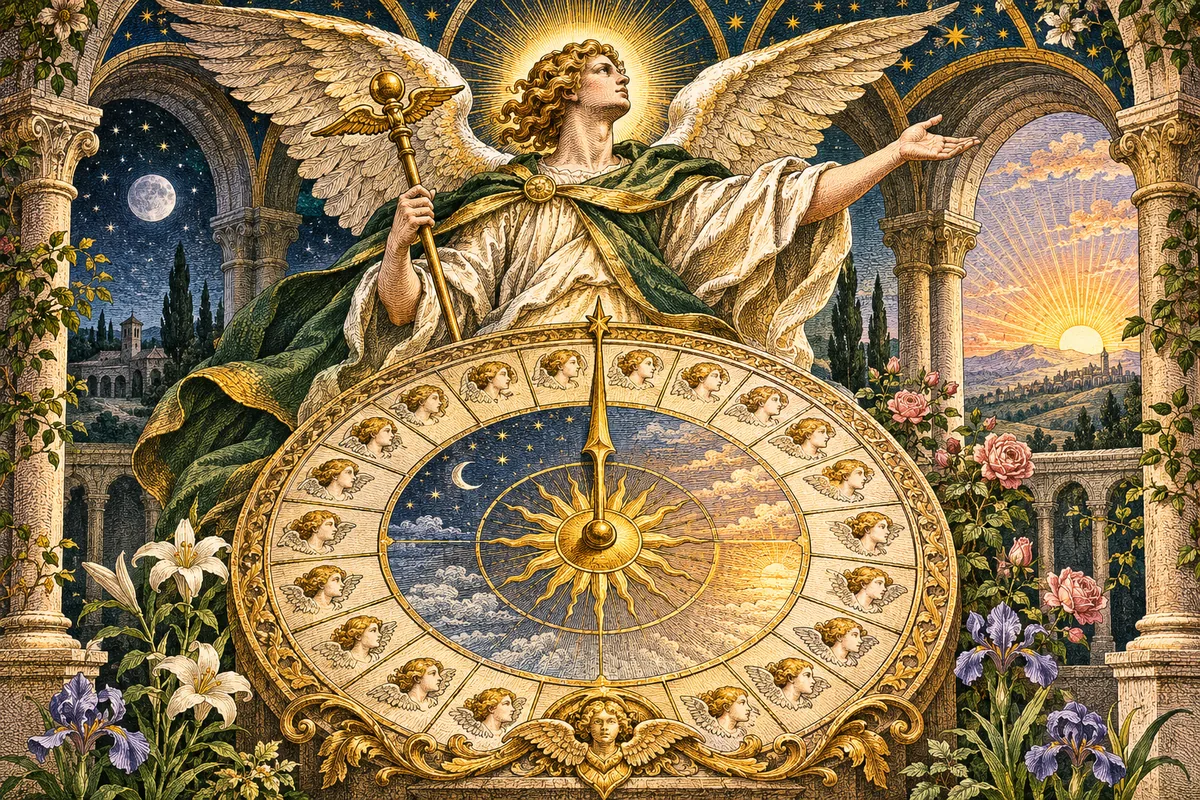
A winged messenger stands above an ornate hour dial between moonlit and sunlit arches.Lucidarium
Anonymous work · Attributed to Peter of Abano

The Lucidarium tradition

Manuscript witness, 1533–1566

The Lucidarium travels under Peter of Abano’s name, but that attribution does not establish his authorship. Its distinctive voice lies in the coordination of hours, angelic governments, sacred speech, and signs: knowledge becomes an ordered relationship between time and place.

ON OUR SHELVES

Lucidarium in arte magica

Named hours and seasonal correspondences sit beside prayers, protective figures, and explanations of divine authority. The accompanying Semiphoras material adds another layer of sacred names and inherited claims.

Read the manuscript section and its Latin transcription. The transcription is not a complete English translation.

Three robed figures rise toward light above a praying reader in an old chapel.Three Souls
Named compiler · Anonymous prayer collection

Berengar Ganell & the Three Souls

Preserved in the Summa sacre magice · 1346

Ganell preserves the Three Souls material within a larger compilation of sacred magic. His role as a transmitter should not be confused with authorship of every prayer he includes. The surviving sequence joins vulnerability, requests for assistance, and strong claims of sacred authority.

ON OUR SHELVES

Liber Trium Animarum

Deliverance, angelic messengers, protected perception, unspoken petitions, and thanksgiving give the prayers their movement. The course follows these distinct purposes and the dependence on God expressed throughout them.

Both the surviving section and the larger Ganell manuscript are available. Abbreviated or missing material is not reconstructed.

Seven celestial medallions connected to an earthly landscape evoke the planetary governments; the diagram names each governor and its particular offices.Arbatel
Anonymous printed work · Spiritual philosophy

The anonymous author of Arbatel

First Latin printing, 1575 · English translation, 1655

Arbatel gives its reader short, ordered teachings about spiritual knowledge, conduct, and the government of the world. Its author remains unnamed. The work places discernment and the proper use of knowledge beside its accounts of extraordinary powers.

ON OUR SHELVES

Arbatel of Magic

Aphorisms introduce Olympic governors, different kinds of secrets, the ordering of sciences, and preparation for study. The reader is repeatedly asked to consider the source, purpose, and limits of what is sought.

The reader contains the complete Arbatel section from Robert Turner’s 1655 English collection.

LEGEND, LINEAGE & ATTRIBUTION

The authority of a name

Solomon, Raziel, Abramelin, Cyprian, and Basil Valentine carry different kinds of authority. Their presence in a title does not settle who wrote the book.

The paired dials distinguish daylight from darkness, the two spans divided separately in this lesson’s planetary clock.The Key
Legendary attribution · Anonymous manuscripts

Solomon & the Key tradition

Late medieval and early modern witnesses · Edition, 1889

Solomon’s wisdom supplies the Key with a powerful claim to authority. The surviving work belongs to a later manuscript tradition, not a verified book written by the biblical king. Different witnesses arrange and transmit its material in different ways.

ON OUR SHELVES

The Key of Solomon

Planetary time, pentacles, prayer, instruments, prepared places, and the conduct of companions form an interdependent art. Our course follows the 1889 edition while distinguishing its editor’s explanations from the historical text.

The full 1889 English edition prepared by S. L. MacGregor Mathers is available in the reader.

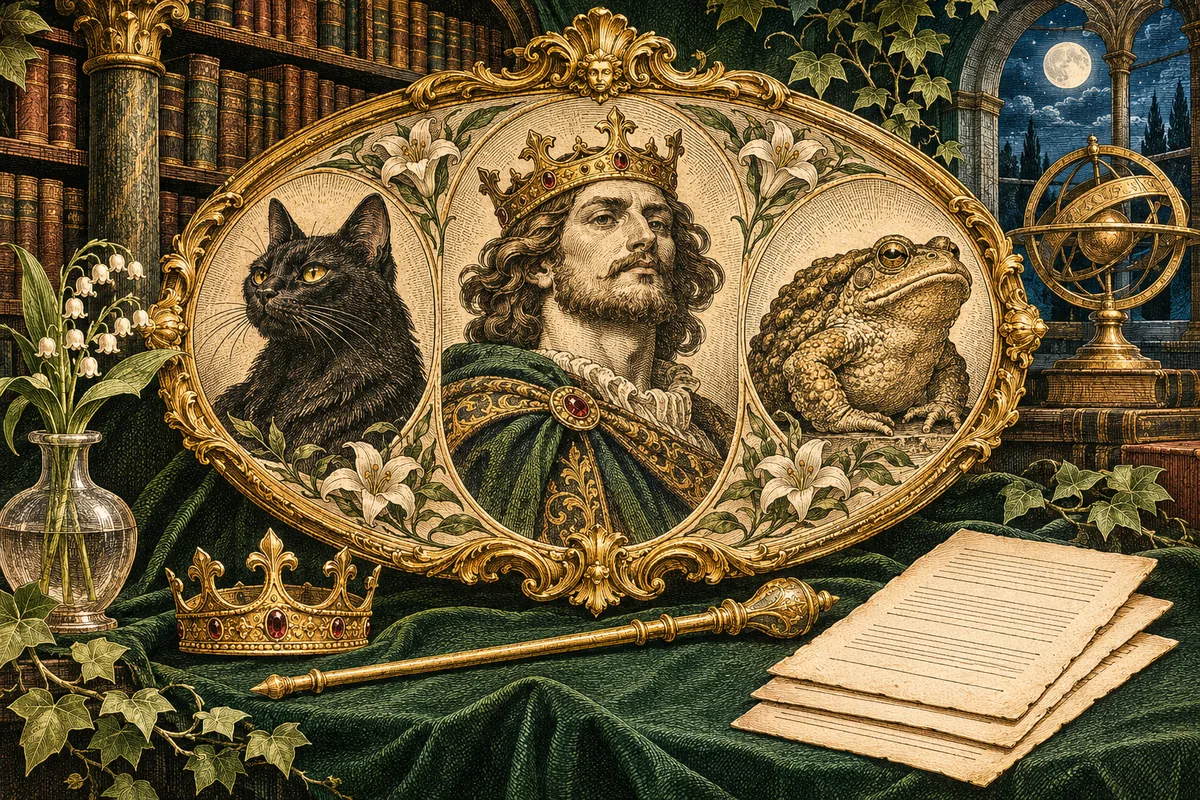
The cat, crowned human and toad illustrate Bael’s three reported forms; the six-field diagram separates appearance from rank, office, company and seal.Lemegeton
Anonymous compilation · Solomonic attribution

The compilers of the Lesser Key

Seventeenth-century compilation · Goetia edition, 1904

The Lesser Key gathers several traditions under Solomon’s name. Its various books organize spiritual beings in different ways, so the familiar Goetic catalogue should not stand for the whole work. The attribution names an authority claimed by the compilation.

ON OUR SHELVES

The Lesser Key of Solomon

Ranks, offices, forms, names, and ritual address give the spirit entries their structure. The course includes the wider Lesser Key tradition while developing the Goetia’s individual profiles in particular depth.

The hosted 1904 Mathers–Crowley Goetia is the first book of the Lesser Key, not all five books.

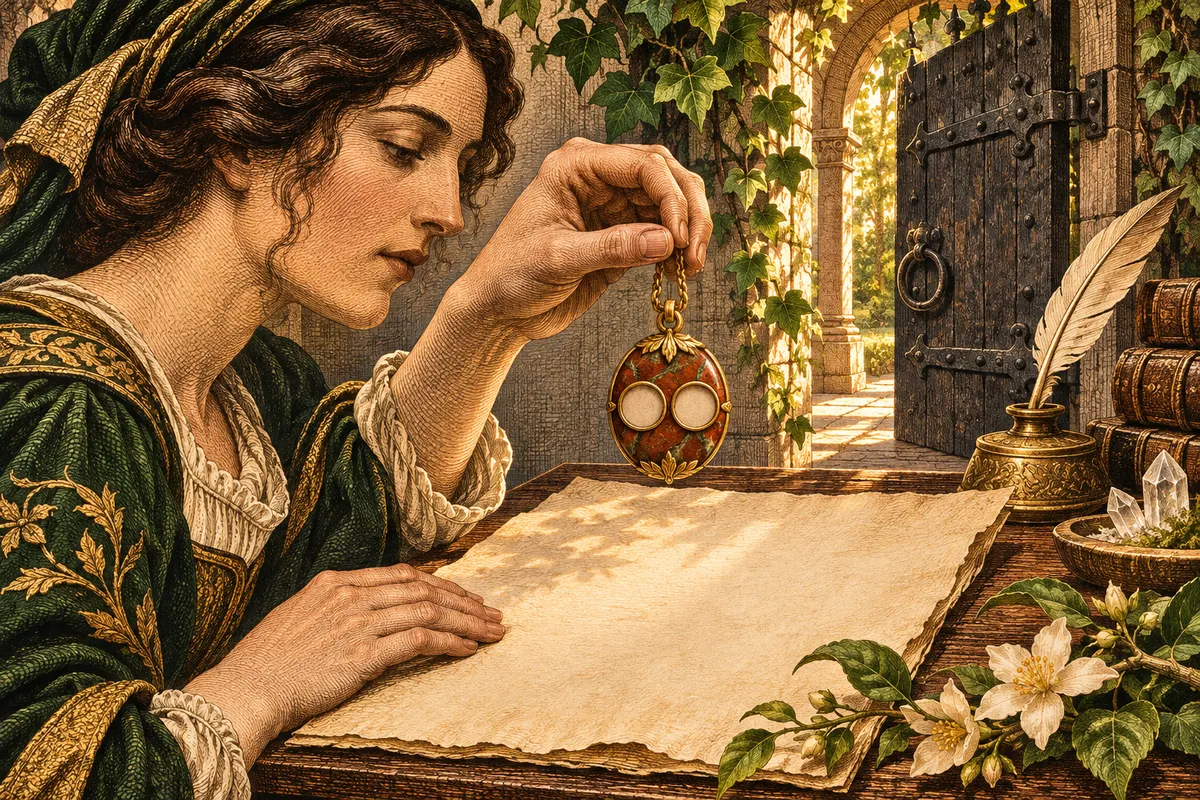
A scholar holds a jasper pendant with two empty compartments above parchment beside an open doorway.Secrets of Solomon
Anonymous Latin compilation · Solomonic attribution

Solomon & the book of secrets

Seventeenth-century manuscript

Here Solomon’s name connects a collection of signs and spiritual offices to the image of a wise ruler of hidden things. The manuscript’s compilers are anonymous. Its account of authority must be understood through its own courts, governments, and relationships.

ON OUR SHELVES

The Secrets of Solomon

Spirit courts, cosmic governors, personal characters, pentacles, and a human-shaped little world appear together. The course compares authority over a place, knowledge of a science, and the power to change a thing.

The Latin manuscript facsimile is available beside the English teaching path.

A large golden key joins square, triangular and circular forms above an earthly garden.Raziel
Angelic attribution · Anonymous compilations

Raziel & the Solomonic tradition

Medieval tradition · English witness, 1564 · Hebrew edition, 1881

Raziel is an angelic authority within the tradition, not an identified human author. The stories of Adam and Solomon explain how the books claim their knowledge was transmitted. Related works under this name have different contents and histories.

ON OUR SHELVES

Sepher Raziel

Our lessons follow an English witness of the Latin/Solomonic tradition: celestial judgments, natural virtues, names, calendars, and the preparation of a sacred book. Each part supplies a different element of the imagined world.

The on-site 1881 Hebrew Sefer Raziel is a related work, not the English witness studied in the lessons.

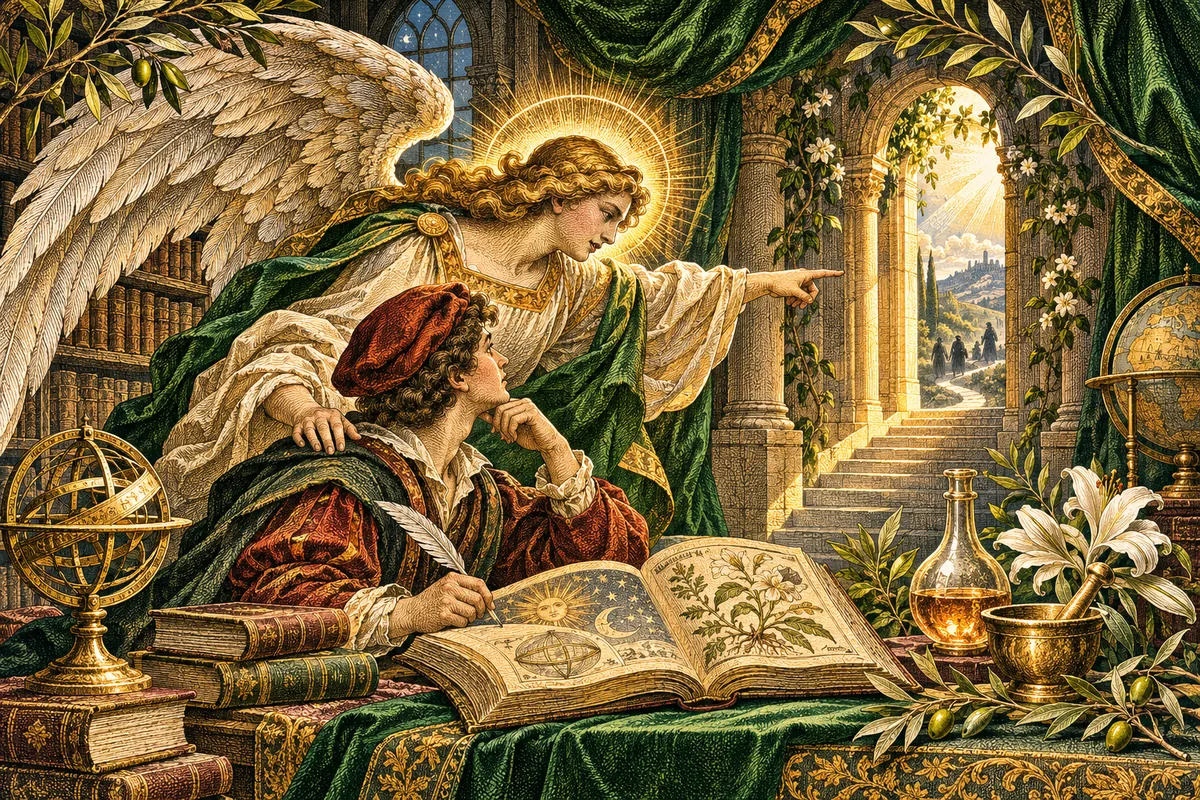
The luminous guardian guiding an attentive learner toward a doorway illustrates instruction and receptivity before the later exercise of power.Abramelin
Narrative attribution · Historical authorship uncertain

Abraham & the teacher Abramelin

Early modern tradition · English edition, 1898

The work presents itself as Abraham’s instruction to his son Lamech and recounts learning associated with the teacher Abramelin. These figures belong to its narrative of transmission; the historical author is uncertain. Apprenticeship and judgment give the promised powers their context.

ON OUR SHELVES

The Sacred Magic of Abramelin

Preparation, angelic guidance, spiritual hierarchy, and letter squares form a connected path. The book asks how ordinary conduct, guarded knowledge, and responsibility relate to the extraordinary abilities it describes.

The 1898 Mathers version is available. This scan lacks printed pages 20–21, 32–33, and 36–37; other historical versions also differ.

Seven brass lamps frame an open velvet-bound manuscript beneath a luminous celestial figure.The Infernal Key
Uncertain attribution · Anonymous manuscript hand

The name of Cyprianus

Late eighteenth-century manuscript · Claims an earlier date

The title names M. L. Cyprianus, but that name does not establish an identified author or authorship by the legendary saint-magician. The manuscript’s script is dated later than the date claimed within it. Its visual language is more secure evidence than an invented biography.

ON OUR SHELVES

Clavis Inferni

Crowned figures, creatures, planetary signs, circles, and binding words arrange a compact spiritual hierarchy. Read how image, location, and inscription divide authority across the page and shape the imagined encounter.

The complete surviving illustrated manuscript is presented as photographed openings.

Modern interpretive painting: Five foundations of the work.Chariot of Antimony
Attributed author · Alchemical tradition

Basil Valentine & his commentators

The Triumphant Chariot of Antimony · English edition, 1678

Basil Valentine is the authorial name attached to this alchemical work; the familiar monastic identity is not a securely established biography. The volume also speaks through Theodore Kerckring’s annotations and an appended work attributed to Synesius. These voices should be read separately.

ON OUR SHELVES

The Triumphant Chariot of Antimony

Spiritual foundations, hidden material powers, instruments, and claims of transformation are argued through prose and images. The course also follows the appendix’s elemental qualities and color stages as ways of interpreting change.

The 1678 English volume includes the Chariot, commentary, and the True Book attributed to Synesius.

SECRETS, MATERIALS & SPIRIT COURTS

Wonder in the working world

These compilations move between invisible powers and ordinary concerns: knowledge, wealth, protection, reputation, and the secrets of natural things.

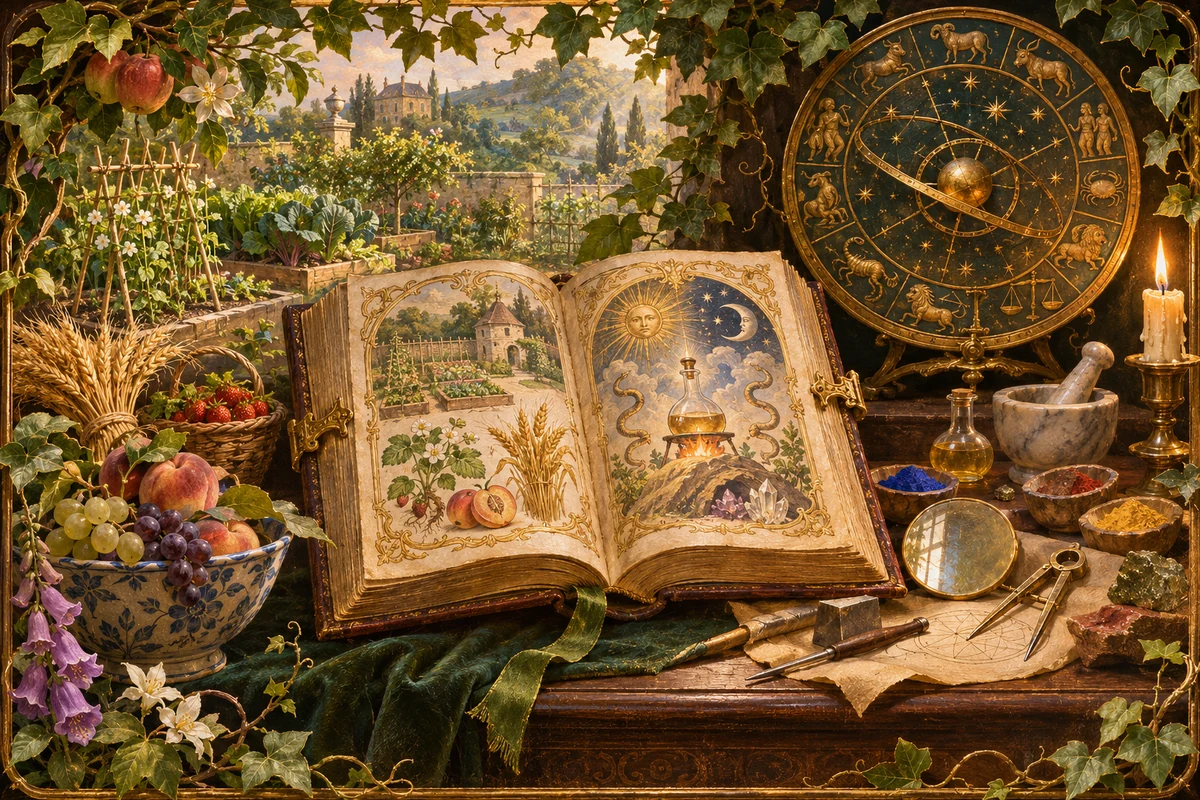
A small printed book gathers a garden, workshop and star chart around one reading desk.The Little Treasury
Pseudonymous compilation · Books of secrets

The voice of Albert le Petit

Petit Albert · French edition, 1765

Albert le Petit is the name used by a compilation of secrets, not a securely identified author whose life explains the whole book. Its varied materials bring lofty promises into contact with everyday concerns and sometimes discuss deception alongside hidden natural powers.

ON OUR SHELVES

Petit Albert

Planetary materials, elemental inhabitants, treasure, sympathy, rural charms, and practical wonders share the pages. The lessons distinguish what the book claims, how it explains an effect, and where it exposes a trick.

The French 1765 edition is available in two reading parts.

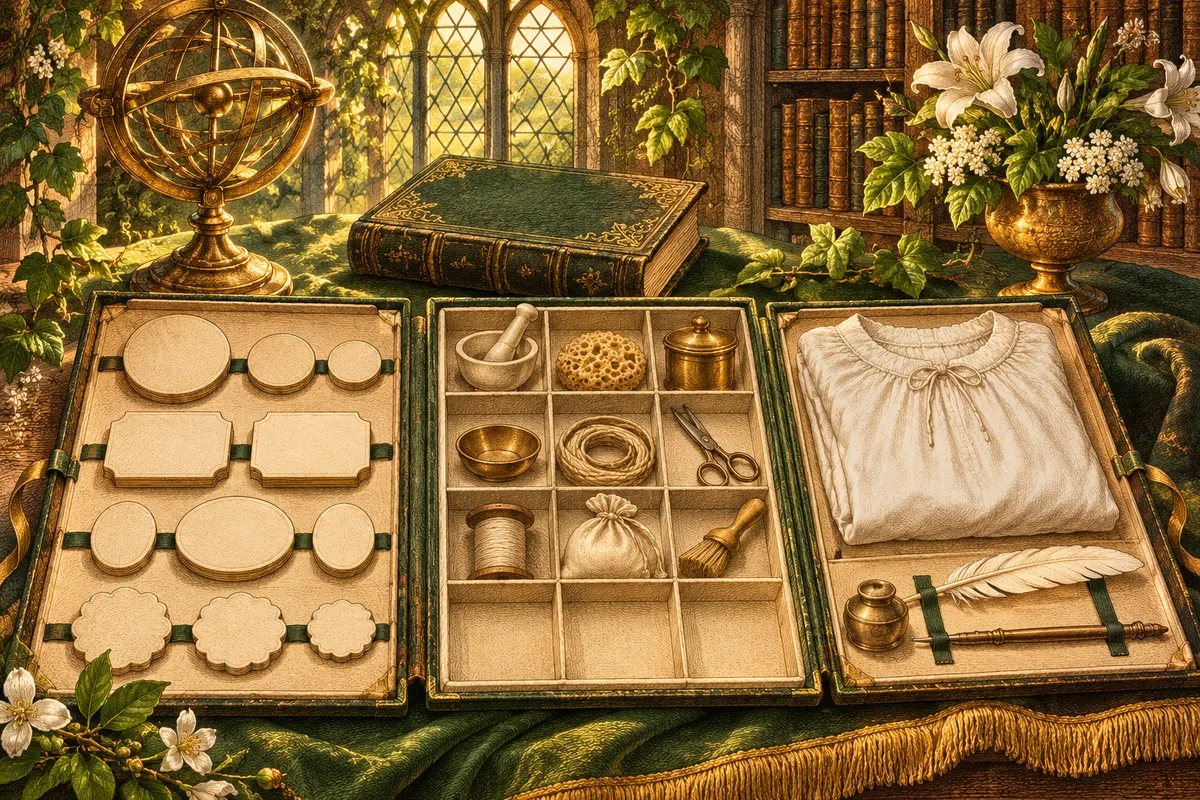
Three open cases display plain tokens, practical objects and a folded garment with writing tools.L’Art Magique
Anonymous composite manuscript

The compilers of L’Art Magique

French manuscript · Circa 1709?

L’Art Magique combines several texts rather than preserving the work of one known author. Its opening grimoire claims Solomonic authority; other sections bring different attributed teachings into the same volume. Their coexistence makes the manuscript a meeting place of traditions.

ON OUR SHELVES

L’Art Magique

Richly drawn courts, personal signs, and proposed material arts appear beside magical elements attributed to Peter of Abano and an invocation of Uriel. The course follows the actual manuscript rather than treating every similarly named grimoire as identical.

Read the complete composite French manuscript. Its distinct sections and attributions are identified in the lessons.

A small red-bound volume lies beneath a crown’s shadow beside larger books.The Grand Grimoire
Anonymous compilation · Claimed Solomonic authority

The anonymous makers of the Red Dragon

Le Véritable Dragon Rouge · Circa 1850; false 1521 imprint

The Grand Grimoire’s title and claimed antiquity belong to its performance of authority. Our witness bears a false 1521 imprint and is dated much later. Its anonymous makers organize the invisible world through commands, ranked offices, and negotiated obligations.

ON OUR SHELVES

The Grand Grimoire · Le Véritable Dragon Rouge

Treasure, pacts, rods, mirrors, dreams, and fortunate times appear in a collection concerned with obtaining particular results. The lessons examine the differences between a command, an agreement, a sign, and an answer.

The complete French Dragon Rouge witness is available; its printed claim of age is distinguished from its historical dating.

THE REFERENCE SHELF

Return to the pages.

Browse the books and their available editions, or begin with a guided reading. Historical pages and our modern illustrations remain distinct throughout the library.