Identify the separate claims of antiquity, Solomonic authorship and practical reliability that authorize this printed grimoire.
Title, preface and opening chapter; reader pages 5–12.
Inside this lesson 5 teachings · 2 source pages
The language of this teaching
- Attribution
- The person or authority to whom a work assigns its knowledge or authorship.
- Witness
- A particular surviving manuscript or printed copy, with its own contents and material history.
- Clavicle
- A little key; here a name for privileged knowledge that supposedly opens access to spiritual powers.
A promise before an explanation
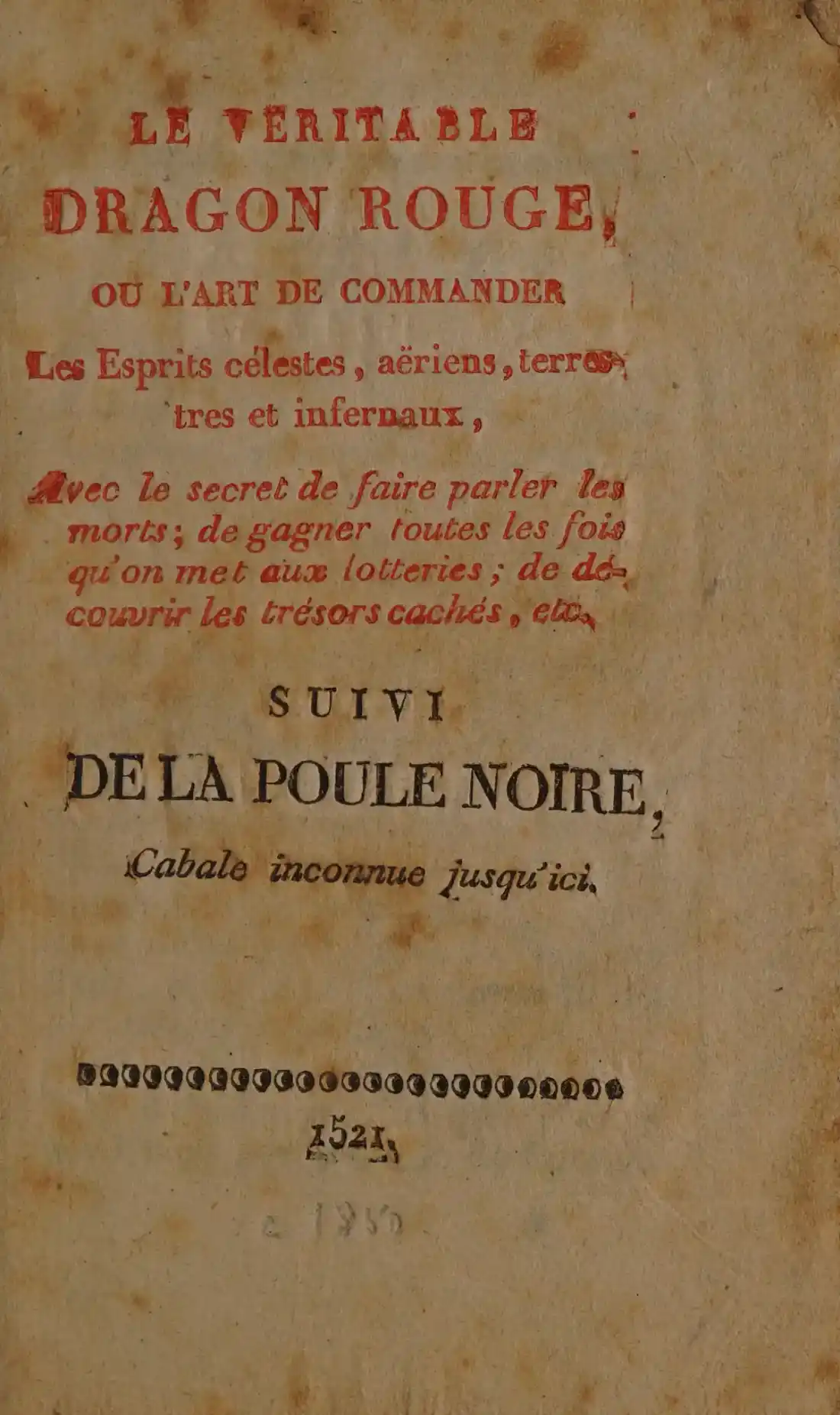
The title presents an art of commanding celestial, aerial, terrestrial and infernal spirits. It adds speaking with the dead, success in lotteries and the discovery of hidden treasure. These promises name the reader’s desired results before explaining any mechanism. They also put very different acts under one apparent mastery. Knowledge, money and control become benefits of possessing a single book. Read the list as an invitation to authority: the volume offers the owner access to a world ordinarily concealed. Its later chapters must then make that extraordinary access appear organized, transferable and usable.
 OCCULT HALL · INTERPRETIVE ILLUSTRATION
The authority of an old book
The small volume and borrowed crown evoke the book’s claim to condense earlier knowledge under Solomon’s authority.
The compact book and the lost library
The preface claims to condense the substance of more than twenty volumes. Repetition and ambiguity supposedly made earlier works difficult to use, while this little collection supplies a clear route. Small size therefore becomes a virtue: the compiler claims to have removed confusion rather than knowledge. This is a familiar form of editorial authority, but here it carries exceptional stakes. A compact manual promises to turn a scattered occult tradition into a sequence the reader can follow. The preface also anticipates disbelief and promises that the prescribed path will dissolve it through experience.
Three warrants for a small book
Compare the different reasons the opening gives a reader to trust its promises.
Choose a part to look closer.
Ancient king
Solomon supplies an exemplary source of knowledge, connecting powerful words, celestial learning and the command of spirits.
Read all the connections
- Ancient king
- Solomon supplies an exemplary source of knowledge, connecting powerful words, celestial learning and the command of spirits.
- Many volumes
- The preface presents condensation as expertise: the little book supposedly preserves useful knowledge while removing earlier confusion.
- Promised experience
- The compiler appeals to successful results as future confirmation, inviting the reader to test the book’s asserted reliability.
These claims work together rhetorically, but none independently establishes the printed object’s date or the promised results.
Solomon as the source of command
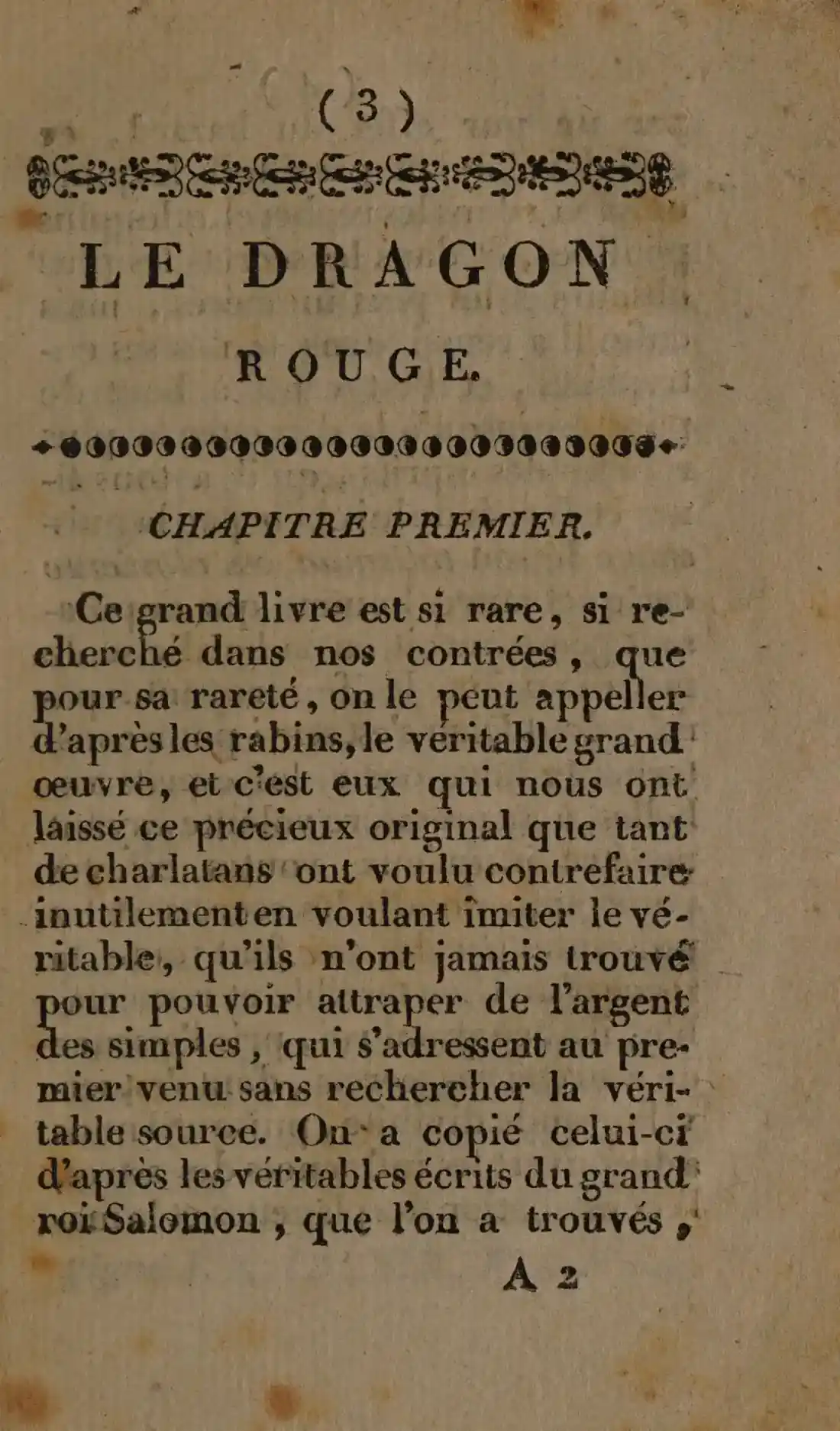
The opening chapter says the work derives from Solomon’s genuine writings, discovered by chance. Solomon’s achievement is described as labor: he searches difficult mysteries, reaches remote spiritual dwellings and compels obedience through his talisman or key. His name supplies more than royal prestige. It connects knowledge of stars, powerful words and government of spirits into one exemplary career. The printed speaker then presents himself as someone who has followed this inheritance successfully. That claim creates a chain from a celebrated ancient ruler, through a transmitting author, to the present reader holding the book.
A date is also an argument
The title leaf bears 1521, while the holding library catalogues this particular object as probably about 1850. The distinction matters because a printed date can participate in the same rhetoric as the Solomonic attribution: both make the object appear close to an ancient source. The historical claim on a title page and the dating of the surviving object answer different questions. The course studies this French witness as a nineteenth-century printed compilation. It does not treat its false imprint as evidence that these very pages were printed in the sixteenth century.
Look at the passage itself.
 Open the book
Title page, false 1521 imprint
Complete historical page from the French Dragon Rouge witness, catalogued c.1850; reader page 5.
 Open the book
Printed page 3
Complete historical page from the French Dragon Rouge witness, catalogued c.1850; reader page 9.
Recognizing the kind of book
The opening does not offer a detached theory of spirits. It offers a warranted path toward results, and it repeatedly claims that exact observance will determine success. Later sections change form: prayers become commands, commands become dialogue, and dialogue becomes a written agreement. Appendices add further kinds of secret knowledge. This variety is part of the book’s appeal. To read it well, keep three questions distinct: who supposedly transmits the knowledge, what kind of authority is invoked, and which benefit is promised? Those questions let you follow the work’s claims without mistaking its self-presentation for independent historical proof.
Read the opening as three linked claims
Compare the title leaf with the opening chapter as evidence of how the book persuades its reader.
- 01
Locate the promised benefit
On the title leaf, distinguish the broad claim to command spirits from the particular rewards of hidden knowledge and wealth. A list of desired results is not yet an account of how those results occur. This distinction helps explain why the chapters later need named offices, procedures and agreements.
- 02
Identify the transmitting authority
In the opening chapter, follow the appeal to Solomon and the claim that his writings were recovered. The authority of a named ancient ruler and the authority of a successful modern transmitter reinforce one another, but they remain two assertions made by the text itself.
- 03
Keep the object’s date separate
Set the printed 1521 beside the catalogue’s approximate nineteenth-century dating. Your conclusion can preserve both pieces of evidence: the old date is visibly part of the object, while the object’s probable production belongs to a much later setting. Neither observation needs to erase the other.
The book’s persuasive structure joins promised results, inherited authority and claimed editorial clarity before the first encounter begins.
The text beside the teaching.
These selected pages accompany this free lesson. Enlarge a page and compare its details with the teaching.
Title page, false 1521 imprint
Complete historical page from the French Dragon Rouge witness, catalogued c.1850; reader page 5.
What to carry into the next lesson
- Distinguish the book’s own claims from the dating of its surviving witness.
- The preface makes condensation and clarity into forms of authority.
- Solomon supplies a model of knowledge joined to command.
The crown in the modern illustration belongs to the book’s claim of authority; the title leaf supplies the actual evidence to examine.
Can you explain it in your own words?
Try answering first, then open the explanation to compare your reasoning.
01Why does a small format support the preface’s promise rather than weaken it?
The compiler presents brevity as the result of selecting the useful substance of many confusing books, turning condensation into a claim of expertise.
02Does the title date establish when this copy was printed?
No. This witness carries a 1521 imprint but is catalogued as probably about 1850.
03What does Solomon contribute to the opening?
He connects kingship, difficult research, sacred words and the ability to govern spirits.