Explain the five foundations and distinguish Basil’s main voice from Kerckring’s annotations.
Triumphant Chariot, opening discourse; pp. 1–9.
Inside this lesson 5 teachings · 3 source pages
The language of this teaching
- Spagyrist
- A historical practitioner of the chemical or alchemical art.
- Contemplation
- Careful inquiry into the nature and circumstances of a thing.
- Utility / fruit
- The claimed consequence or benefit following an application.
The foundations precede the substances
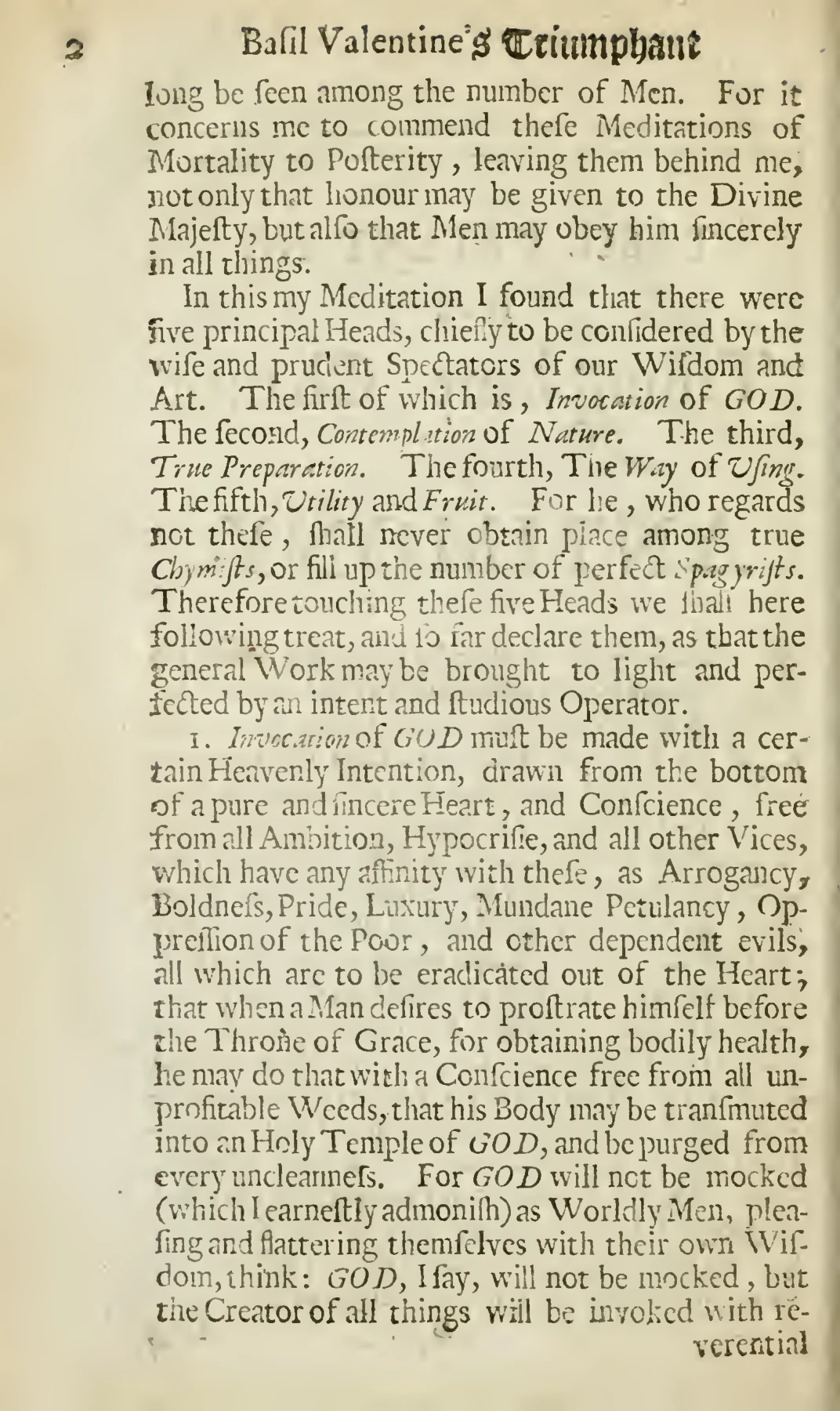
The book begins by asking what kind of person can practice the art responsibly. Its main speaker presents himself as a Benedictine religious and sets out five heads: invocation of God, contemplation of nature, true preparation, the way of using, and utility or fruit. The order matters. A reader who jumps directly to a later material procedure misses the author’s account of what makes knowledge legitimate.
Invocation is not presented as an ornamental preface. It directs the worker away from pride, greed, and oppression toward humility and service. The text’s Christian theology belongs to its historical identity. We can explain its role without requiring readers to adopt the author’s faith or promising supernatural results from a prayer.
 OCCULT HALL · INTERPRETIVE ILLUSTRATION
Five foundations of the work
An original interpretive painting inspired by this lesson.
Contemplation and preparation do different work
Contemplation asks about a thing’s circumstances, matter, form, origin, and operations. The author distinguishes possible inquiry into formed nature from presumptuous inquiry into what lies beyond human comprehension. Preparation then concerns skilled engagement with material things. In this scheme thought without work is incomplete, but work without a guiding account is also liable to error.
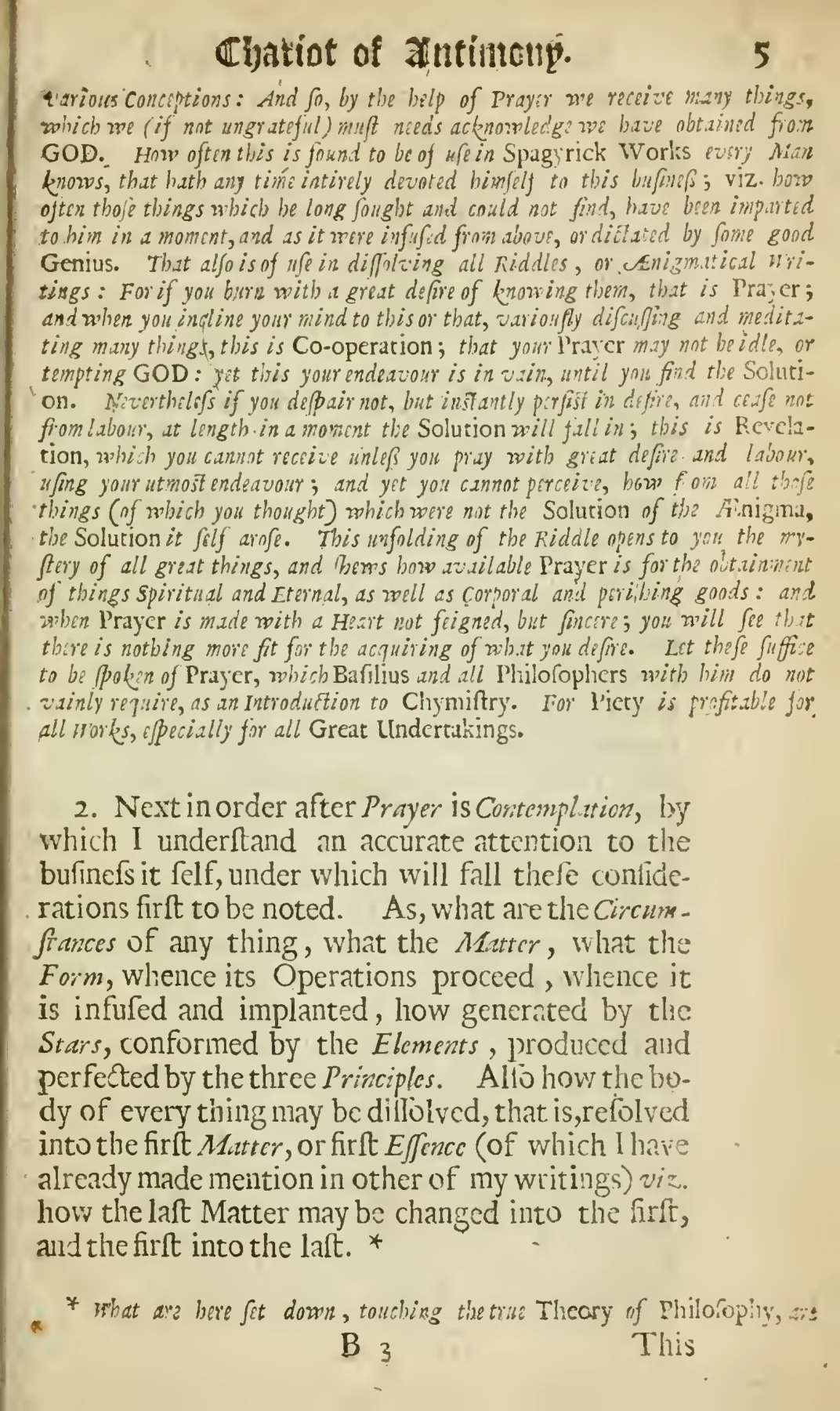
The annotations add another voice. Kerckring describes concentrated attention and the sudden resolution of a difficult problem when sustained effort has prepared the mind. On page 8 he also stresses that seeing a skilled operation can teach more than many written pages. Reading the typography helps separate the main argument from its commentary.
Five foundations before any claimed result
Explain the five foundations and distinguish Basil’s main voice from Kerckring’s annotations.
Choose a part to look closer.
Invocation
The opening directs intention through humility, devotion, and service, making the worker’s aim part of the historical account of legitimate knowledge.
Read all the connections
- Invocation
- The opening directs intention through humility, devotion, and service, making the worker’s aim part of the historical account of legitimate knowledge.
- Contemplation
- Inquiry examines a thing’s circumstances, matter, form, and action before the worker claims to understand what its transformations may reveal.
- Preparation
- Skilled material work is distinguished from theory, while the commentator stresses that written pages cannot communicate every aspect of practical knowledge.
- Use
- Application is a separate question from preparation; possession of an impressive object does not itself establish an appropriate or beneficial use.
- Fruit
- The claimed consequence must be considered separately from intention, theory, and use; a sincere aim cannot by itself demonstrate a good result.
The work begins with aims and responsibilities.
Use and fruit are separate tests
The final two heads distinguish how something is applied from what actually follows. A preparation’s reputation does not by itself establish a beneficial result. Page 9 acknowledges that even something carefully prepared can be harmful in a particular case. This creates a sequence of responsibilities, rather than one dramatic claim that a hidden substance cures everything.
The volume contains hazardous historical medical claims about antimony. Our study concerns the architecture of evidence and responsibility, not reproducing those preparations or doses. Translate the five heads into questions for reading: what aim is stated, what theory supports it, what work is reported, what use is claimed, and what outcome is offered as evidence? The answers may differ, and that difference is worth preserving.
Read the typographic conversation
Choose one paragraph of the main text and the adjacent smaller italic annotation. Summarize each in a separate sentence before combining them. The main speaker may frame an issue through devotion, while the commentator emphasizes attention, skill, or the limits of written instruction. These differences are part of the volume’s teaching. If the two voices are merged into one seamless summary, the reader loses the opportunity to see how a seventeenth-century commentator interpreted and revised an inherited authority. The page layout is therefore not incidental: it is evidence about who is speaking.
Look at the passage itself.
 Open the book
The five heads · printed p. 2
Read the sequence before later material claims.
 Open the book
Contemplation and attention · printed p. 5
Distinguish the main text from the preceding commentary.
The fifth head makes the outcome answerable
The order of the five heads ends with fruit rather than with a completed object. This ending shifts attention from possession of a secret to the consequences claimed for it. The author’s reasoning therefore contains a check on prestige: an impressive preparation and an eloquent theory are not the same thing as a beneficial result. The text’s actual standards remain historical and often fall short of modern evidence, but the distinction itself is clear.
Read the beginning and ending of the sequence together. Invocation directs the intention toward humility and service; fruit asks what follows from the work. The middle stages connect those ends through inquiry, preparation, and use. This produces an ethical and epistemic structure, not simply a list of ceremonies. In your notes, keep the intended good separate from the demonstrated good. A sincere motive can coexist with a mistaken explanation or a harmful practice. Recognizing that possibility allows the opening to be studied sympathetically without turning the volume’s confidence into a guarantee.
Annotate a claim without performing it
Choose a historical assertion anywhere in the volume and make a five-row reading card.
- 01
Find intention and theory
Record why the author says the work matters and how its proposed effect is explained.
- 02
Separate report from application
Distinguish what the text claims was prepared from the use it recommends. Do not convert either into an instruction for yourself.
- 03
Ask about the evidence of fruit
Is the result an observation, testimony, analogy, or promise? A confident statement is not automatically a demonstrated outcome.
The five foundations become a useful method of source criticism as well as a subject of historical study.
The text beside the teaching.
These selected pages accompany this free lesson. Enlarge a page and compare its details with the teaching.
The five heads · printed p. 2
Read the sequence before later material claims.
What to carry into the next lesson
- The work begins with aims and responsibilities.
- Theory, preparation, use, and outcome are distinct.
- Read the main text and commentary as separate voices.
On page 2 the five heads appear together; on pages 5 and 8 the main voice and italic commentary develop different aspects of them.
Can you explain it in your own words?
Try answering first, then open the explanation to compare your reasoning.
01Why are use and utility separate heads?
Use concerns the application, while utility or fruit concerns the resulting effect; the text admits the outcome can differ from the intention.
02What separates contemplation from preparation?
Contemplation supplies inquiry and theory; preparation concerns skilled material work.
03Why identify Kerckring’s voice?
His annotations interpret and sometimes qualify the main author rather than merely repeating him.