The Munich Manual of Necromancy
Masters, mirrors, and impossible journeys
 AN OCCULT HALL ILLUSTRATION
Enter its world.
Clm 849 preserves a varied fifteenth-century collection in Latin and German. Its historical opening is lost: leaves 1 and 2 are missing. Our complete facsimile retains all 317 images of the surviving volume, including its binding and appended materials.
These lessons examine what individual passages ask for, how they assign authority, and what would count as success within their own accounts. Original illustrations interpret each teaching; the manuscript pages remain beside them for comparison.
- The complete 317-scan surviving manuscript
- Seventeen lessons grounded in specific folios
- Unique illustrations, close reading activities, and source-page comparisons
Seventeen encounters
One free introduction · 16 member lessons
Why this number?
17 lessons form our expanded editorial path through this collection. The course count is a modern study arrangement, not the number of chapters, beings or stages stated by the historical authors.
Your way through.
Follow the teachings step by step, work through concrete examples, and connect each explanation with its cited passage.
Reading a book whose beginning is missing
Distinguish the surviving manuscript, its catalogue title, and the ritual voice that speaks within its pages.
15 min · Free introduction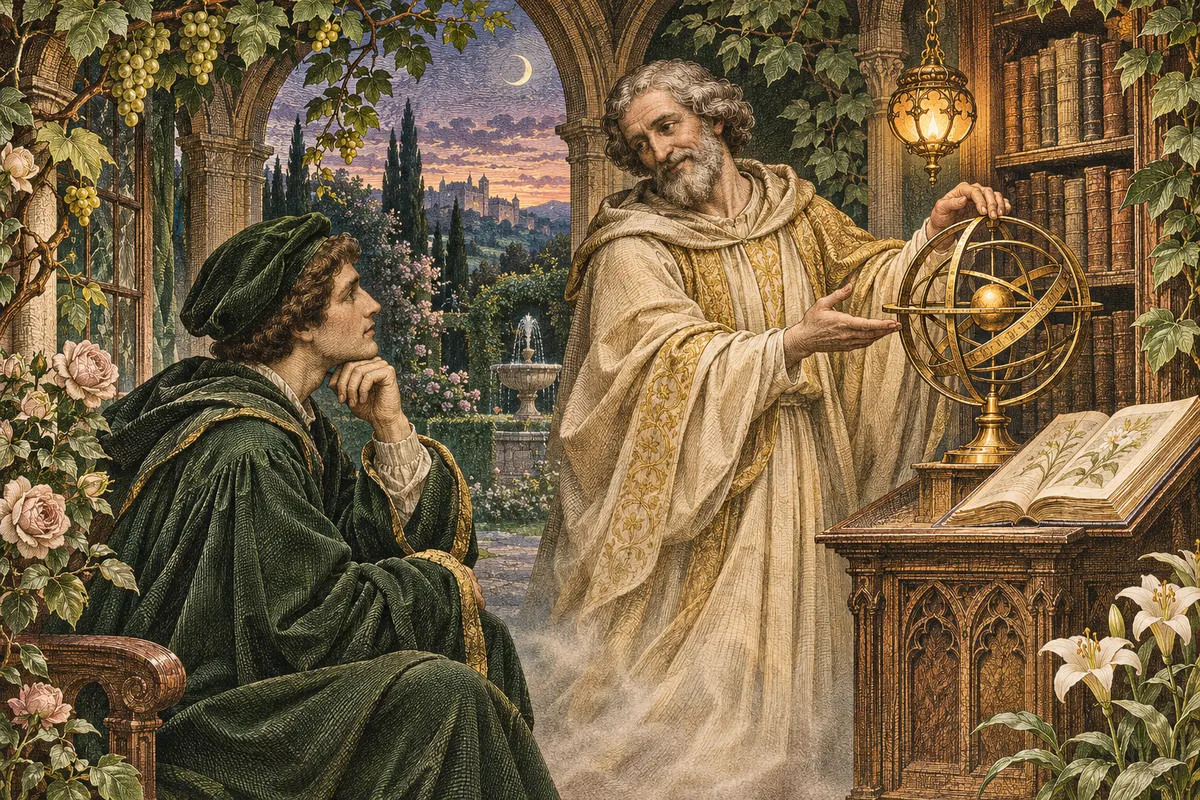
A spirit in the form of a master
Explain why the first surviving experiment specifies both an expert teacher and a reassuring appearance.
16 min · Member lesson
When desire is written as a command
Analyze how the manuscript assigns power and speech in a coercive attraction passage without treating it as relationship advice.
16 min · Member lesson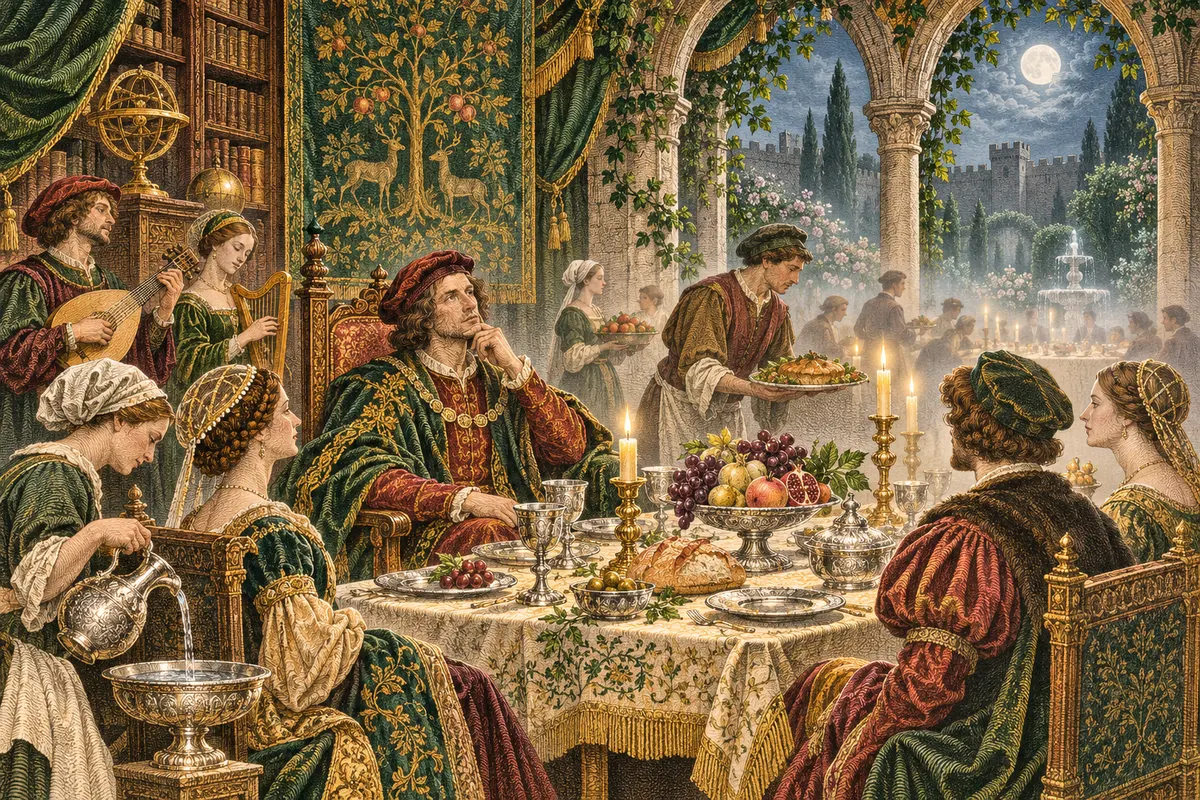
The banquet that becomes a performance
Explain how the banquet passage stages abundance and why its account of eating complicates the spectacle.
16 min · Member lesson
A castle is more than its walls
Explain why the castle experiment supplies inhabitants and conflict as well as an extraordinary building.
17 min · Member lesson
A boat that answers to a destination
Distinguish the boat's appearance, transport function, and imagined agreement of service.
16 min · Member lesson
The horse and the removable bridle
Explain how the horse passage distinguishes arrival, continued service, and departure through the bridle.
16 min · Member lesson
The flying throne and the fear of falling
Analyze the throne passage's distinction between being carried, remaining unharmed, and controlling the surrounding spectacle.
17 min · Member lesson
A question carried into sleep
Explain how the dream passage assigns different roles to the written object, the sleeping recipient, and the expected messengers.
16 min · Member lesson
Floron's mirror: object, witness, and answer
Explain the separate roles of the prepared mirror, its holder, the operator, and the anticipated visitor.
17 min · Member lesson
Why keep two versions of Floron's mirror?
Compare the adjacent Floron accounts without assuming that repeated material is an error or that sequence proves chronology.
17 min · Member lesson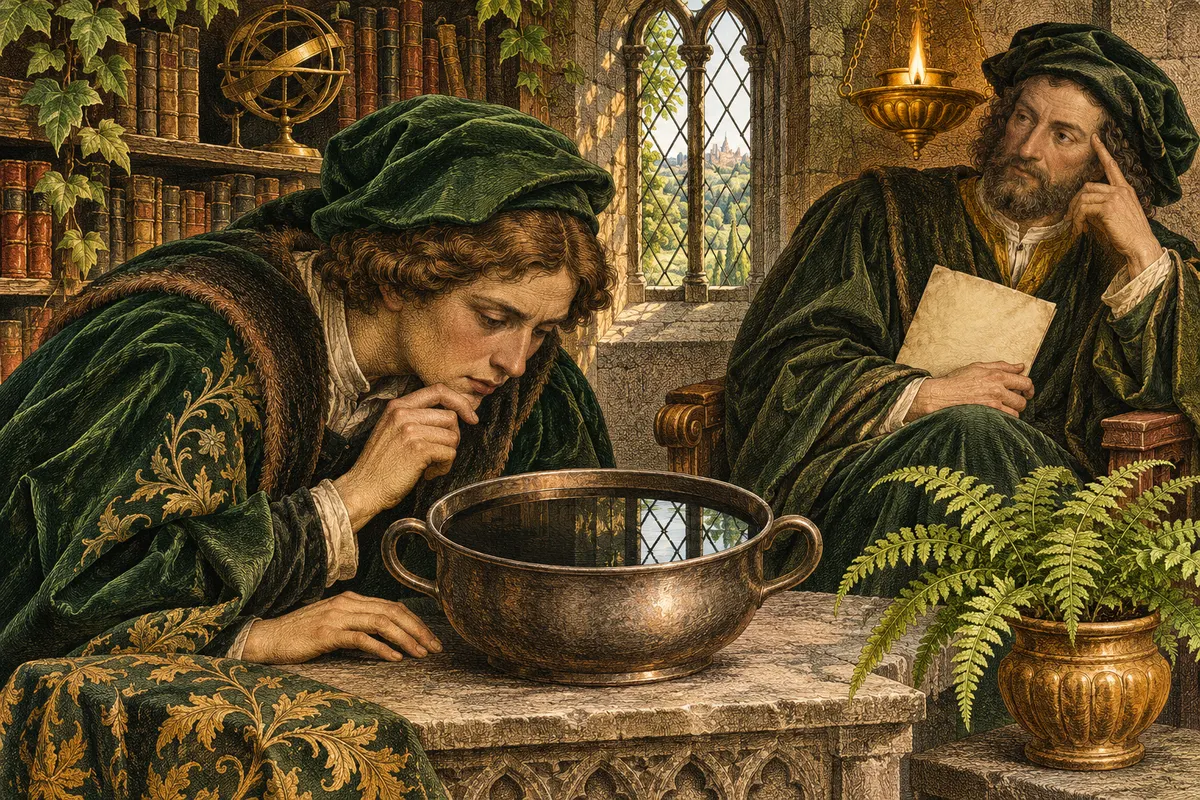
Who sees into the vessel?
Explain how the vessel passage separates the operator's authority from a witness's vision and asks for the removal of deception.
17 min · Member lesson
Two or three messengers in a crystal
Explain how the crystal passage turns a general question into a staged encounter and why appearance, truth, and departure remain separate.
17 min · Member lesson
Three vehicles, three relationships
Compare the boat, horse, and flying throne as different models of service, control, and exposure.
10 min · Member lesson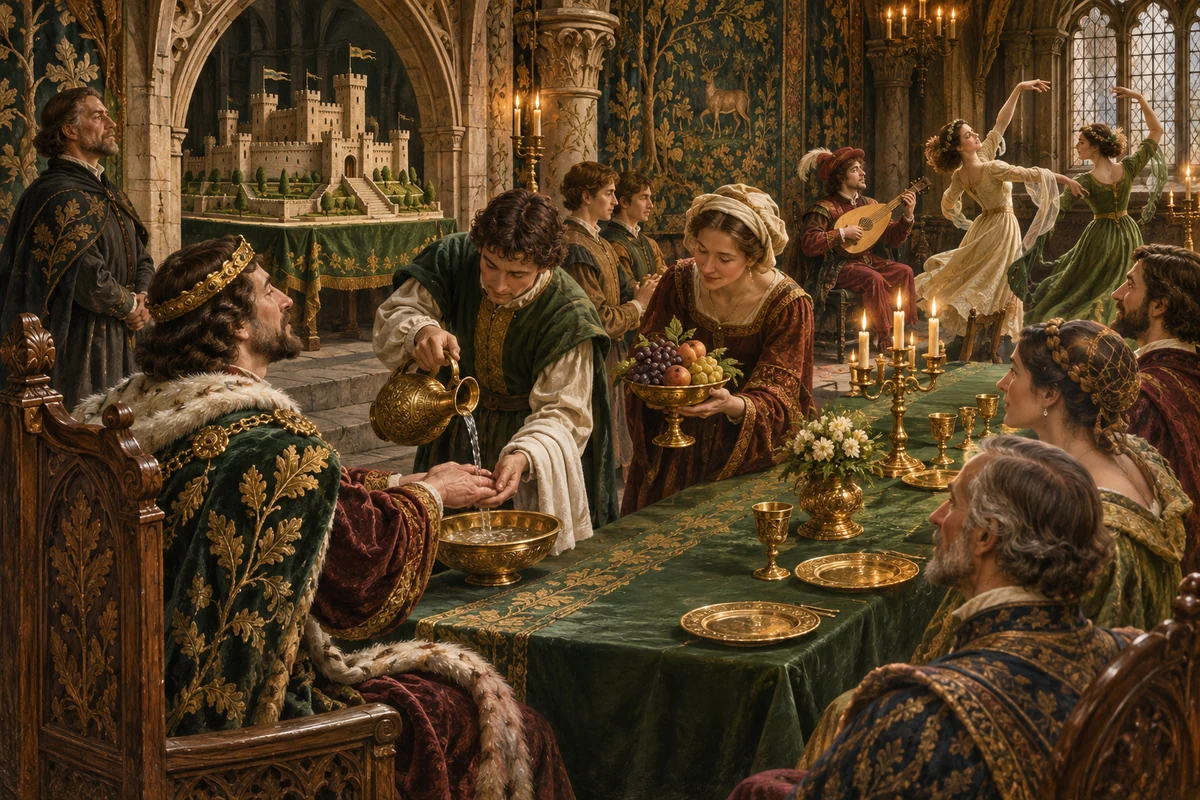
A feast becomes a miniature court
Explain how service, entertainment, and obedience turn the banquet and castle into images of social power.
10 min · Member lesson
Who sees, who speaks, who reports?
Trace the division of labor in the manual’s mirror, vessel, and crystal inquiries.
10 min · Member lesson
The conditions of a safe arrival
Explain how the flying-throne passage separates destination, bodily security, and manageable perception.
10 min · Member lessonThe source beside you.
Members can explore the complete edition. Begin with the free introduction and its selected source pages.
The complete book awaits.
The Munich Manual of Necromancy
The complete historical editions and page-turning readers belong to the member library. Free introductions include the source excerpts used in their teaching.
Books & dates
Munich Manual of Necromancy — complete surviving Clm 849The Munich Manual · fifteenth century
Guided readings and teaching diagrams are original Occult Hall commentary. Imagined scenes are modern illustrations, separate from the historical source pages.
The Secrets of Solomon
Seventeen thresholds through spirits, pentacles and the little world