Arbatel of Magic
Olympic governors and the study of secrets
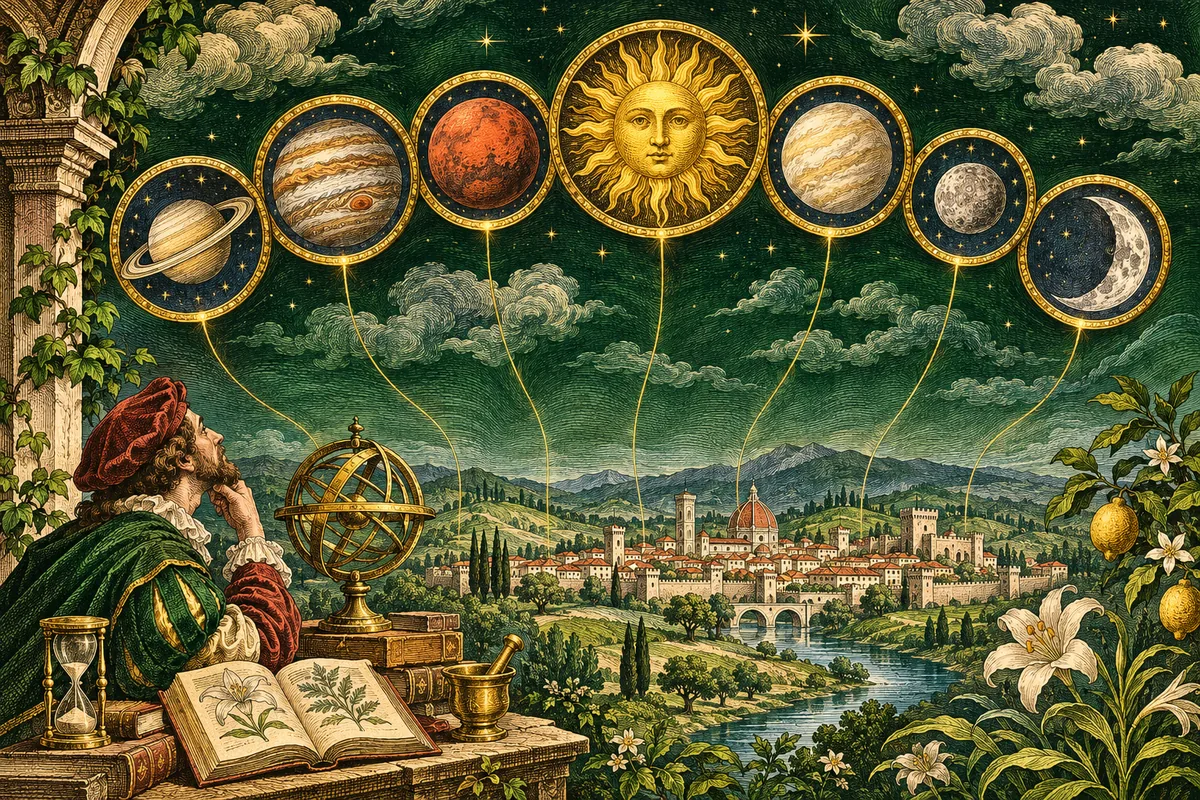 AN OCCULT HALL ILLUSTRATION
Enter its world.
The Arbatel imagines a world ordered through divine government, spiritual ministries and the particular virtues of created things. Its seven Olympic governors provide one map of that world; its aphorisms also ask how a learner should choose a purpose, receive instruction and judge a claimed gift.
Ten lessons form our expanded course, extending a seven-lesson core on the governors. This arrangement does not replace the book’s forty-nine aphorisms. They move from the governors and the circle of secrets to the distinctions among kinds of magic and the Midas example of a fulfilled wish that defeats its purpose. Each reading is linked to the historical English of Robert Turner’s 1655 edition.
- Seven Olympic governors
- What a secret means
- The Seal of Secrets
Ten heavens of study
One free introduction · 9 member lessons
Why this number?
10 lessons form our expanded editorial path through this collection. The course count is a modern study arrangement, not the number of chapters, beings or stages stated by the historical authors.
Your way through.
Follow the teachings step by step, work through concrete examples, and connect each explanation with its cited passage.
Meet the seven Olympic governors
Connect each governor with its planetary sphere and attributed offices, and explain how the work distinguishes a natural process from a miraculous intervention.
16 min · Free introduction
What counts as a secret?
Distinguish the Arbatel’s greatest, intermediate and lesser secrets, and explain why self-government and skilled labor belong within its magical curriculum.
16 min · Member lesson
The circle of 112 secrets
Derive the seal’s 112 divisions, explain its directional subjects and distinguish the divine center from the governors of its quarters.
16 min · Member lesson
Call the office you actually need
Explain the connection between a spirit’s name and office, the work’s warning about inherited names, and the structure of its model petition.
16 min · Member lesson
How the Arbatel trains a student
Apply the opening aphorisms’ account of study, calling and responsibility, distinguishing depth of learning from the accumulation of curiosities.
16 min · Member lesson
Seven ways to distinguish kinds of magic
Explain why the seven divisions of aphorism 38 describe several dimensions of an operation rather than seven exclusive schools.
12 min · Member lesson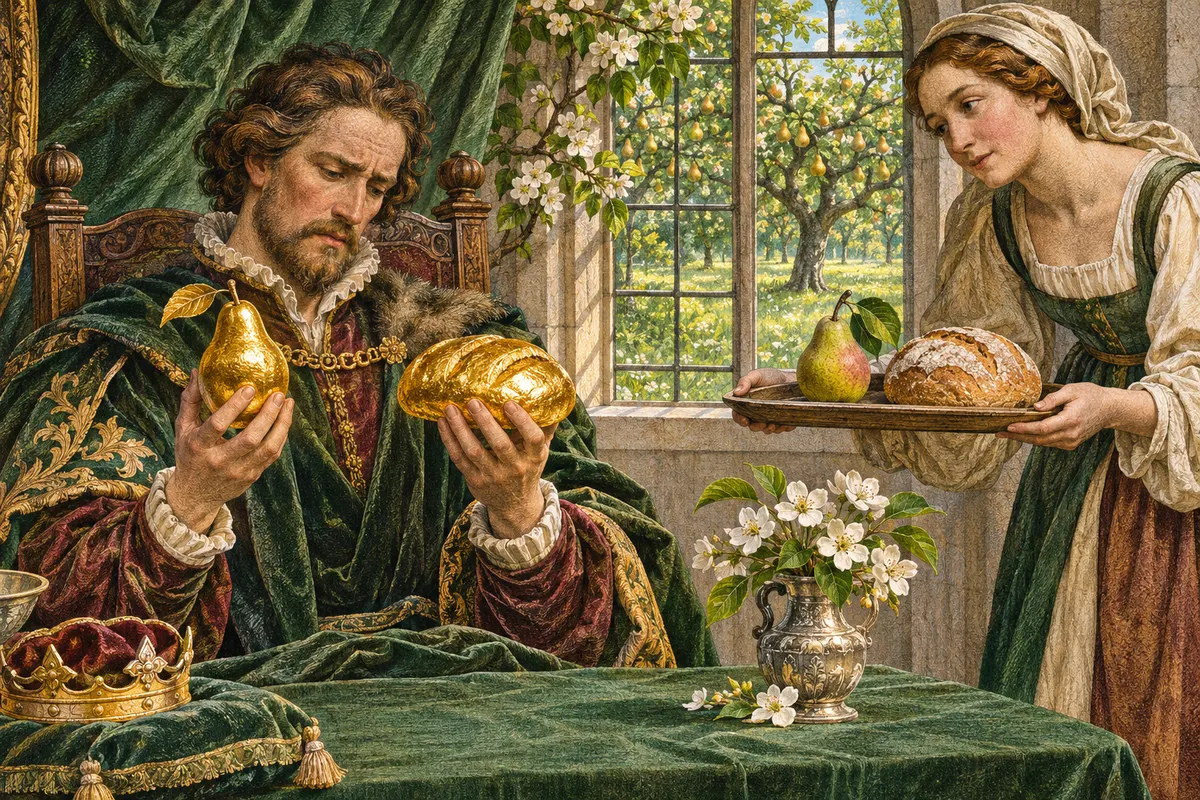
Midas and the difference between a gift and a trap
Explain how the Midas example develops the Arbatel’s tests of desire, spiritual counsel and the limits of created power.
12 min · Member lesson
Seven preparations, one divided human being
Reconstruct the seven preparations in aphorism 39 and distinguish the tasks assigned to mortal and immortal life.
14 min · Member lesson
Why the Arbatel refuses a mixed experiment
Explain the appeal to simplicity in aphorism 36 and its relation to mind, appointed ends and the order of creatures.
14 min · Member lesson
The final tree of the sciences
Reconstruct the closing classification and explain why natural knowledge is judged through its direction and use.
14 min · Member lessonThe source beside you.
Members can explore the complete edition. Begin with the free introduction and its selected source pages.
The complete book awaits.
Arbatel of Magic
The complete historical editions and page-turning readers belong to the member library. Free introductions include the source excerpts used in their teaching.
Books & dates
Arbatel of MagickArbatel · Robert Turner · 1655
Guided readings and teaching diagrams are original Occult Hall commentary. Imagined scenes are modern illustrations, separate from the historical source pages.
Sepher Raziel
The seven books of the angel's secrets