The Book of Oberon
A magician's book of spirits, visions and hidden things
 AN OCCULT HALL ILLUSTRATION
Enter its world.
The Book of Oberon gathers prayers, catalogues, characters and proposed encounters into a working collection. Its spirits have particular offices: some disclose natural properties, some reveal treasure, and others govern subordinate companies. These differences shape the questions and demands addressed to them.
Seventeen editorially selected lessons examine the collection’s different kinds of work: visionary encounters, fairy learning, treasure, regional government, prayer, planetary hours, sacred names and the cooperation of a ritual company. They explain the manuscript’s own distinctions between an appearance, a truthful answer, a promised service and its completion. Seventeen is the course’s arrangement, not a claim about the manuscript’s original divisions. Each new reading is accompanied by the corresponding historical page within our two-volume facsimile.
- The book and the visionary stone
- Oberyon, Mycob and their companies
- Treasure knowledge and guardianship
- Four directional kings
- Birto and the license to depart
Seventeen thresholds
One free introduction · 16 member lessons
Why this number?
17 lessons form our expanded editorial path through this collection. The course count is a modern study arrangement, not the number of chapters, beings or stages stated by the historical authors.
Your way through.
Follow the teachings step by step, work through concrete examples, and connect each explanation with its cited passage.
The glass and stone as instruments of vision
Explain how consecration, a visible appearance, a truthful answer and permission to depart form different parts of the glass-or-stone encounter.
18 min · Free introduction
Oberyon, Mycob and the knowledge of the fairy court
Describe the offices assigned to Oberyon and Mycob, their associated companies, and the distinction between a spirit's rank and its requested visible form.
19 min · Member lesson
Treasure, truthful knowledge and the power to obtain it
Explain why the treasure passages distinguish discovery, truthful information, guardianship, movement and possession.
18 min · Member lesson
Four kings and the distribution of spirit offices
Explain how the four directional kings organize subordinate spirits without giving every subordinate the same ability or character.
19 min · Member lesson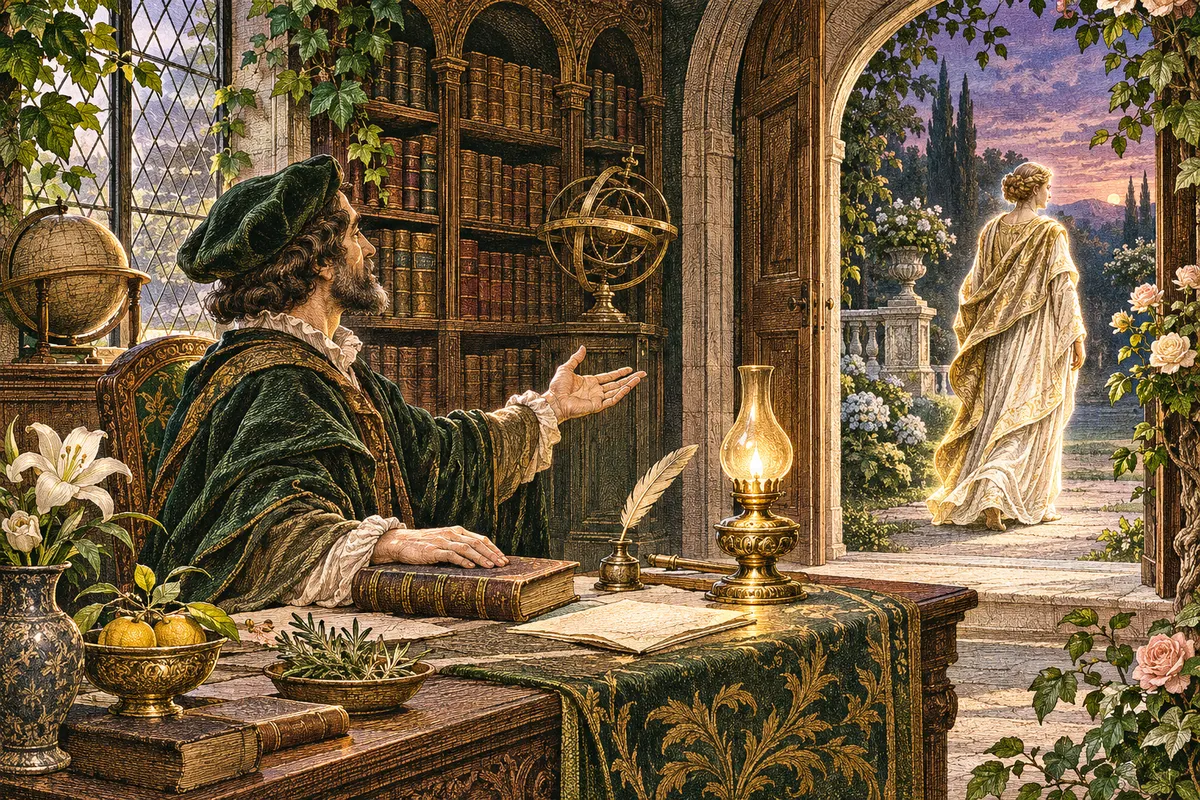
How an encounter is brought to an end
Explain the relationship between truthful answers, temporary presence, peaceful dismissal and future availability in the Birto passage.
18 min · Member lesson
Why the conjurer first asks for authority
Explain how the opening prayer connects penitence, divine sovereignty and a delegated power over spirits.
14 min · Member lesson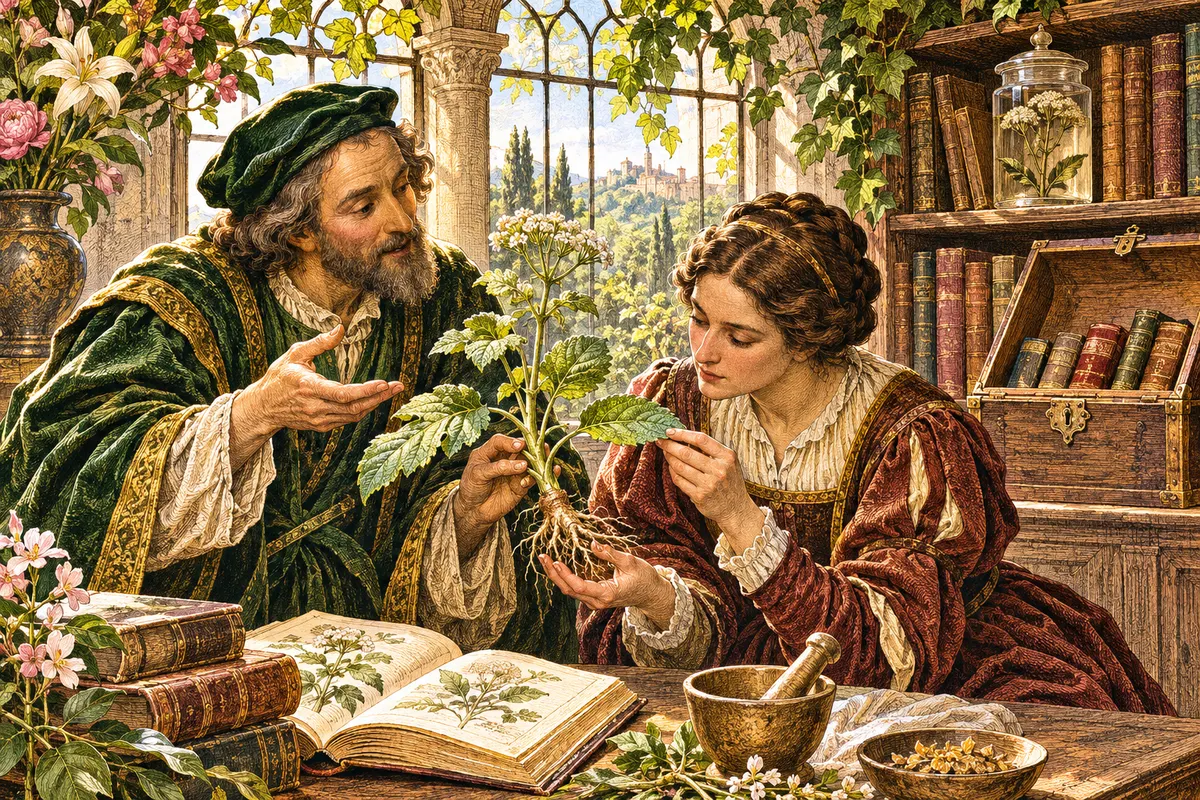
A spirit who teaches the arts
Explain the teaching relationship requested in the prayer beginning sic igitur orabis.
14 min · Member lesson
How a planetary hour differs from a weekday
Distinguish a day ruler, an hour ruler and a spirit’s planetary affiliation.
14 min · Member lesson
The seven Semoferas of Adam and Moses
Compare the Adamic and Mosaic sequences and explain how their categories assign different work to names.
14 min · Member lesson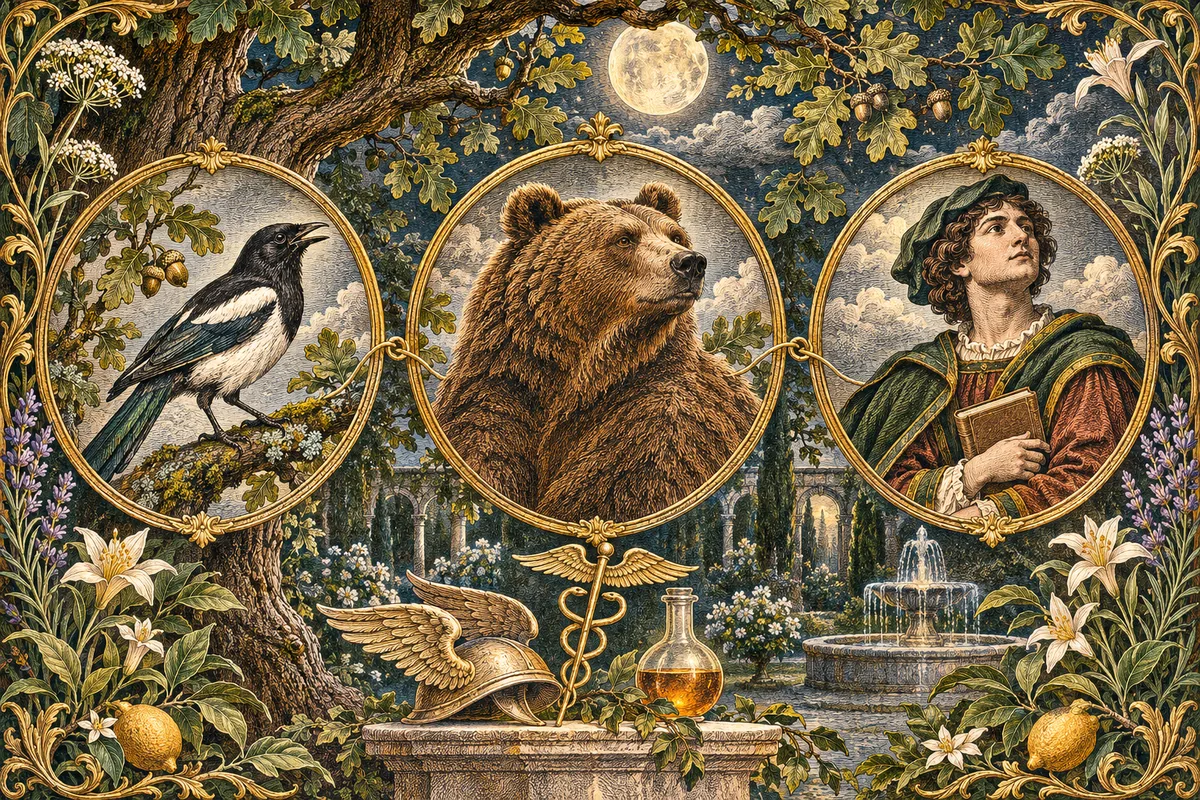
Mercury’s spirits: appearance, office and skill
Separate the Mercurial entry’s general appearance, particular forms, offices and governing names.
14 min · Member lesson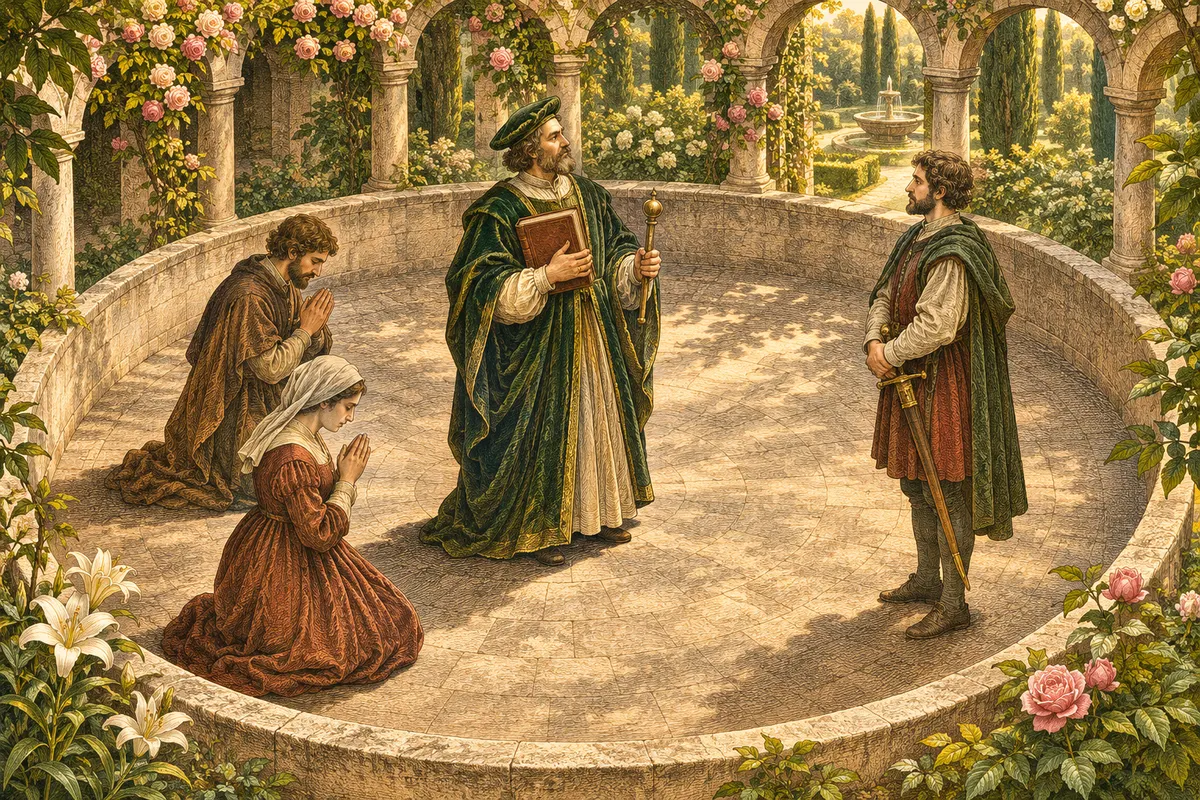
The circle is a place for a company
Explain how the circle instructions distribute actions among participants and distinguish the place from its occupants.
14 min · Member lesson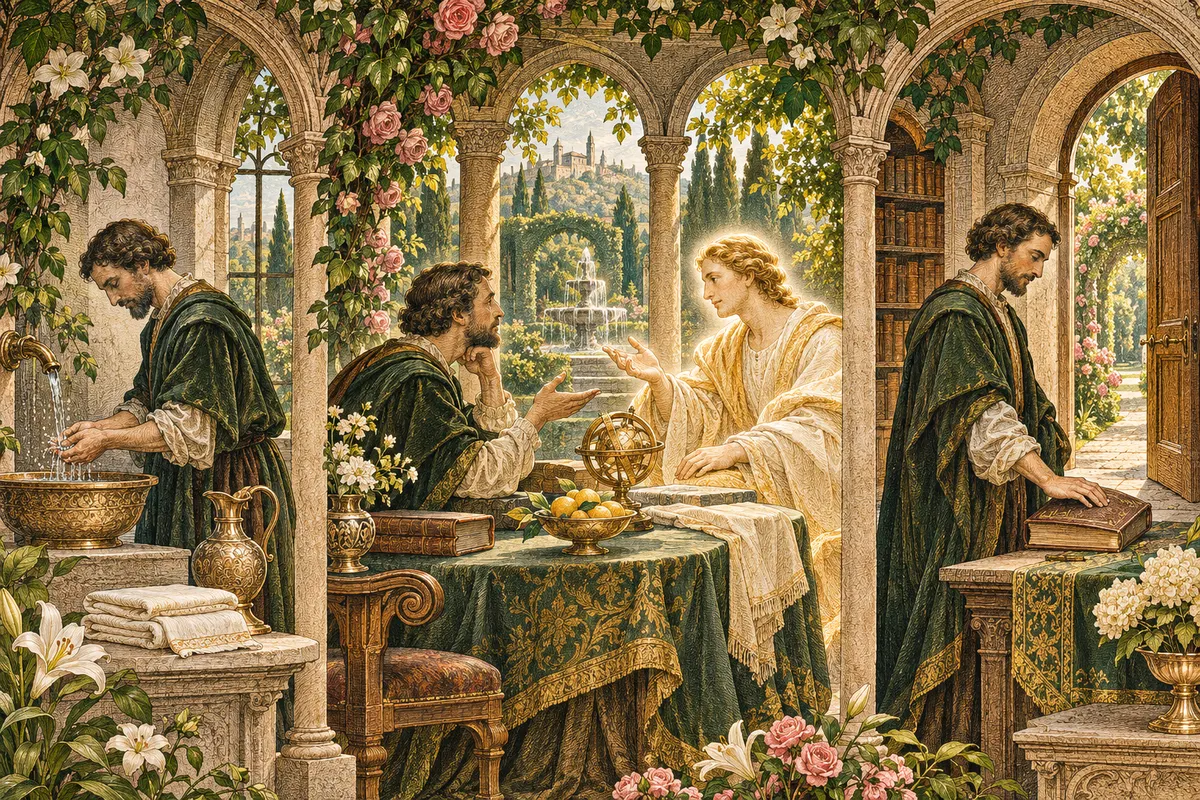
Preparation, constraint and completion
Identify the three stated parts of the art and show why an appearance alone does not complete its purpose.
14 min · Member lesson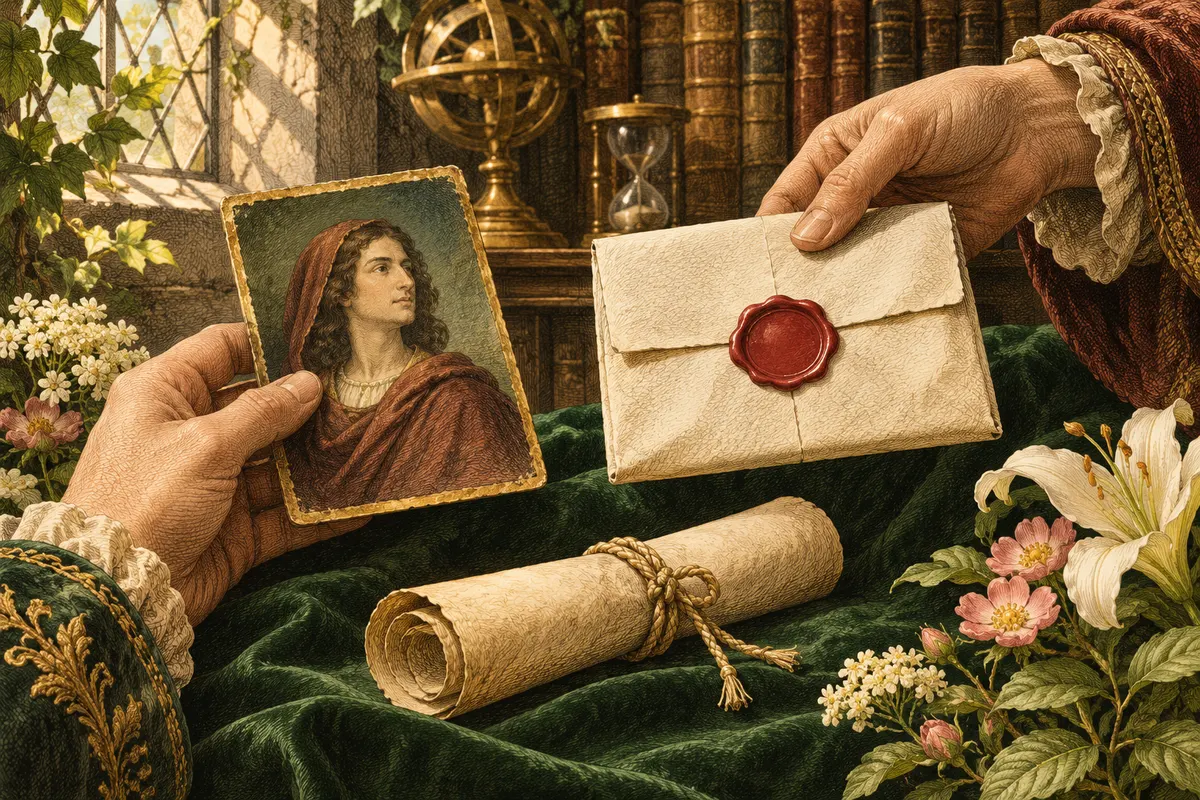
The name, the picture and the written pledge
Explain the different roles of a displayed image, an identifying name, an oath and a delivered character.
14 min · Member lesson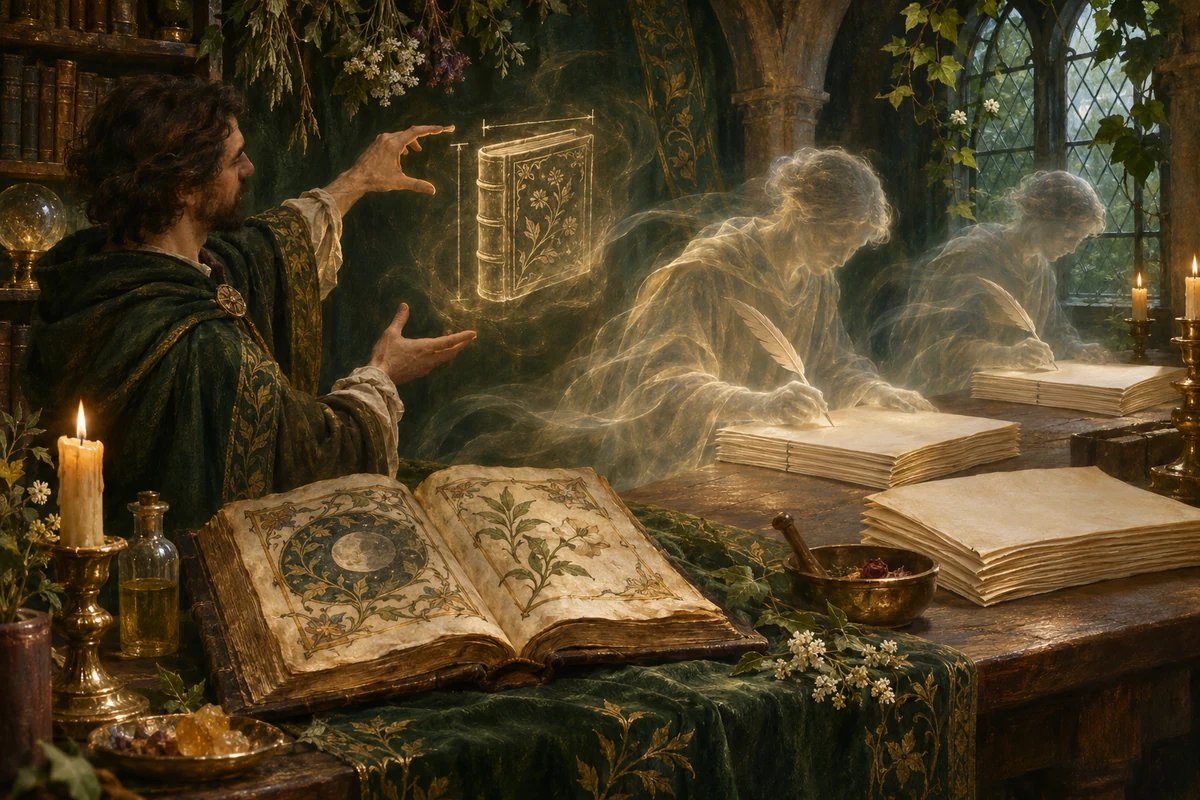
The spirit scribes
Explain how the manuscript imagines a magical book being commissioned, written, and made effective.
16 min · Member lesson
A month is not a planetary hour
Read the manuscript’s thirty-one-day table without confusing its units, conditions, or negative entries.
16 min · Member lesson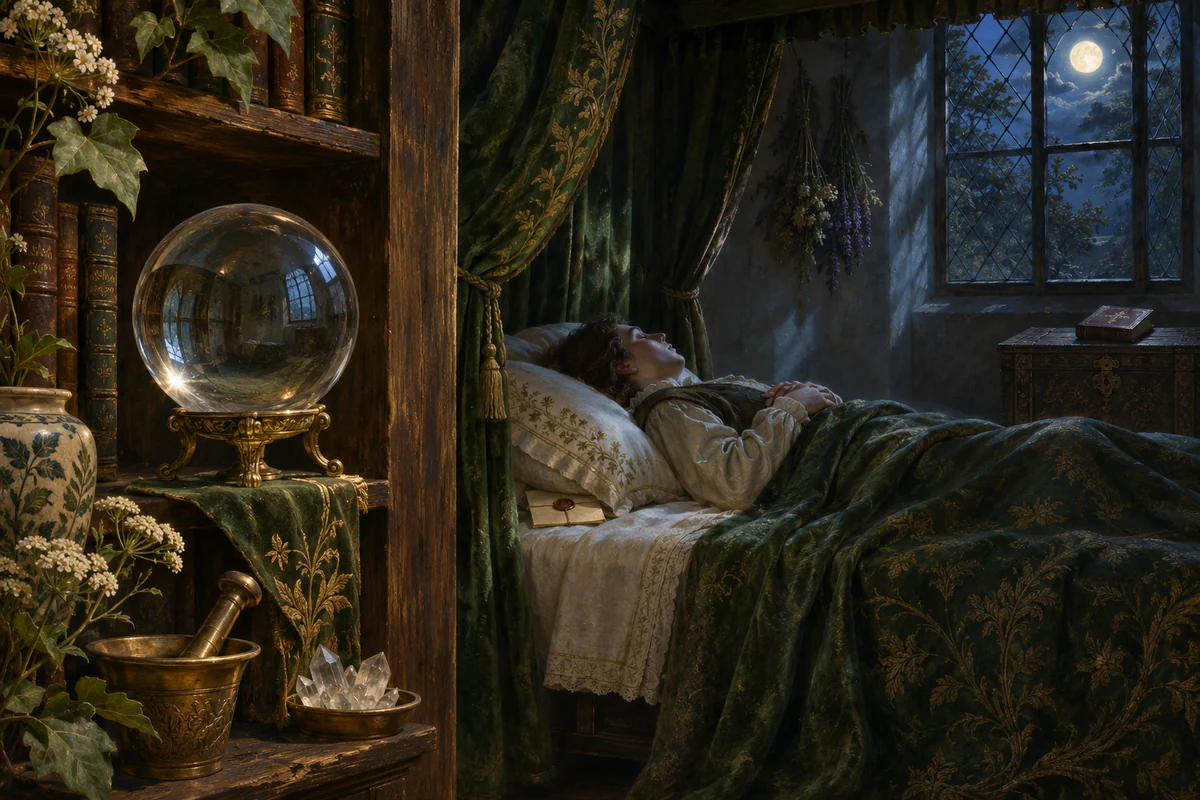
Sleep as a medium of revelation
Compare the page’s crystal and dream passages through their questions, audiences, and scriptural framing.
16 min · Member lesson
Angels, knowledge, and the neighbour
Read the manuscript’s short theological note as an account of created authority, angelic offices, and ethical purpose.
16 min · Member lessonThe source beside you.
Members can explore the complete edition. Begin with the free introduction and its selected source pages.
The complete book awaits.
The Book of Oberon
The complete historical editions and page-turning readers belong to the member library. Free introductions include the source excerpts used in their teaching.
Books & dates
Book of Oberon: surviving historical manuscript, reading volume 1 of 2The Book of Oberon · c. 1577–1583
Book of Oberon: surviving historical manuscript, reading volume 2 of 2The Book of Oberon · c. 1577–1583
Guided readings and teaching diagrams are original Occult Hall commentary. Imagined scenes are modern illustrations, separate from the historical source pages.
The Sacred Magic of Abramelin
The guardian angel and the discipline before the squares