The Key of Solomon
Time, the circle and the authority of pentacles
 AN OCCULT HALL ILLUSTRATION
Enter its world.
The Key of Solomon presents an ordered art in which prayers, planetary time, signs, prepared objects and the conduct of a company belong together. This course follows the 1889 Mathers edition closely, distinguishing its historical text from the editor’s explanations and from the different arrangements found in other manuscripts.
Our twenty-six lessons are a modern editorial path through the source, not a claim that the original work contains twenty-six chapters in total. The first five provide substantial foundations; twenty-one further readings examine individual planetary families and particular passages in greater depth. Each lesson asks what a page actually teaches, how its parts relate and what the book claims for them.
Use the on-site pages beside the explanations. Figure numbers, printed pages and scan positions identify the evidence, while exercises develop close reading and comparison rather than requiring the performance of historical rites.
- Twenty-six substantial guided lessons
- All seven planetary pentacle families
- Sacred space, vestments and the magical book
- Spiritual audiences and their endings
- Source-led exercises and review questions
Twenty-six doors
One free introduction · 25 member lessons
Why this number?
26 lessons form our expanded editorial path through this collection. The course count is a modern study arrangement, not the number of chapters, beings or stages stated by the historical authors.
Your way through.
Follow the teachings step by step, work through concrete examples, and connect each explanation with its cited passage.
Two clocks in one day
Reconstruct the planetary-hour sequence, explain its weekday pattern, and connect particular planets with the purposes assigned to them.
16 min · Free introduction
Inside the circle of art
Explain the circle’s named boundaries, directional pattern and the responsibilities of the master and companions.
16 min · Member lesson
What a pentacle authorizes
Interpret a pentacle by connecting its figure, named beings, surrounding verse and purpose through Jupiter and Sun examples.
16 min · Member lesson
Before the command comes confession
Explain how confession, petitions for renewal and commanding addresses form a consistent account of delegated authority.
16 min · Member lesson
When matter becomes an instrument
Explain how ordinary material functions are connected with the spiritual purposes attributed to them through consecration.
16 min · Member lesson
The inheritance of a king
Explain how the opening chapter connects devotion, ordered time and the responsibility to transmit knowledge.
12 min · Member lesson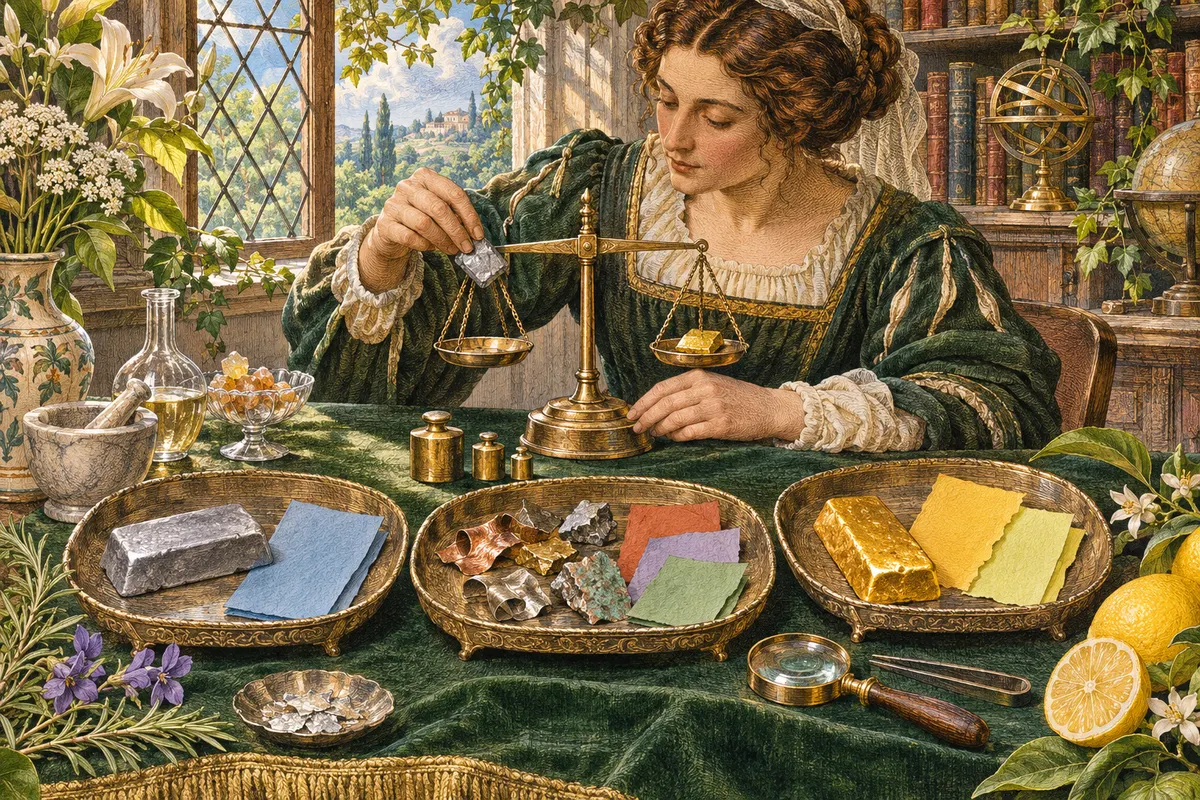
Seven planets, seven material languages
Distinguish the Key’s metal, colour and timing rules without treating every correspondence as interchangeable.
12 min · Member lesson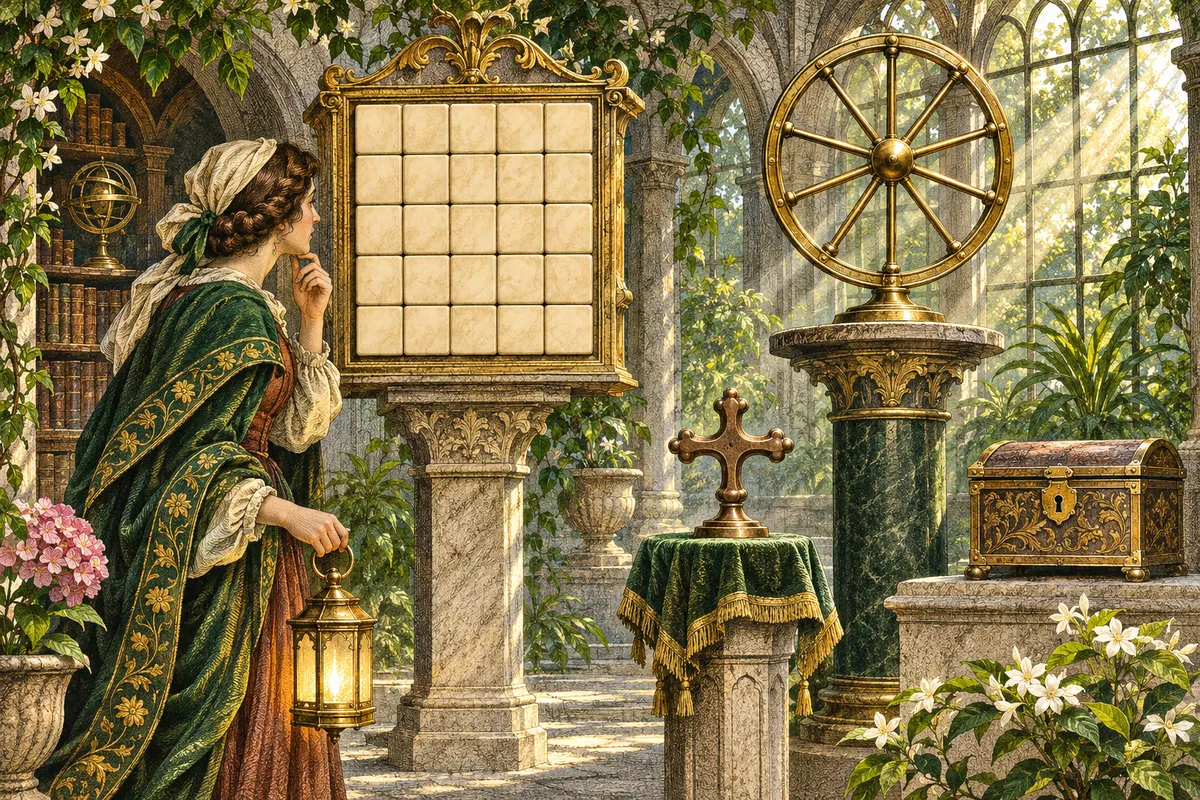
Saturn’s square, wheel and guarded treasure
Compare the second, third and fifth Saturn pentacles through their forms, names and assigned offices.
12 min · Member lesson
Jupiter beyond the treasure chest
Distinguish the social and protective aims assigned to Jupiter’s second, fourth, sixth and seventh pentacles.
12 min · Member lesson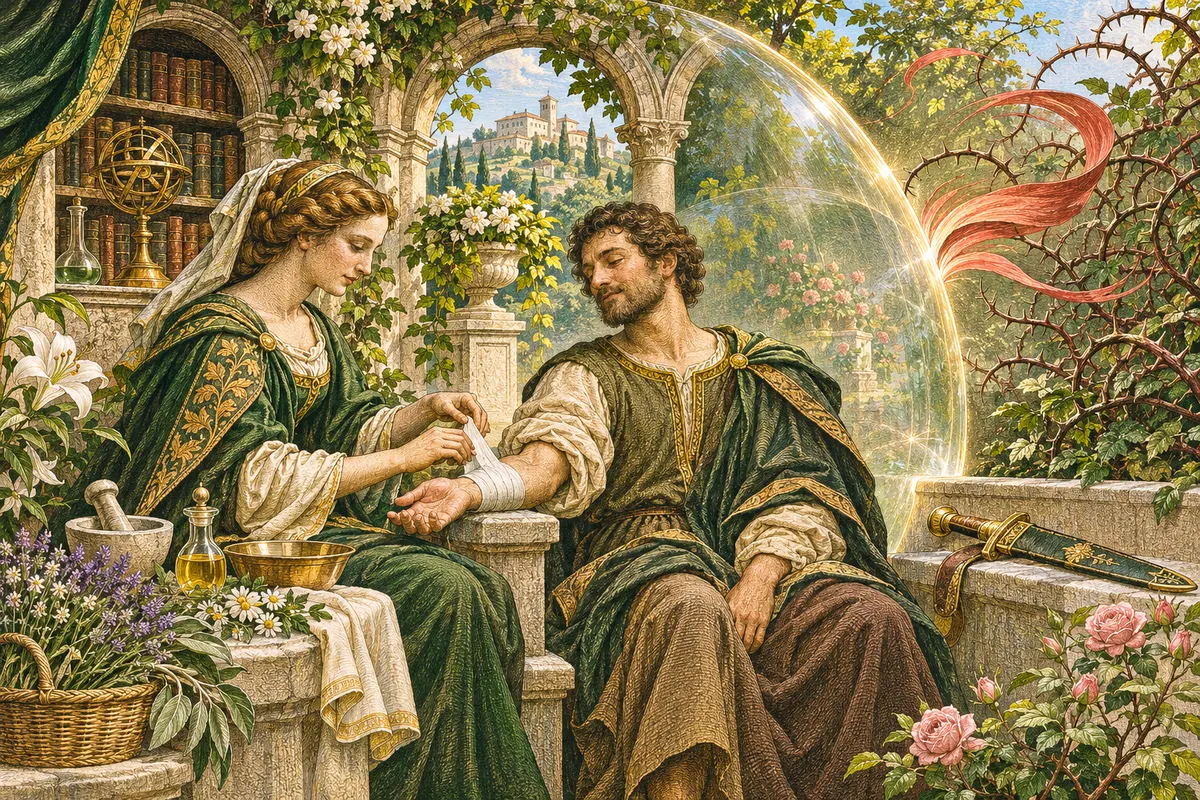
Mars as life, resistance and reversal
Interpret three contrasting Mars captions through their scriptural images and their account of resistance.
12 min · Member lesson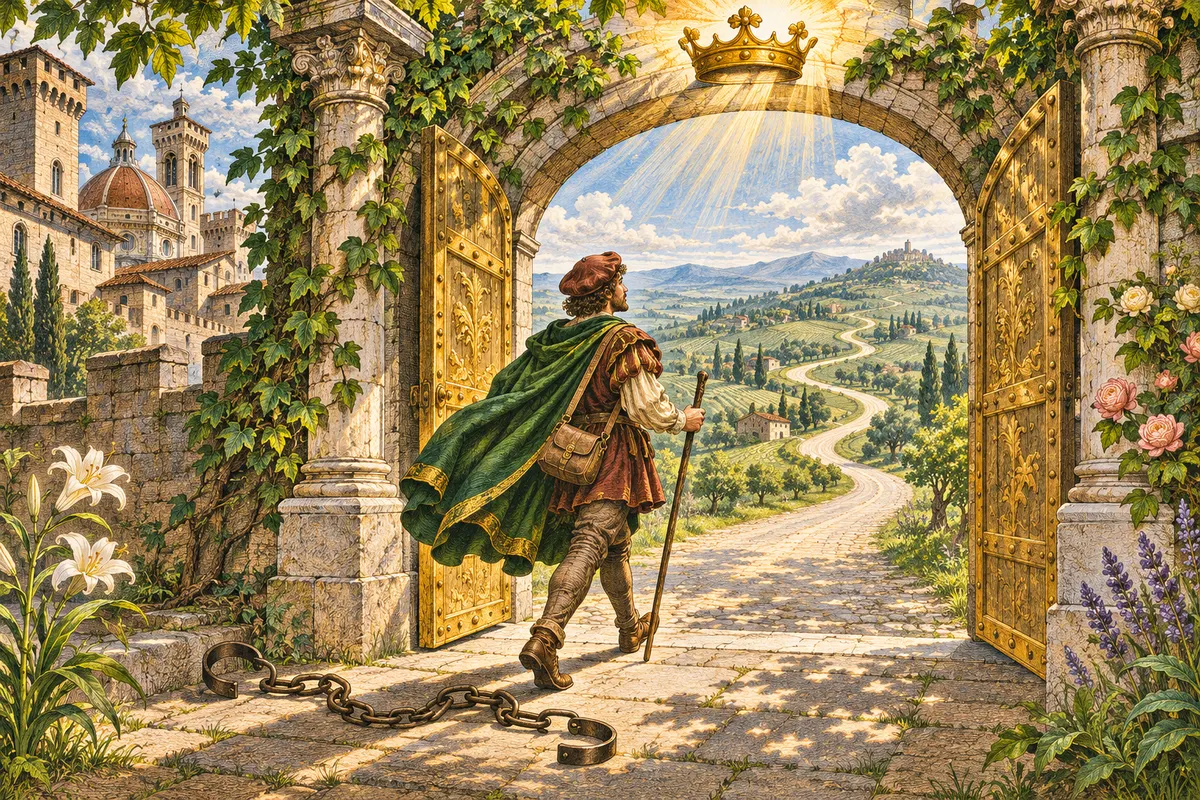
The Sun’s kingdom and broken bonds
Explain how the solar pentacles connect divine representation with authority over status, movement and confinement.
12 min · Member lesson
Venus and the meanings of attraction
Compare the five Venus captions and explain how their scriptural images support distinct claims about relationships.
12 min · Member lesson
Mercury’s knowledge, messages and open doors
Explain the second, fourth and fifth Mercury pentacles as distinct ways of obtaining information or overcoming a barrier.
12 min · Member lesson
The Moon’s gates, waters and sleeping answers
Compare lunar offices by their medium of access: a gate, water, natural properties or sleep.
12 min · Member lesson
A stolen object and an innocent name
Separate the questions asked in the theft chapter and explain the role of its biblical examples of deliverance.
12 min · Member lesson
A carpet for questions
Explain the carpet chapter’s spatial symbolism and distinguish its stated mode of response from visual scrying.
12 min · Member lesson
An audience with a king of spirits
Analyze the audience scene and explain why its license to depart is part of the operation’s structure.
12 min · Member lesson
What are the appearing spirits made of?
Explain how the text relates a spirit’s attributed substance to its appearance and the conditions of encounter.
12 min · Member lesson
The companions have work to do
Explain how disciples participate in the Key’s operations and why instruction, steadiness and written petitions matter.
12 min · Member lesson
From ordinary clothing to vestments of power
Explain the symbolic movement from washing to vesting, and read the master’s crown as a bodily arrangement of divine names.
12 min · Member lesson
A secluded place can become a sacred place
Distinguish the qualities of a suitable location from the ceremonies that make it ready in the Key’s account.
12 min · Member lesson
When the book becomes an instrument
Explain the magical book’s contents and how its dedication differs from simply collecting information.
12 min · Member lesson
Conduct before conjuration
Explain how the Key makes ordinary speech and shared conduct part of preparation.
16 min · Member lesson
The surface beneath a sacred name
Distinguish the Key’s definitions of writing materials and the alternative preparations it permits.
16 min · Member lesson
Wax, earth and the meaning of fresh matter
Explain why the Key distinguishes stored wax from earth prepared anew for each need.
16 min · Member lesson
The tool and the cloth that keeps it
Trace the Key’s distinction between making an instrument, assigning its office and preserving it between uses.
16 min · Member lessonThe source beside you.
Members can explore the complete edition. Begin with the free introduction and its selected source pages.
The complete book awaits.
The Key of Solomon
The complete historical editions and page-turning readers belong to the member library. Free introductions include the source excerpts used in their teaching.
Books & dates
The Key of Solomon the KingThe Key of Solomon · S. L. MacGregor Mathers · 1889
Guided readings and teaching diagrams are original Occult Hall commentary. Imagined scenes are modern illustrations, separate from the historical source pages.
Arbatel of Magic
Olympic governors and the study of secrets