The Tarot of the Bohemians
Twenty-six studies through the complete tarot pack
 AN OCCULT HALL ILLUSTRATION
Enter its world.
Enter the pack as a connected world of images. Papus begins with the Juggler’s four tools and ends with a figure that gathers the whole system into one view. Between them, gestures, vessels, paths, and buildings change their meaning as the sequence unfolds.
This course follows the English edition of 1892. Its twenty-six lessons are our reading path through Papus’s twenty-two major figures, with the minor-card grammar and practical arrangements brought into the final synthesis. The unnumbered Fool appears where he discusses it, before the World; Justice remains VIII and Strength XI.
The book’s claims about an Egyptian origin and a hidden universal science belong to Papus’s nineteenth-century occult synthesis. The lessons explain that system closely, while distinguishing its historical doctrines and divining language from established facts or reliable predictions.
- Twenty-six distinct illustrated lessons
- Complete 1892 English edition
- Exact original pages beside every teaching
- Papus’s own numbering and correspondences
- Minor-card grammar and a full reading arrangement
Twenty-six tarot studies
One free introduction · 25 member lessons
Why this number?
26 lessons form our expanded editorial path through this collection. The course count is a modern study arrangement, not the number of chapters, beings or stages stated by the historical authors.
Your way through.
Follow the teachings step by step, work through concrete examples, and connect each explanation with its cited passage.
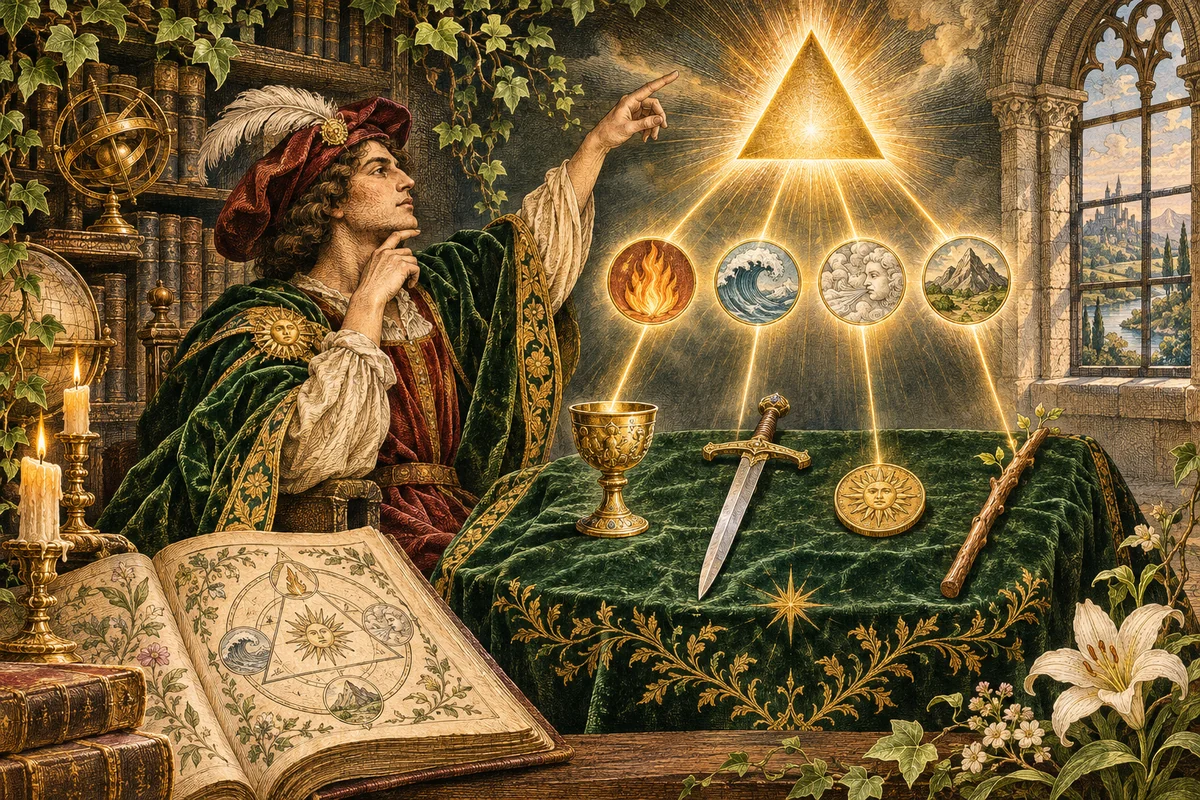
The whole pack upon one table
Read the Juggler as a diagram of Papus’s whole system, and distinguish its symbolic teaching from its later fortune-telling use.
13 min · Free introduction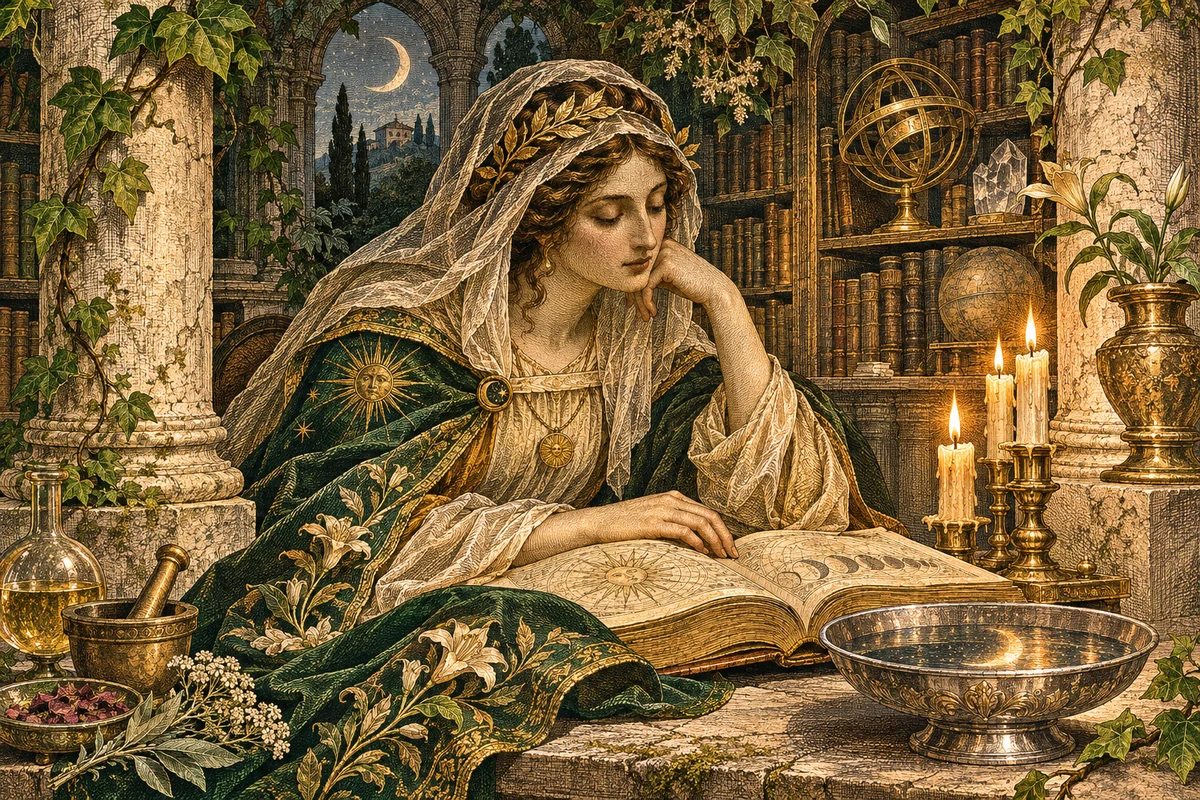
The book behind the veil
Explain how the seated reader, veil, columns, and book together express Papus’s idea of guarded instruction.
13 min · Member lesson
When two principles bear a world
Show how Papus uses the third card to turn a pair of opposites into a living, embodied result.
13 min · Member lesson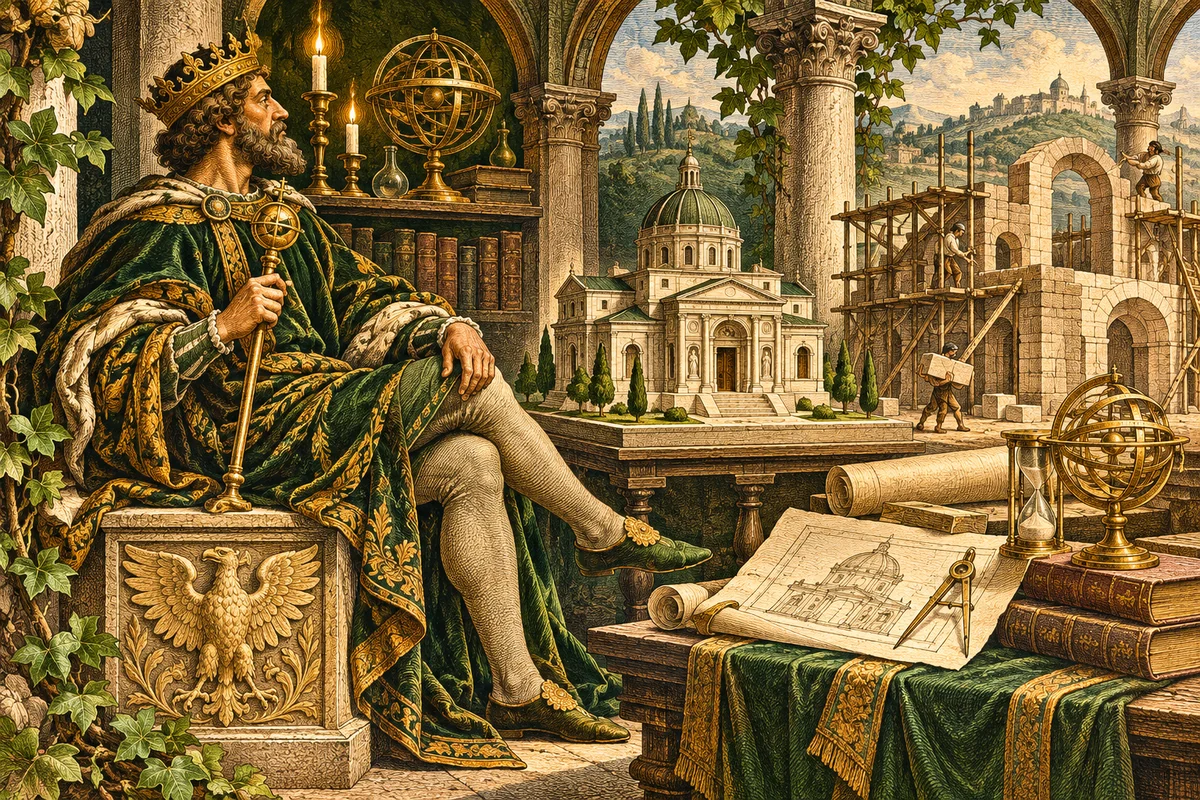
The throne at the turning point
Explain why Papus treats four as both the completion of one group and the active opening of another.
13 min · Member lesson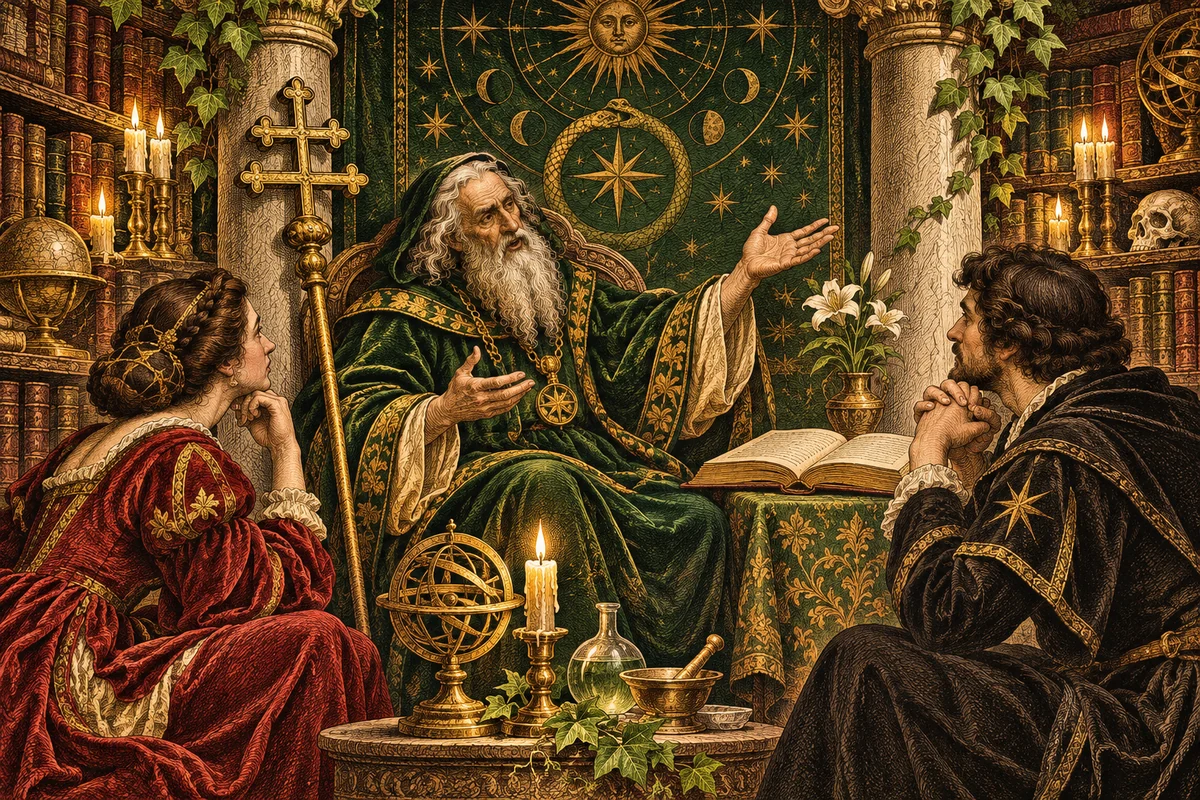
When the closed school begins to speak
Compare the Priestess’s guarded book with the Pope’s spoken teaching, and explain the role of a mediator in Papus’s second ternary.
13 min · Member lesson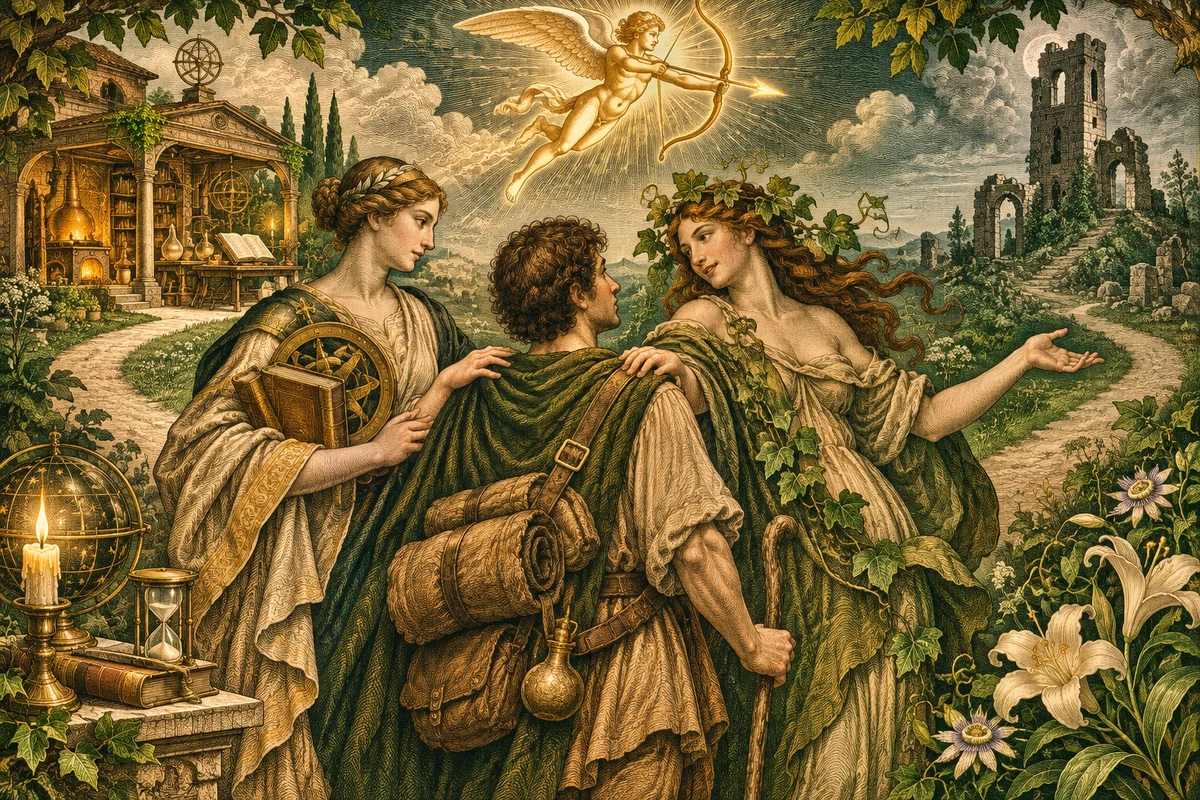
At the meeting of the two roads
Read the Lovers as a scene of divided agency, and distinguish conflict, decision, and productive union in Papus’s account.
13 min · Member lesson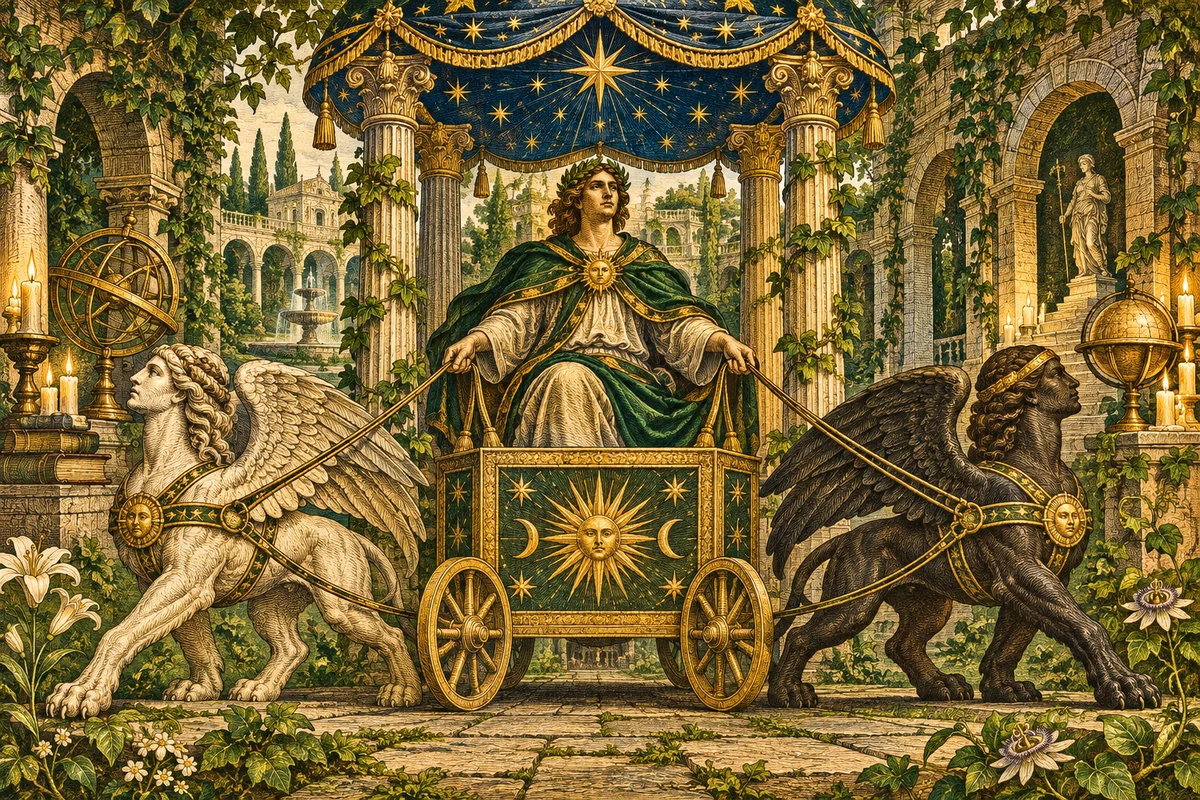
The vehicle that gathers the forces
Explain how a directing center, paired forces, and four supports make the Chariot a picture of organized realization.
13 min · Member lesson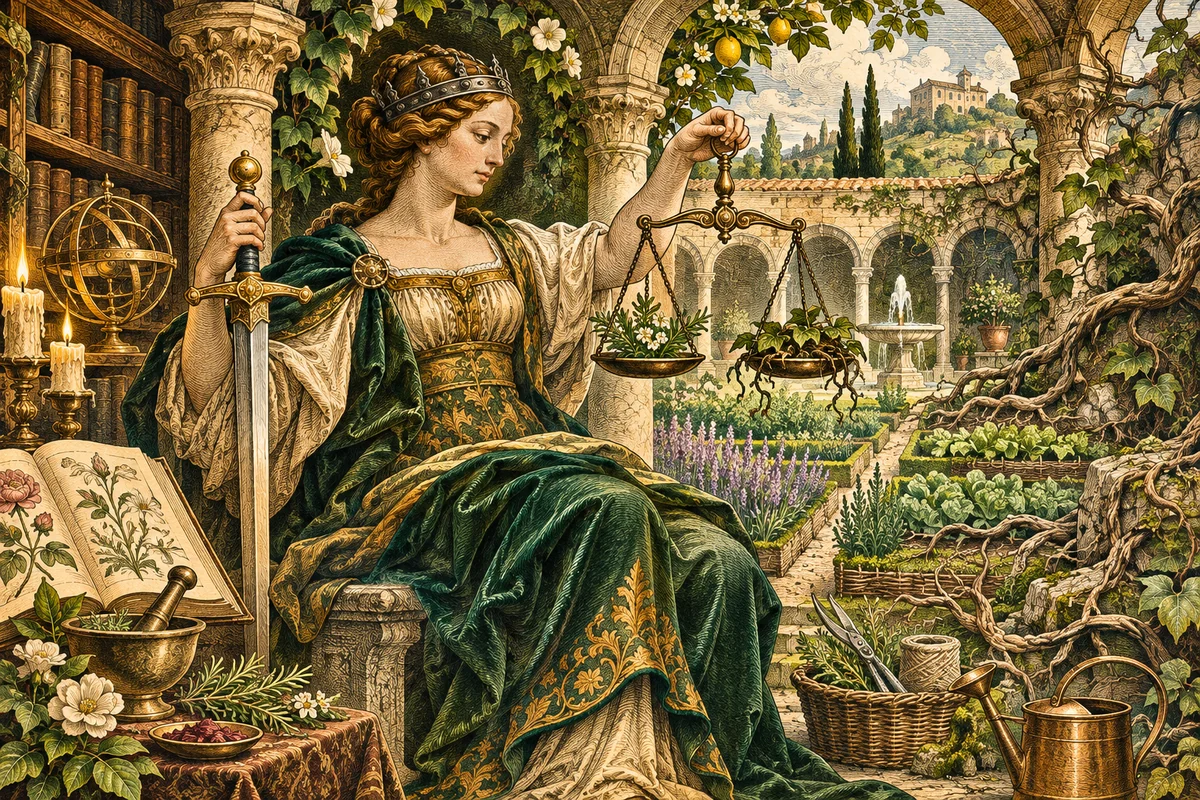
A balance that must be maintained
Read Justice through continuing work, and distinguish the different functions of sword and scales in Papus’s image.
13 min · Member lesson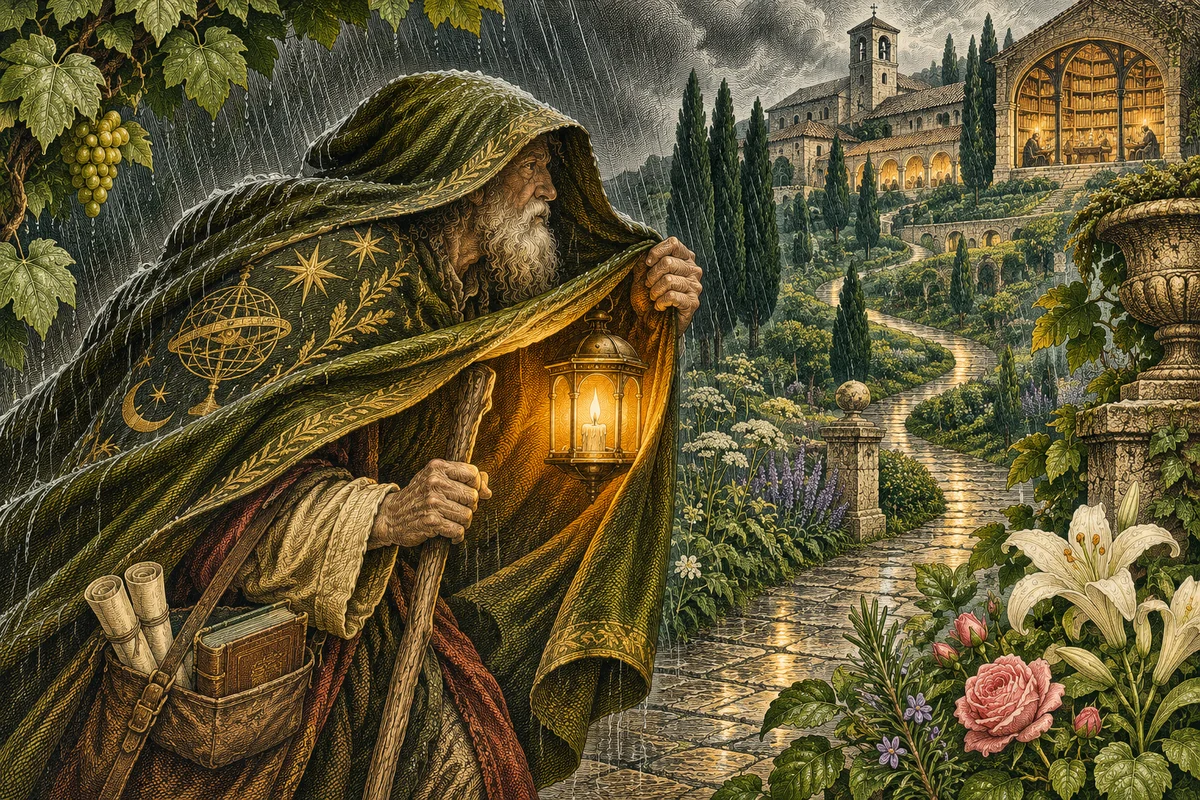
The light carried inside experience
Explain the different jobs of the Hermit’s lamp, mantle, and staff, and trace his relation to the earlier traveler.
13 min · Member lesson
What remains while the wheel turns
Distinguish the Wheel’s opposed movements from its ruling balance, and apply Papus’s recurring three-part pattern without flattening it into luck.
13 min · Member lesson
Power without visible struggle
Distinguish potential force from its expression, and explain why Papus’s Strength shows calm contact rather than a violent contest.
13 min · Member lesson
The figure that reverses the view
Read the figure’s geometry and position within Papus’s sequence, without confusing symbolic discipline with a physical practice.
13 min · Member lesson
What the scythe changes
Explain why Papus places destruction beside regeneration, and distinguish a change of form from a prediction about a person’s life.
13 min · Member lesson
The stream that keeps its continuity
Read the uninterrupted pour as a relation among source, transfer, and receiver, then compare it with the more open circulation of the Star.
13 min · Member lesson
The circle around the will
Identify the reversals linking the Devil to earlier figures, and explain the relation between a limit and the freedom exercised within it.
13 min · Member lesson
When an invisible order becomes a building
Explain why Papus reads the Tower through materialization and fall, and trace the architectural motif into the Moon and Sun.
13 min · Member lesson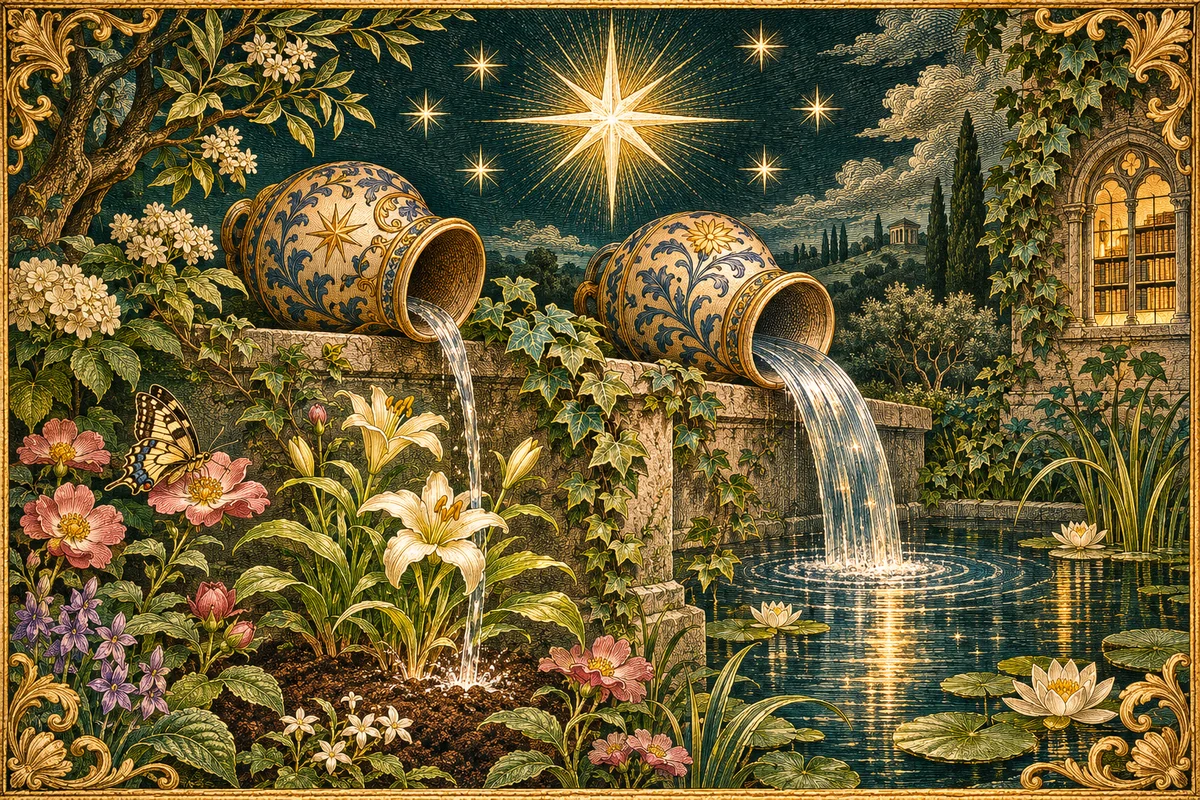
The water returned to the earth
Compare the Star’s open pour with Temperance’s contained transfer, and explain how Papus places hope after destruction.
13 min · Member lesson
A world lit by reflection
Read the field, towers, path, and animals as a bounded scene of reflected light, and distinguish Papus’s cosmological claim from a practical judgment about evidence.
13 min · Member lesson
The first warmth of the return
Explain the shift from reflected to direct light while recognizing that Papus’s Sun remains within a material enclosure.
13 min · Member lesson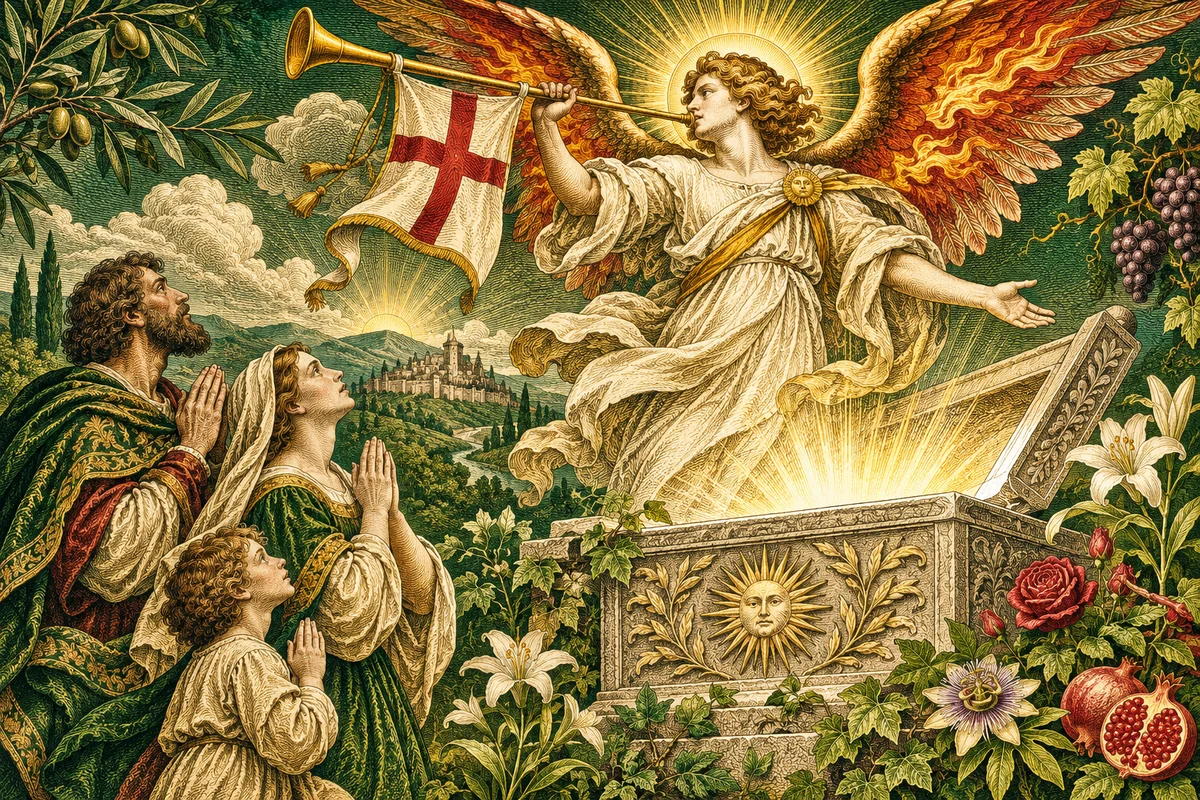
The call that sets life in motion
Read the trumpet, open tomb, and responding figures as a sequence of awakening, then distinguish illumination from self-directed movement.
13 min · Member lesson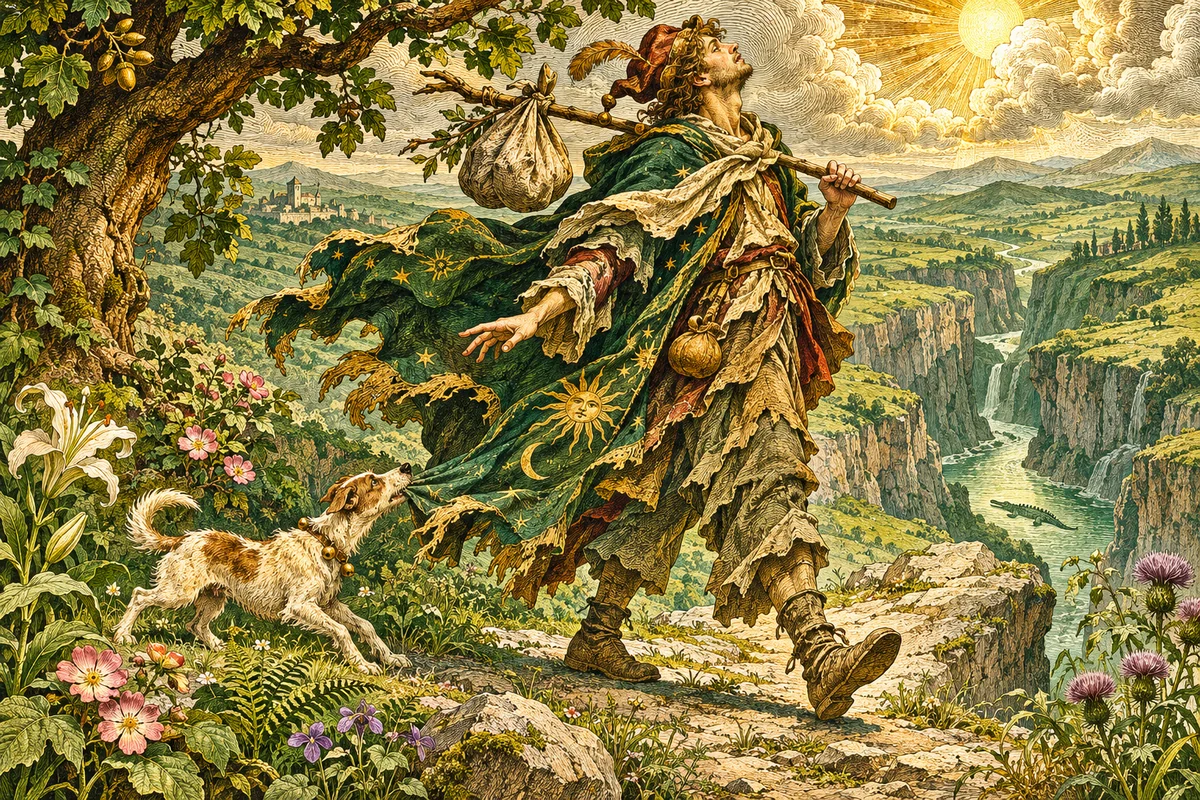
The traveler who does not look
Explain why Papus discusses the unnumbered Fool near the end, and distinguish its unstable motion from the movement of the Chariot and Devil.
13 min · Member lesson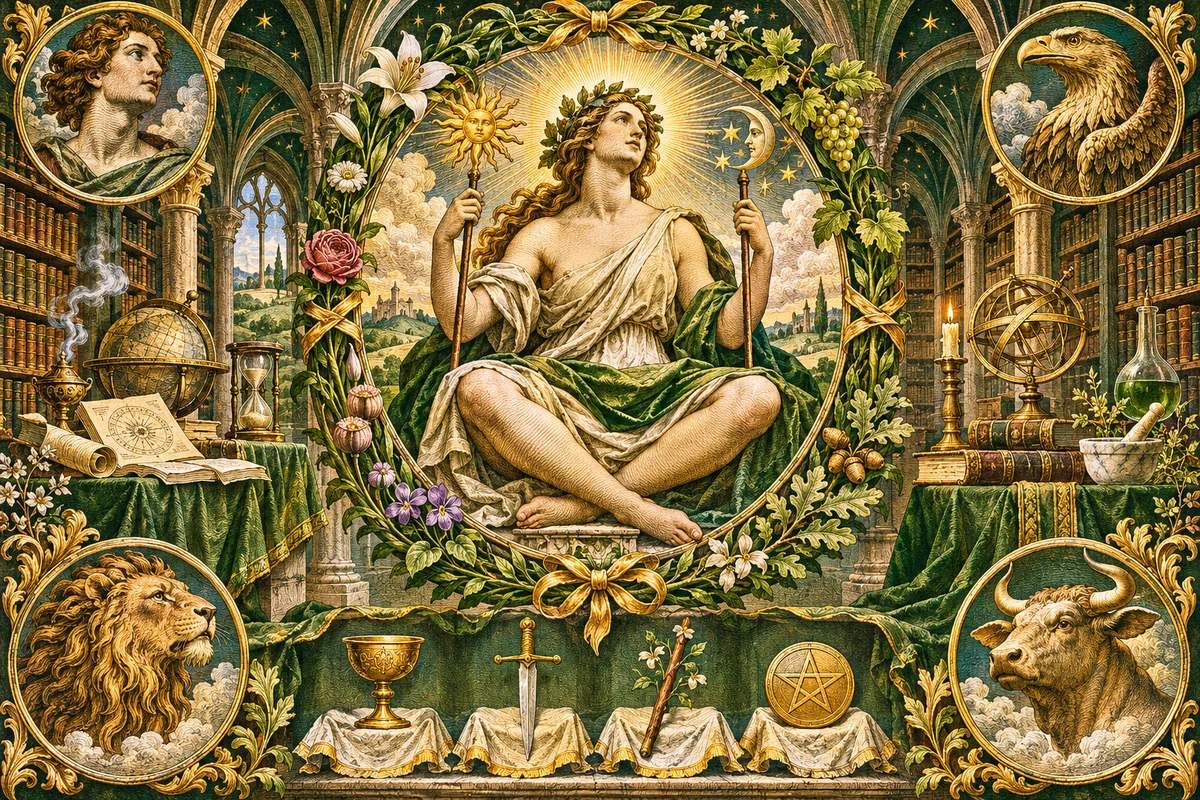
The pack closes into a world
Reconstruct the World as a summary, derive a minor-card reading from Papus’s grammar, and distinguish card identities from positions in his larger layout.
13 min · Member lesson
Two operations hidden in one number
Distinguish Papus’s two numerical operations and reproduce his explanation of four as a renewed unity.
14 min · Member lesson
The four courts and the ten numbers
Map Papus’s court figures onto numerical families while distinguishing affinity from narrative character.
14 min · Member lesson
Why Papus’s sevens overlap
Reconstruct the three overlapping septenaries and the final ternary without counting shared cards twice.
14 min · Member lesson
When the book changes its way of knowing
Explain the shift into Papus’s divinatory section and distinguish his historical claims from the procedures he actually supplies.
14 min · Member lessonThe source beside you.
Members can explore the complete edition. Begin with the free introduction and its selected source pages.
The complete book awaits.
The Tarot of the Bohemians
The complete historical editions and page-turning readers belong to the member library. Free introductions include the source excerpts used in their teaching.
Books & dates
The Tarot of the BohemiansPapus · A. P. Morton translation · 1892
Guided readings and teaching diagrams are original Occult Hall commentary. Imagined scenes are modern illustrations, separate from the historical source pages.
The Hand of the Microcosm
Eleven studies in Richard Saunders’s 1653 Chiromancie