The Triumphant Chariot of Antimony
Eleven chambers of matter, fire and Hermetic interpretation
 AN OCCULT HALL ILLUSTRATION
Enter its world.
This book places prayer, observation, skilled work, and transforming matter inside one intellectual world. The main text speaks under the name Basil Valentine; Kerckring’s annotations question, explain, and sometimes contest that voice. The appended True Book introduces a language of one matter and many names.
These eleven lessons examine historical theory, images, and claims. Antimony and several other substances discussed are hazardous; the course supplies no preparation or dosing instructions. All 176 numbered pages and four apparatus plates from this copy are preserved. Its frontispiece portrait is absent and one plate is cropped at the scan edge. Eleven is our editorial learning path, not the original chapter count.
- Eleven lessons with historical source pages
- Four engraved apparatus plates
- Basil Valentine, Kerckring, and Synesius as distinct voices
Eleven transformations
One free introduction · 10 member lessons
Why this number?
11 lessons form our expanded editorial path through this collection. The course count is a modern study arrangement, not the number of chapters, beings or stages stated by the historical authors.
Your way through.
Follow the teachings step by step, work through concrete examples, and connect each explanation with its cited passage.
Five foundations of the work
Explain the five foundations and distinguish Basil’s main voice from Kerckring’s annotations.
12 min · Free introduction
The hidden life of matter
Explain the text’s layered use of spirit and its sulfur–mercury–salt account of matter.
12 min · Member lesson
Vulcan and the test of experience
Explain Vulcan’s role and distinguish an asserted experience from a demonstrated universal law.
12 min · Member lesson
How to read an alchemical workshop
Read the apparatus plates as visual evidence while distinguishing pictured form from inferred operation.
12 min · Member lesson
The star hidden in the metal
Separate the visible star, the named regulus, and the stronger conclusions drawn from them.
12 min · Member lesson
Two stones, different claims
Explain the difference in scope between the Stone of Fire and the greater stone.
12 min · Member lesson
One matter, many names
Read the one-matter doctrine, the sequence of colors, and the Hermetic epilogue as a distinct appended text.
12 min · Member lesson
The balsam of the soul
Explain how the author joins Christian prayer and the language of substances while keeping spiritual and bodily aims distinguishable.
11 min · Member lesson
When a secret becomes workmanship
Explain the author’s distinction between hidden art, published knowledge, skilled operation, and claims to authority.
11 min · Member lesson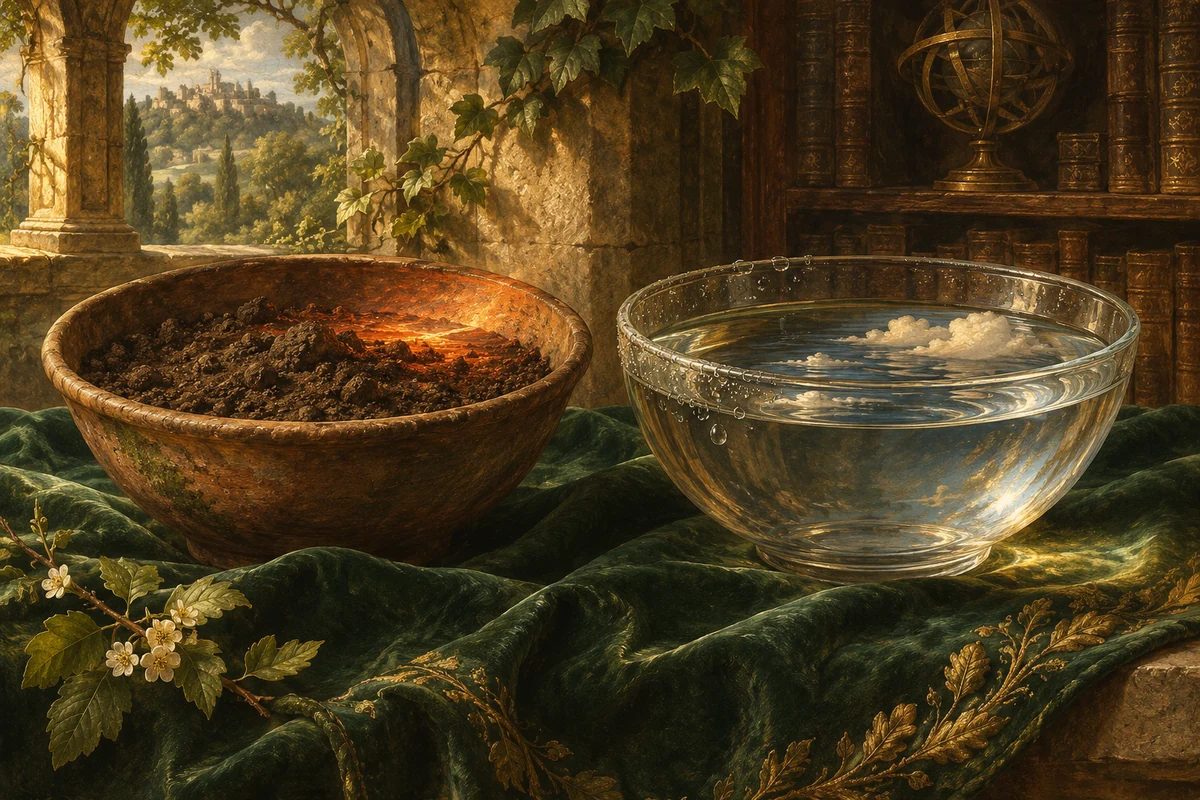
Two visible elements, four effective qualities
Explain how the Synesius appendix claims that two apparent components can carry four elemental qualities.
11 min · Member lesson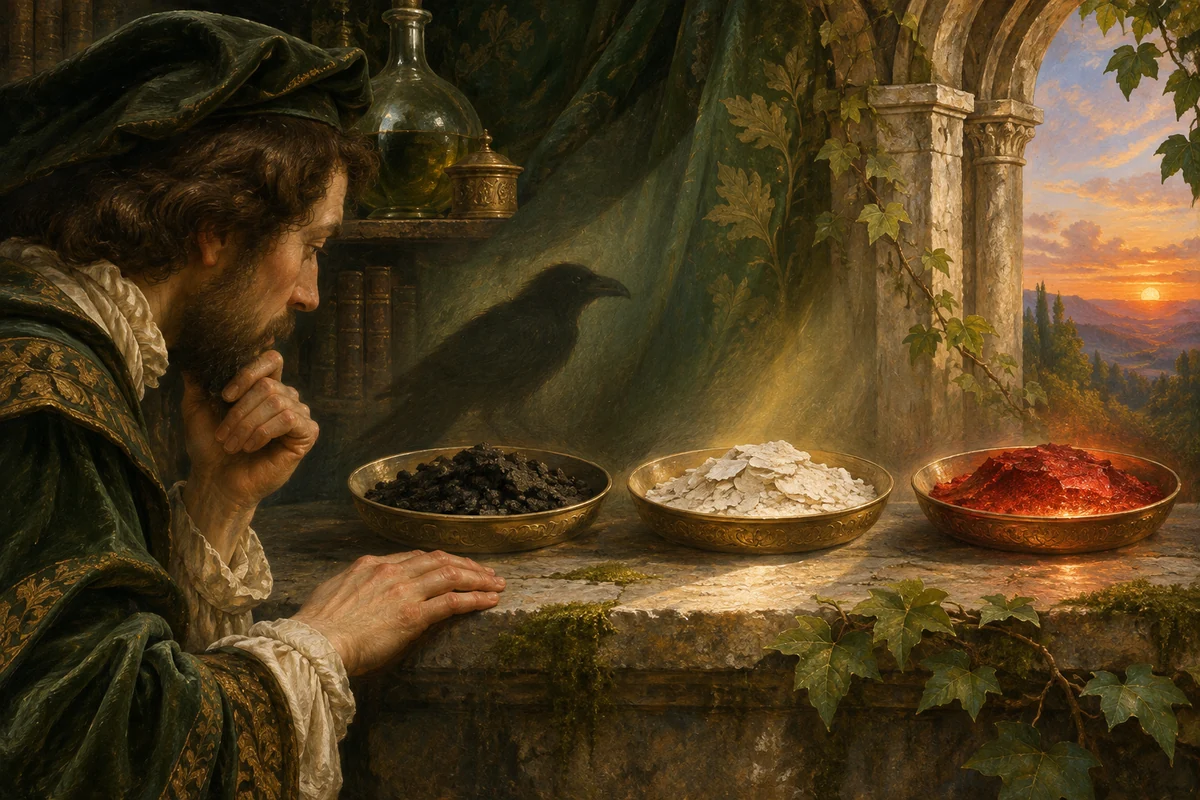
Black, white, and red as judgments
Read the appendix’s color language as a sequence of interpreted conditions, distinguishing observation, symbolic name, and claim of completion.
11 min · Member lessonThe source beside you.
Members can explore the complete edition. Begin with the free introduction and its selected source pages.
The complete book awaits.
The Triumphant Chariot of Antimony
The complete historical editions and page-turning readers belong to the member library. Free introductions include the source excerpts used in their teaching.
Books & dates
The Triumphant Chariot of AntimonyAttributed to Basil Valentine · 1678
Guided readings and teaching diagrams are original Occult Hall commentary. Imagined scenes are modern illustrations, separate from the historical source pages.
Lucidarium in arte magica
The ordered world of hours, angels and seals