The Secrets of Solomon
Seventeen thresholds through spirits, pentacles and the little world
 AN OCCULT HALL ILLUSTRATION
Enter its world.
The Secrets of Solomon survives here in manuscript Rps 3352 II, a seventeenth-century Latin witness. Its attribution to Solomon is part of its claim to authority, not its historical date.
Our seventeen lessons follow the book’s changing explanations: personal characters and agreements, delegated spirit offices, celestial and elemental intelligences, material preparation, and the stone called a little world. Each lesson connects original commentary with the manuscript pages and an individual modern illustration.
The complete 116-page digitization is available in the reader. Thirteen misoriented scans have been rotated without changing their encoded images; every source page remains in its original sequence. Empty or unfinished diagrams remain visible as evidence of this particular copy.
- A complete 116-page Latin manuscript facsimile
- Seventeen lessons with original illustrations and close-reading exercises
- Spirit offices, thirteen governors and the pentacle gallery
- The stone of the art as a human-shaped microcosm
Seventeen secrets
One free introduction · 16 member lessons
Why this number?
17 lessons form our expanded editorial path through this collection. The course count is a modern study arrangement, not the number of chapters, beings or stages stated by the historical authors.
Your way through.
Follow the teachings step by step, work through concrete examples, and connect each explanation with its cited passage.
A character belongs to someone
Explain why the opening character identifies an operator and depends on a relationship, rather than working as an isolated picture.
12 min · Free introduction
Three rulers and their delegates
Read the hierarchy as an arrangement of authority, offices and claimed appearances.
12 min · Member lesson
Read a spirit by its office
Compare the catalogue’s promised results instead of reducing each entry to a name and seal.
12 min · Member lesson
A storm or the appearance of one?
Distinguish environmental claims, material correspondences and staged appearances in the weather secrets.
12 min · Member lesson
A voice from the absent dead
Explain the roles of identity, an intermediary and a limited encounter in the manuscript’s necromantic claim.
12 min · Member lesson
Nine heavens and four elements
Read the thirteen governors as a cosmological arrangement rather than an arbitrary list of names.
12 min · Member lesson
An invisible curriculum
Compare the branches of knowledge and practical powers assigned to the intelligences.
12 min · Member lesson
Why matter accompanies words
Explain the manuscript’s theory that material instruments and spiritual address must work together.
12 min · Member lesson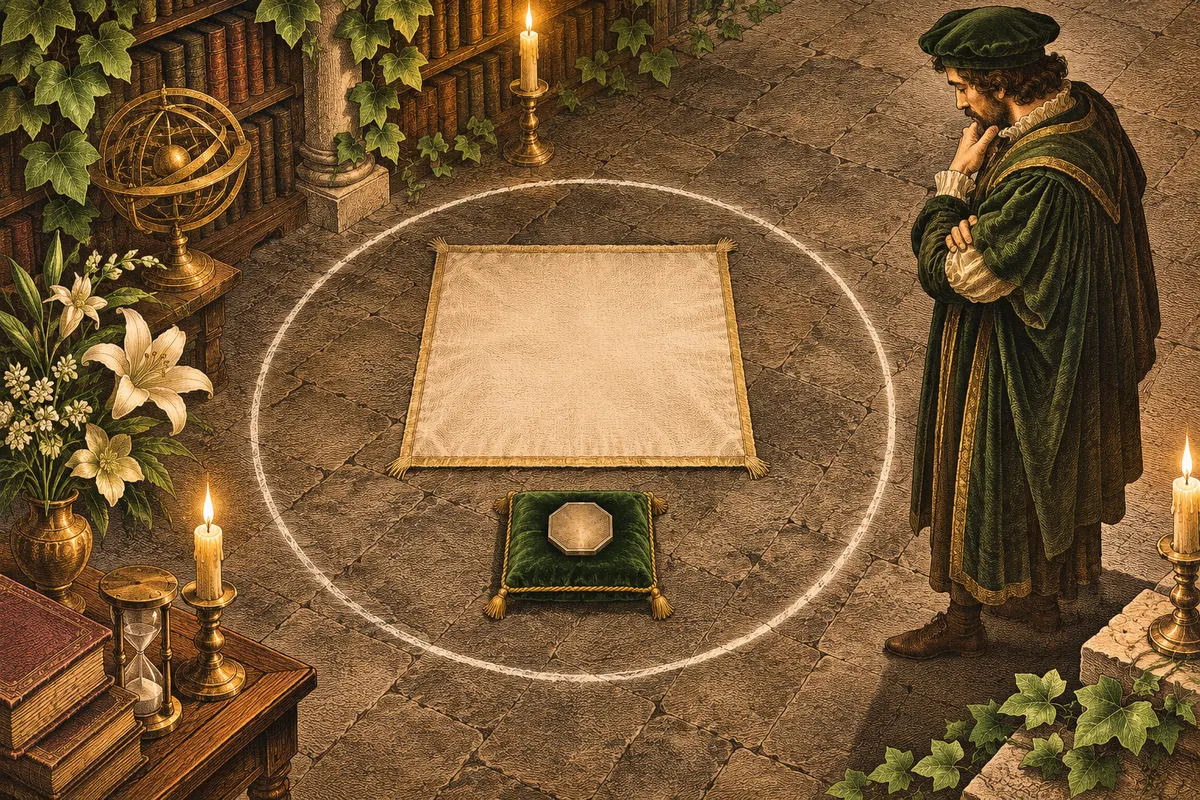
A place and a portable credential
Distinguish the circle, the great pentacle and particular pentacles by their stated roles.
12 min · Member lesson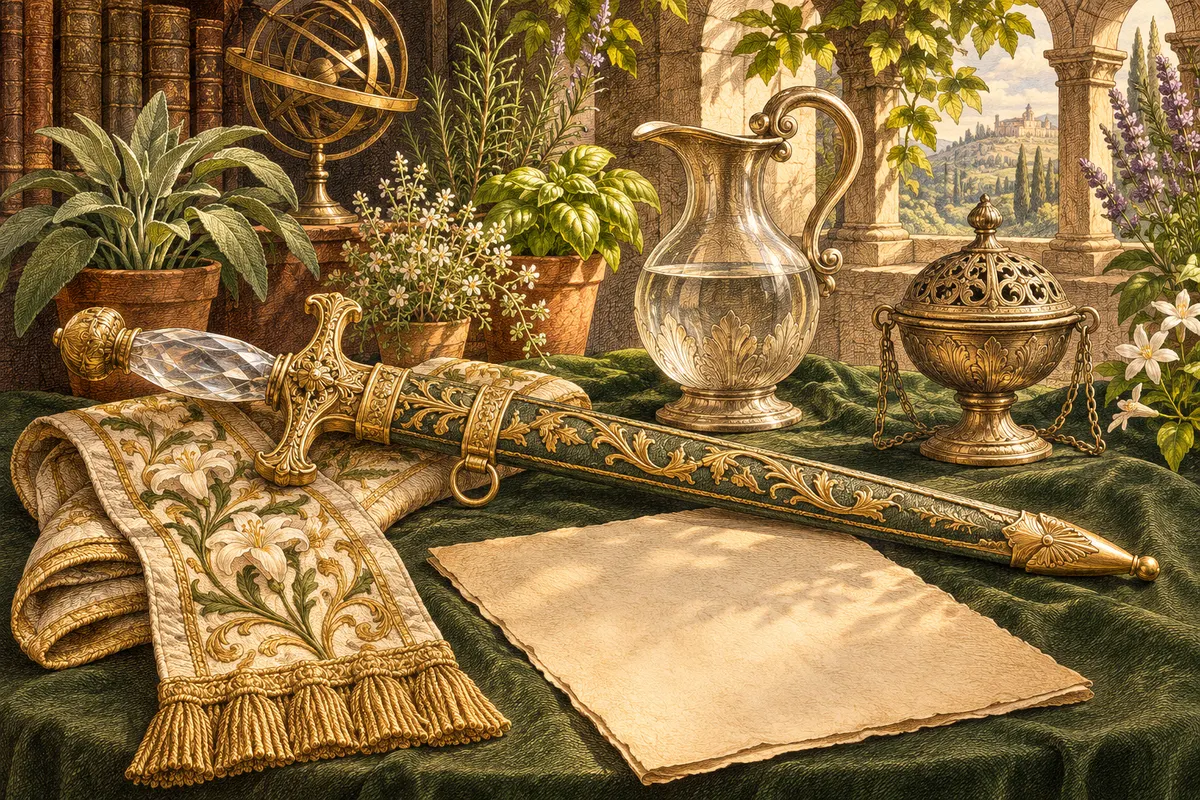
When ordinary things become instruments
Explain how the manuscript distinguishes making, preparing and dedicating its material instruments.
12 min · Member lesson
Different promises within one gallery
Compare study, dream knowledge and courtly honour in the manuscript’s pentacle entries.
12 min · Member lesson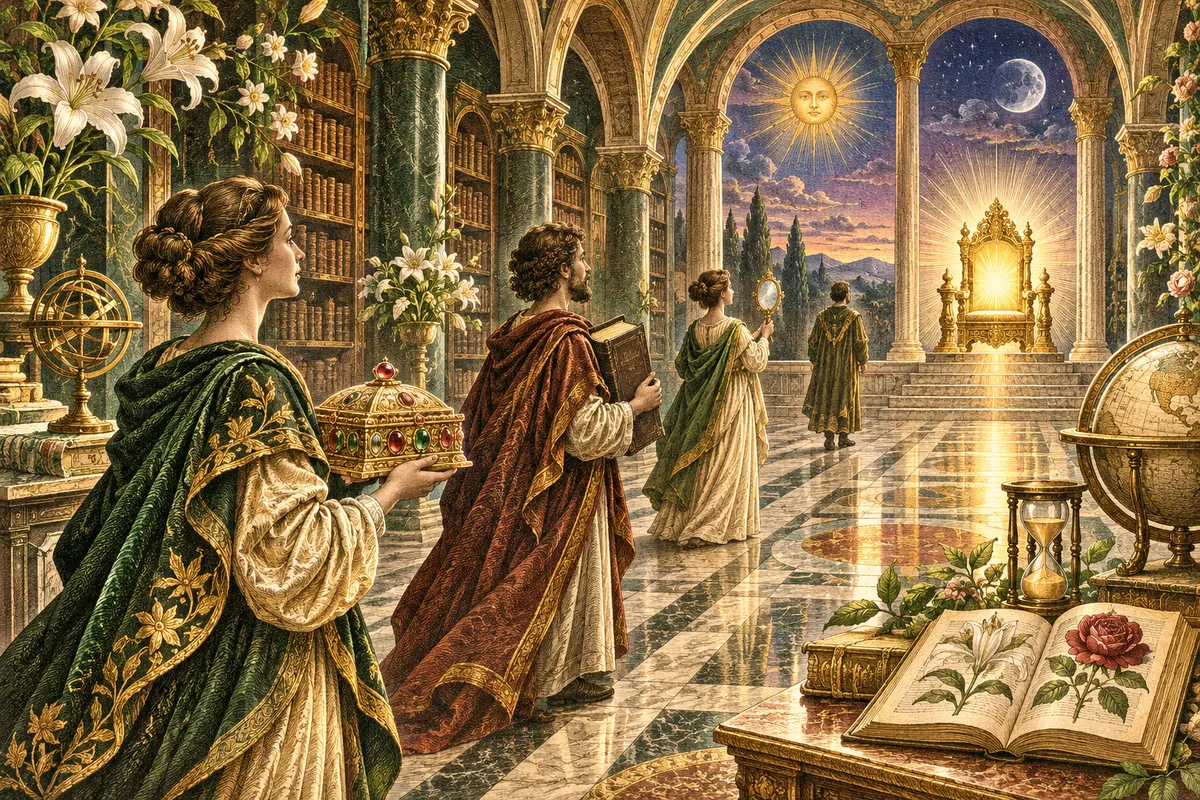
A governor is not every minister
Explain the third book’s three levels of spirit and its division of planetary offices.
12 min · Member lesson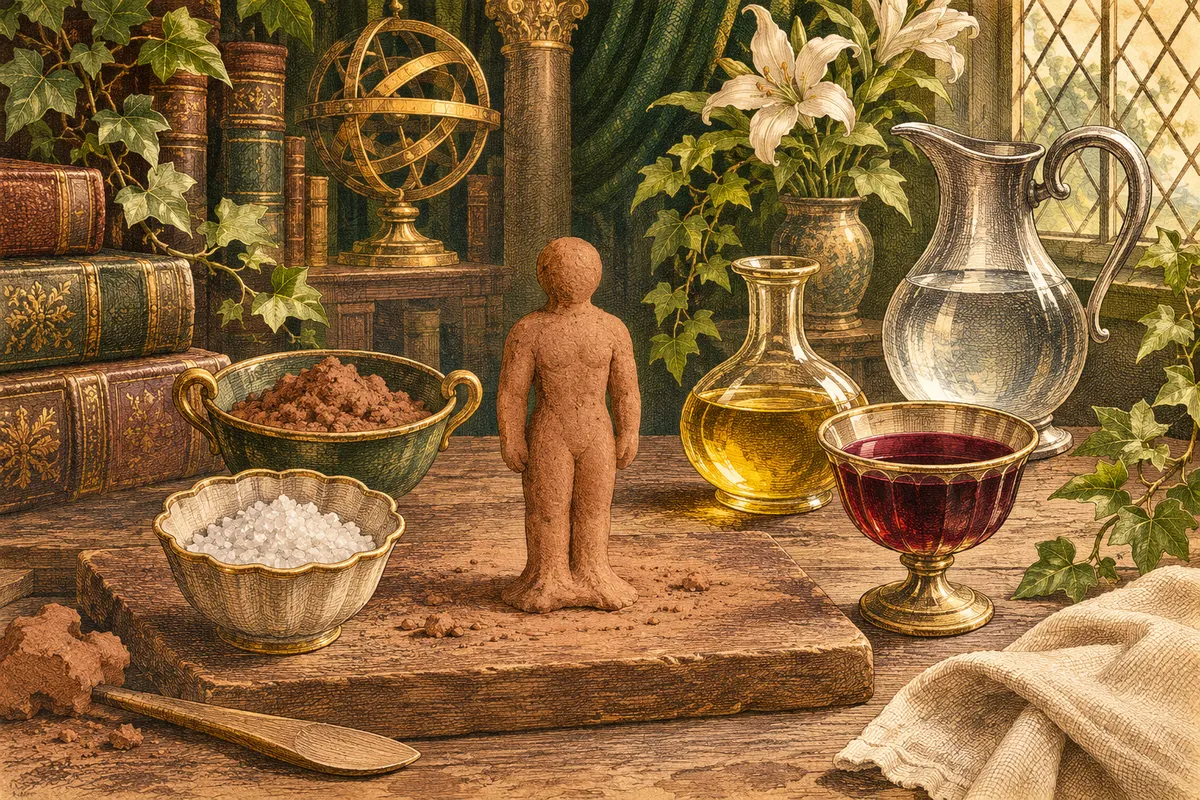
A small image of the world
Explain why the stone is a human-shaped microcosm prepared through four distinct stages.
12 min · Member lesson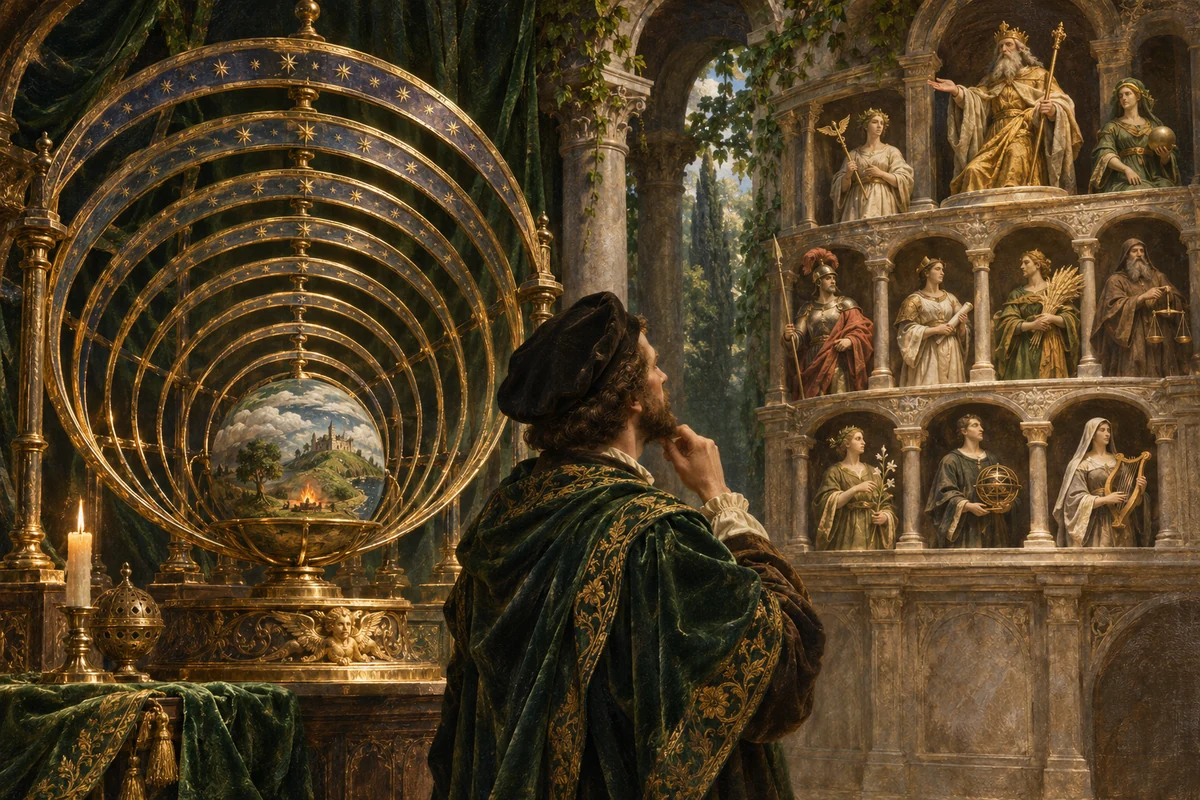
A jurisdiction is not an office
Distinguish the second book’s cosmic regions from the tasks attributed to their governors and ministers.
10 min · Member lesson
Learning an art, changing a thing
Separate instruction, discovery, protection, and transformation within the intelligences’ catalogue of sciences.
10 min · Member lesson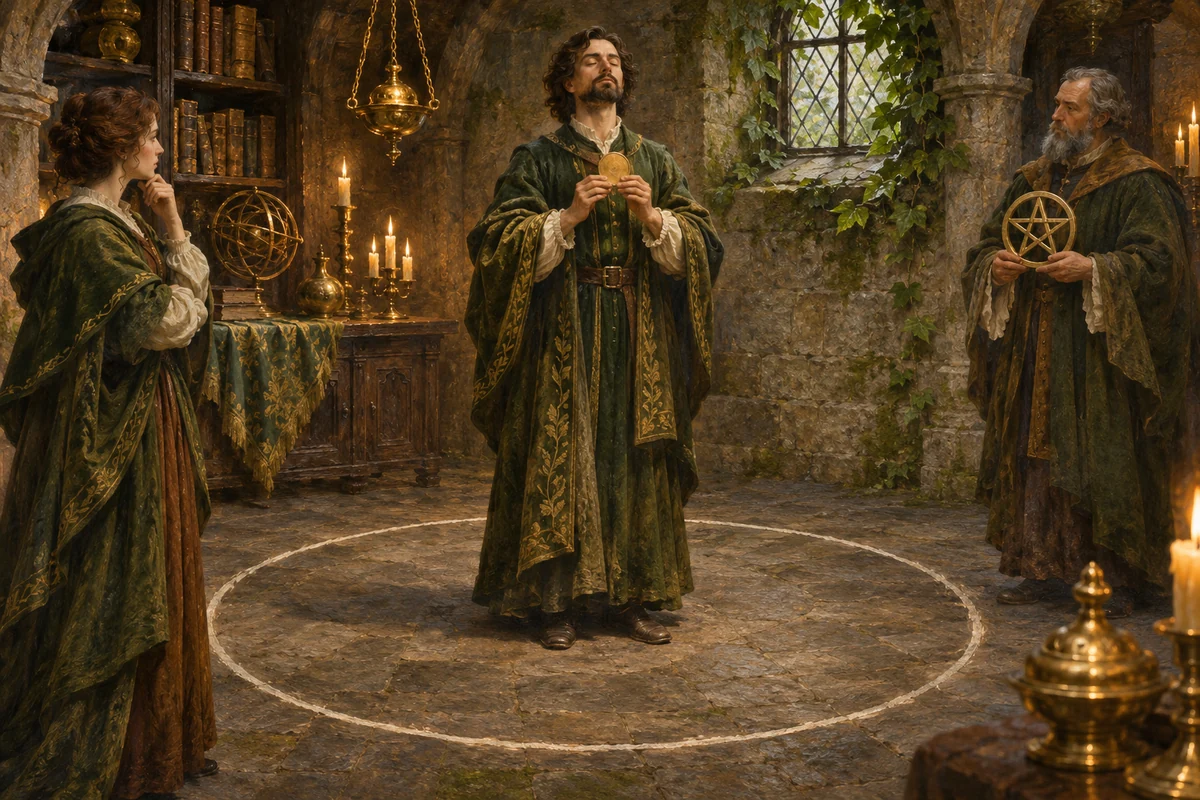
Place, token, and person
Explain why a circle, a pentacle, and the operator’s disposition cannot replace one another in the second book.
10 min · Member lesson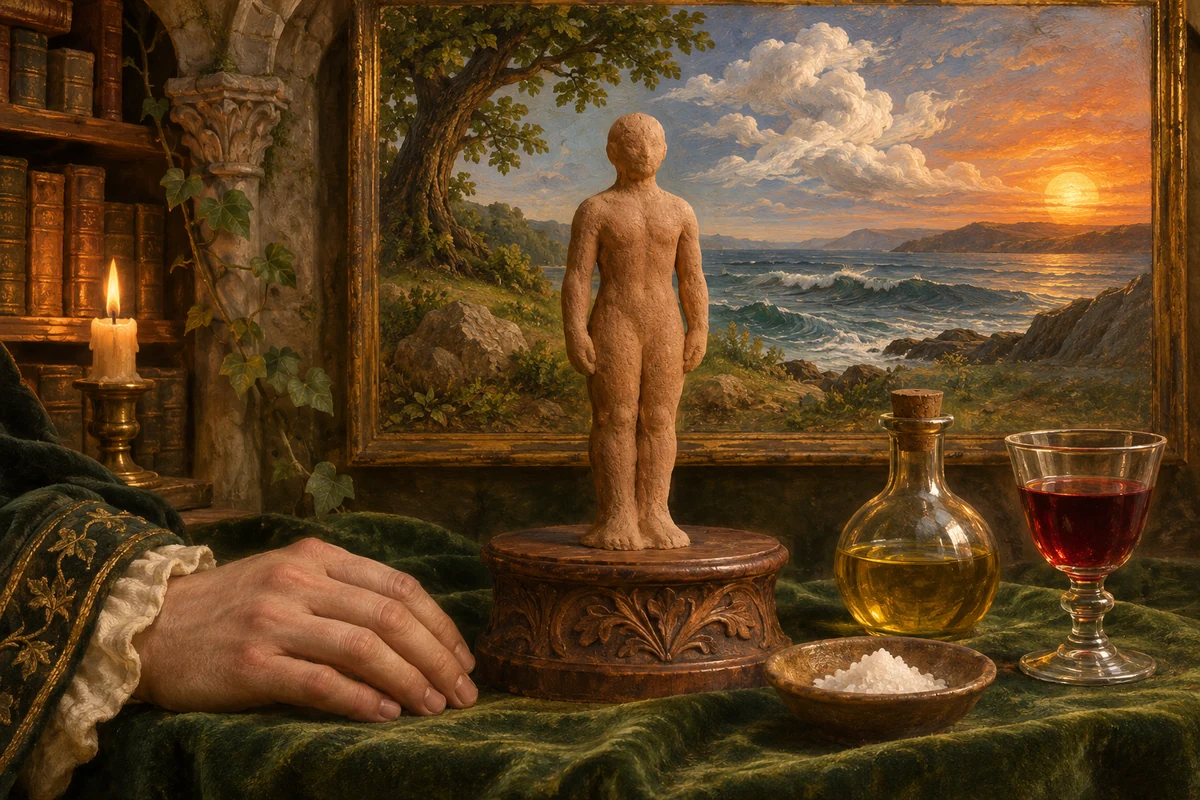
A human figure made into a little world
Explain the stone’s fourfold composition, human shape, and staged identity without confusing it with an alchemical transmutation stone.
10 min · Member lessonThe source beside you.
Members can explore the complete edition. Begin with the free introduction and its selected source pages.
The complete book awaits.
The Secrets of Solomon
The complete historical editions and page-turning readers belong to the member library. Free introductions include the source excerpts used in their teaching.
Books & dates
The Secrets of Solomon · complete available manuscript facsimileThe Secrets of Solomon · seventeenth century
Guided readings and teaching diagrams are original Occult Hall commentary. Imagined scenes are modern illustrations, separate from the historical source pages.
L’Art Magique
An early French witness to the Verum tradition