The Agrippa Collection
Follow the three books in order, or start with a question that catches your attention.
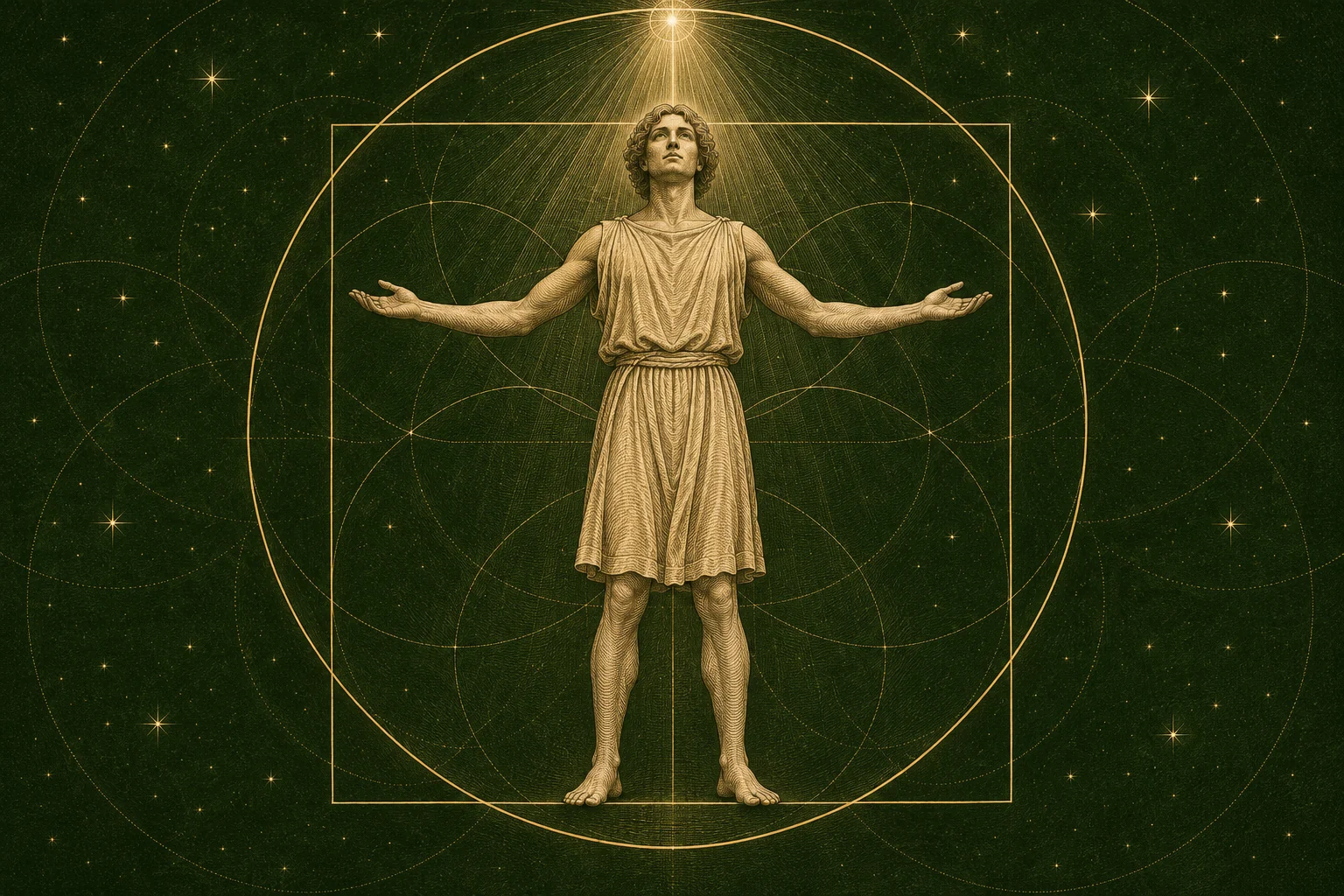 MODERN INTERPRETATION
The hand as a little cosmos.
Look closely at Agrippa’s hand diagram, its planetary signs, and the proportions of the human body.
Explore the handThe complete books
All 199 chapters and the Latin and English editions, included with library membership.
Open the editions28 LESSONS
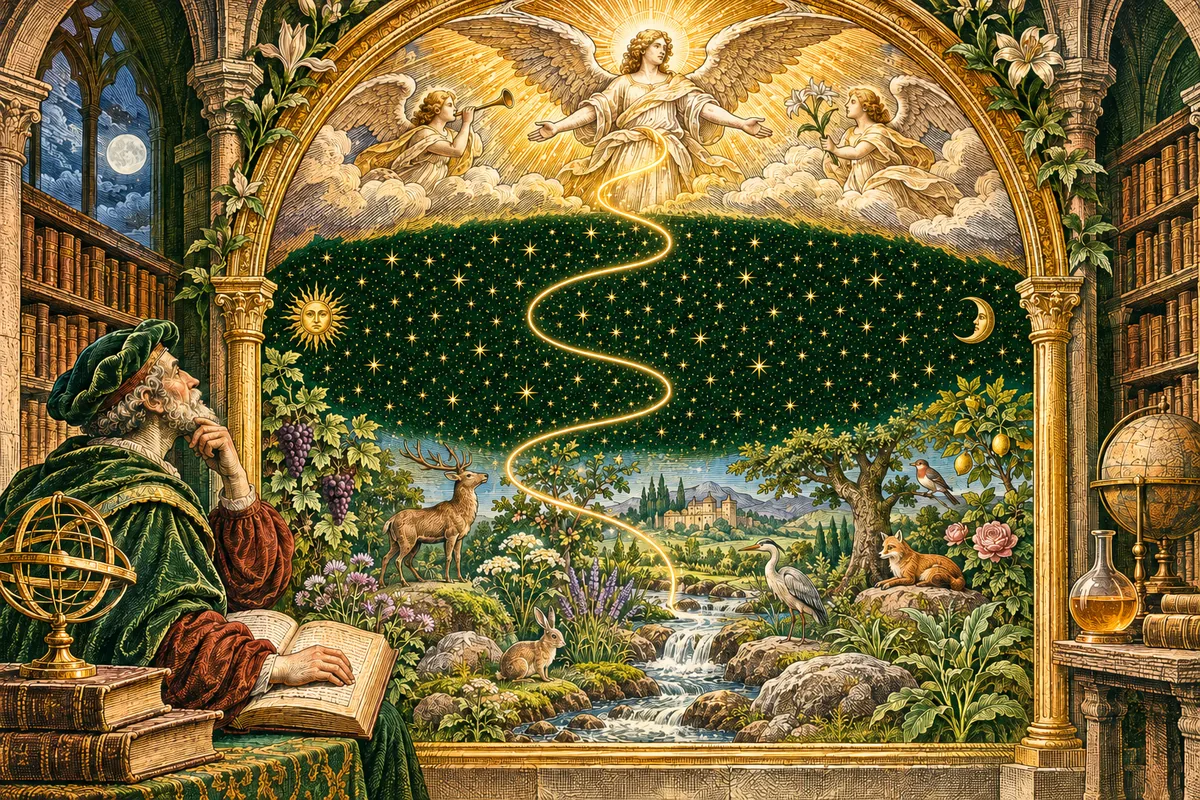
A map of the three worlds
Use the first page to draw Agrippa’s chain of causes, then turn the arrows around to see the course of study he proposes.
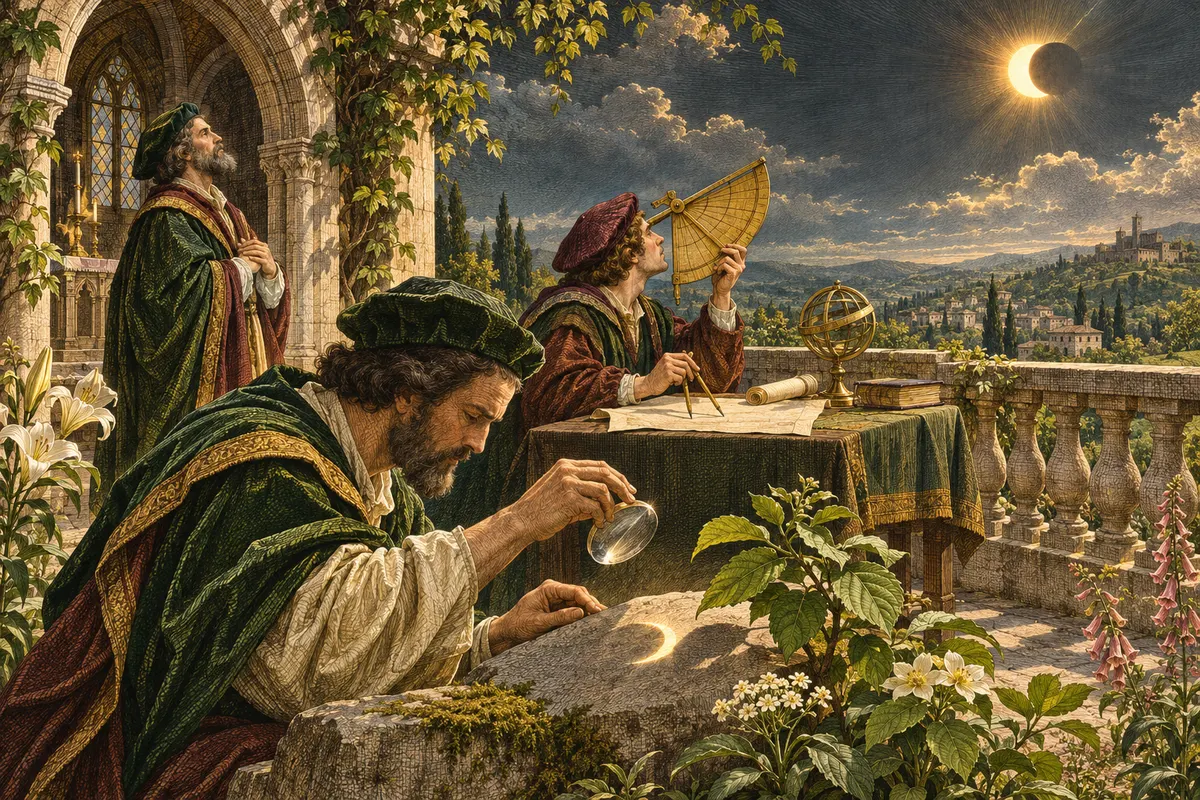
What should a student of magic learn first?
Use an eclipse to separate three kinds of expertise in Agrippa’s curriculum.
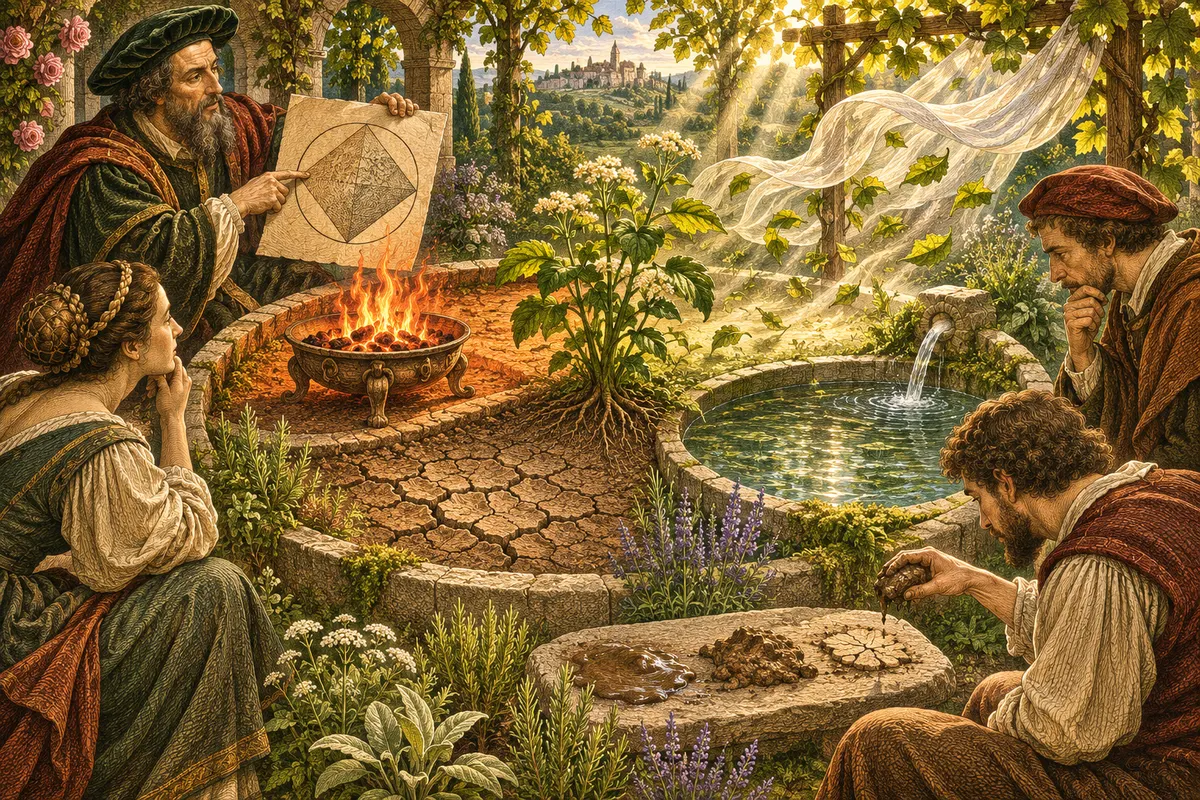
What holds the four elements together?
Draw Agrippa’s four-element diagram, then use a patch of drying mud to test what his diagram explains.

How can one fire have so many effects?
Compare three places Agrippa finds fire and decide which parts of his argument you could reach by observation.
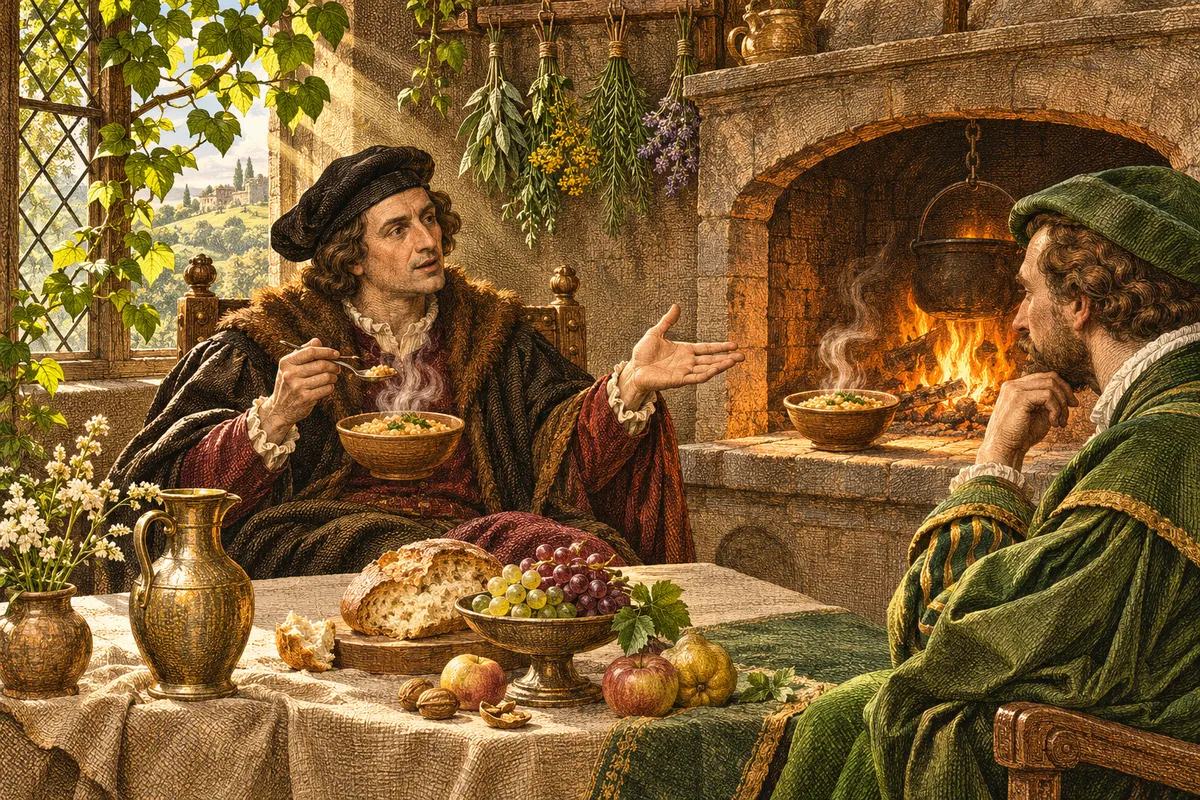
Why compare a stomach with a fireside?
Use Agrippa’s dinner by the hearth to reconstruct an argument for hidden natural powers.
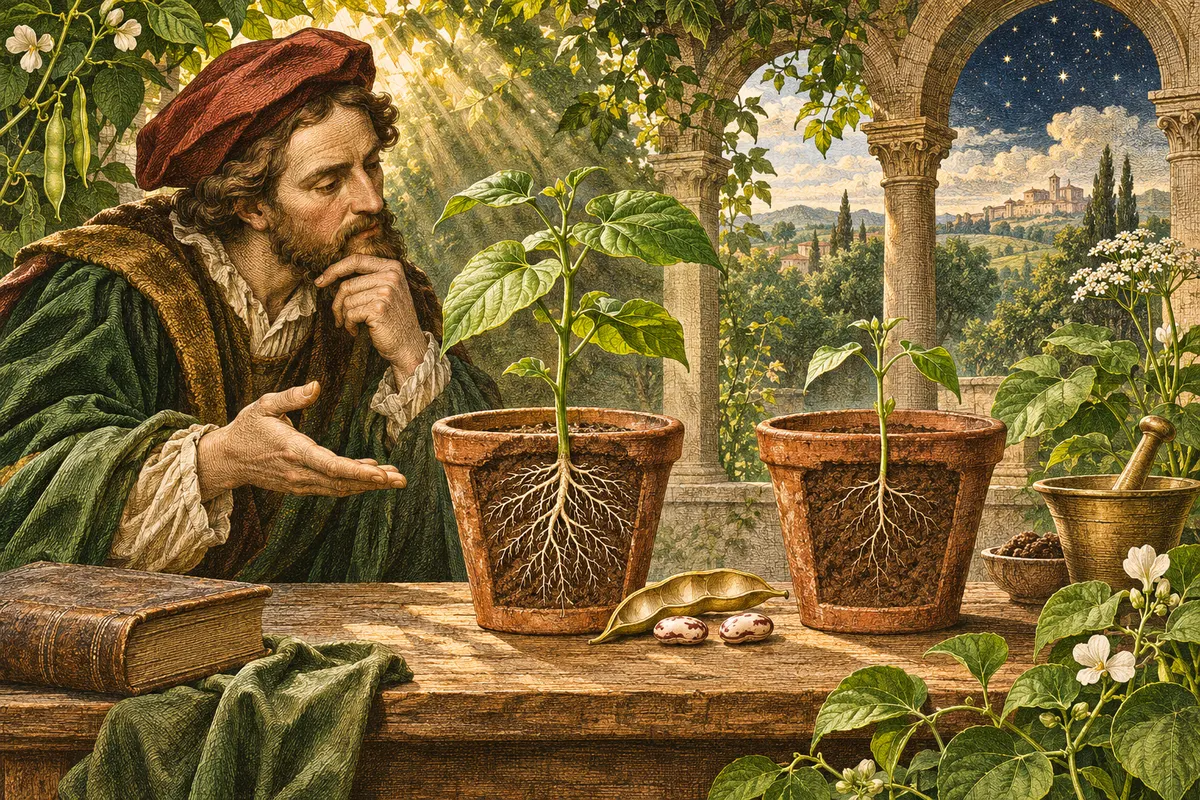
Why should two seeds of one kind differ?
Think through two seedlings and follow Agrippa’s comparison between a responsive body and a responsive world.
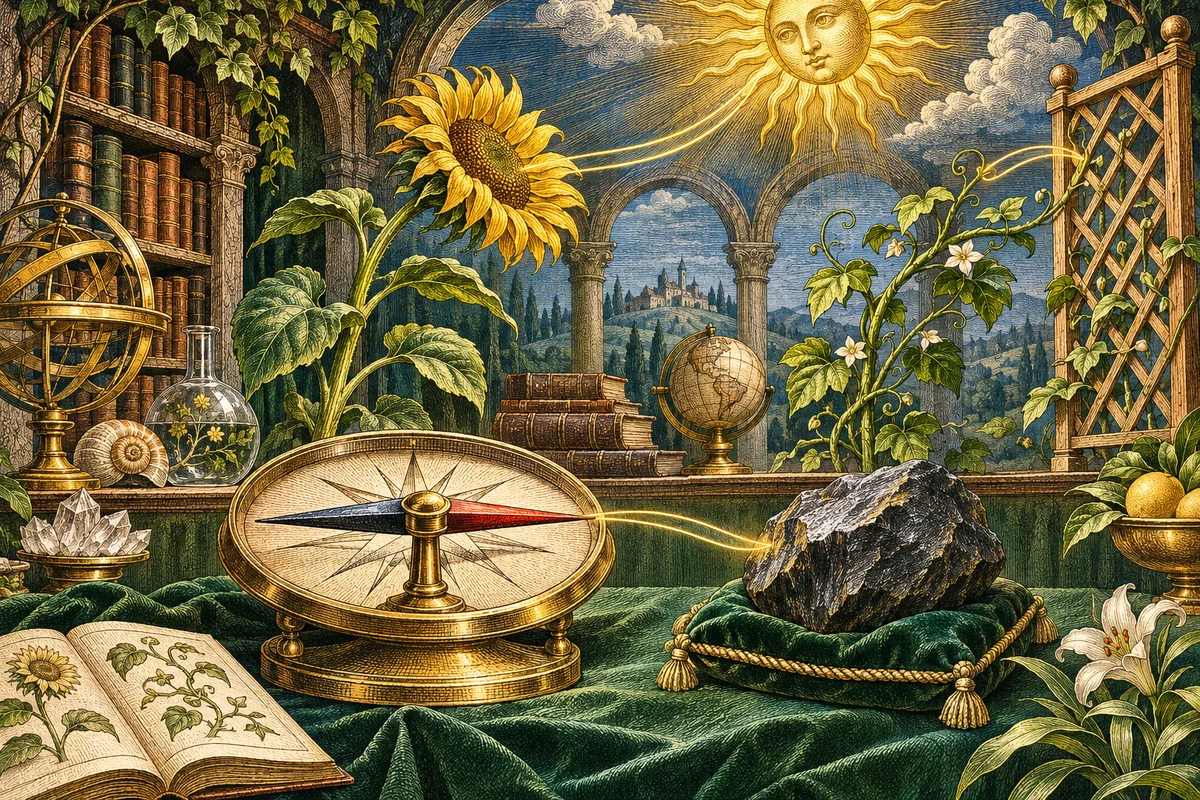
What a magnet could teach
Read the lodestone, diamond, and amber together to distinguish an observed motion from Agrippa’s explanation for a material’s power.

How could a soul move a stone?
Build the missing middle of Agrippa’s chain of causes, then see what the word quintessence contributes.

When does a receiver become an agent?
Distinguish an object moving from an object acquiring a power to move something else.
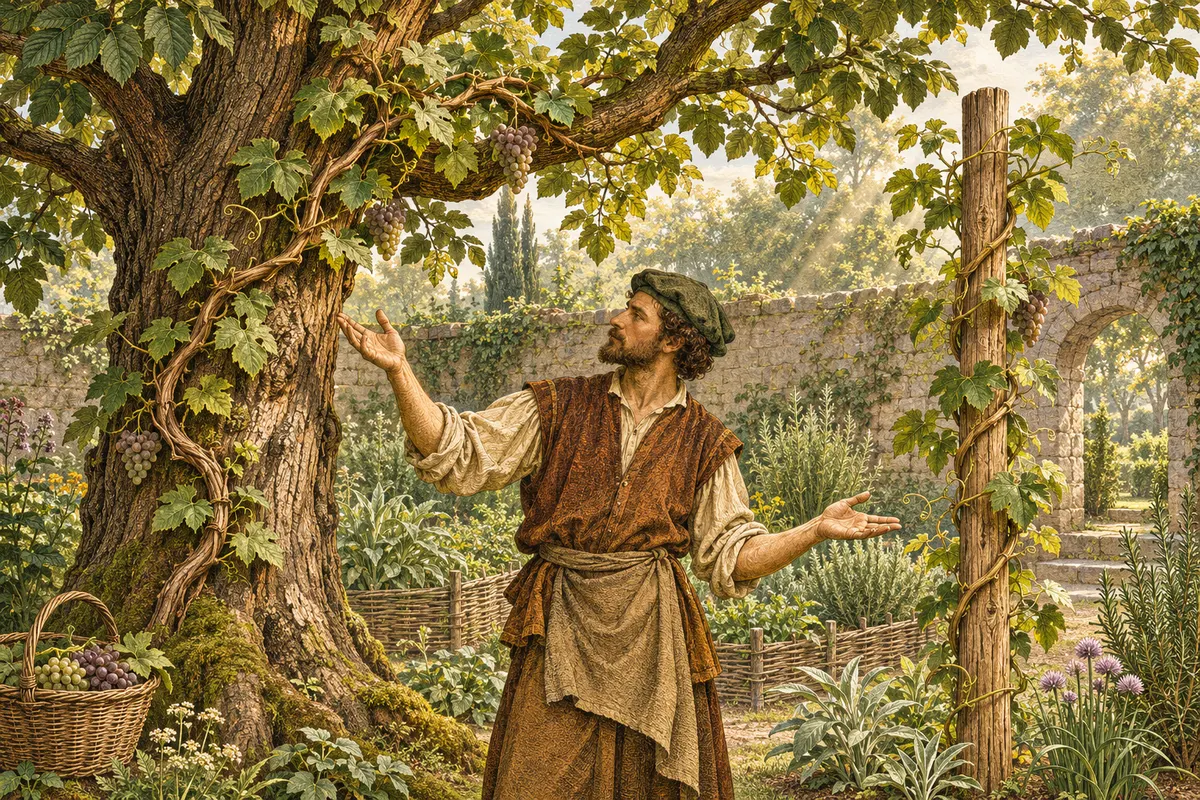
What does it mean for a vine to love an elm?
Follow a vine up an elm to uncover the work that the words friendship and enmity do in natural magic.
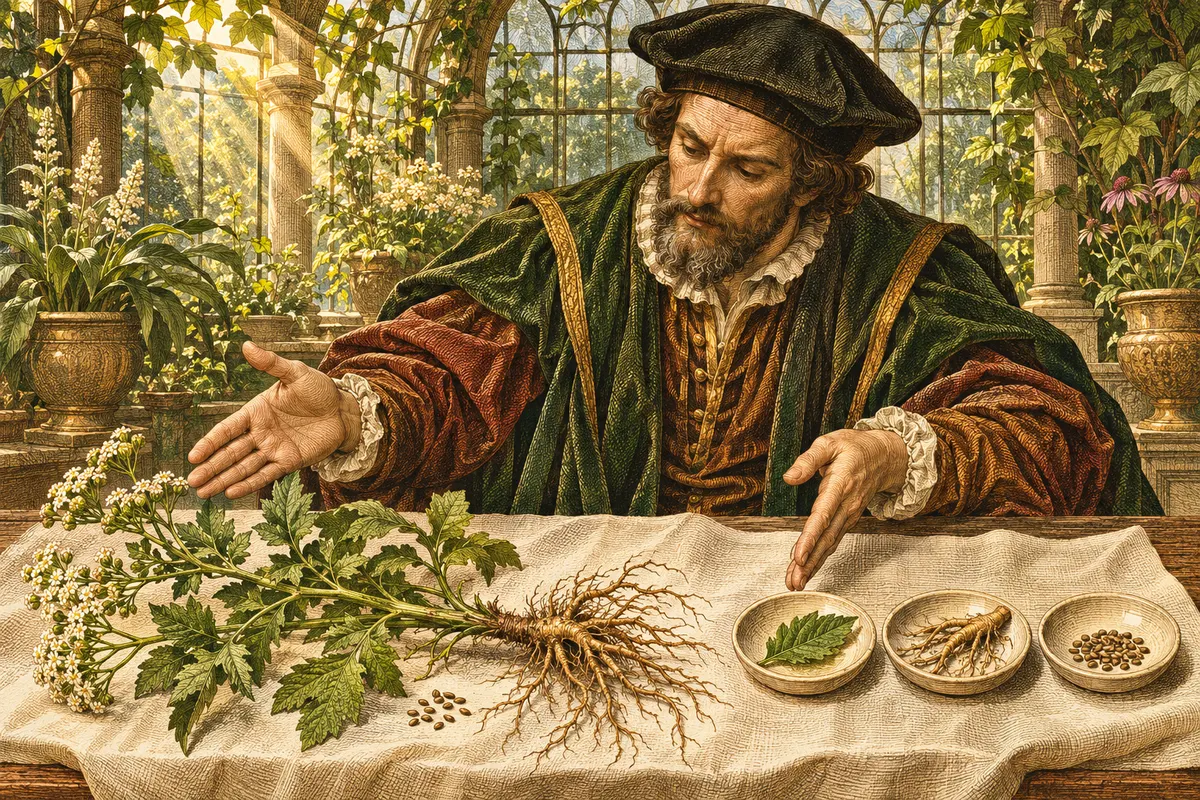
Where does a creature’s power reside?
Draw the boundary around a claimed effect and see how changing that boundary changes the claim.
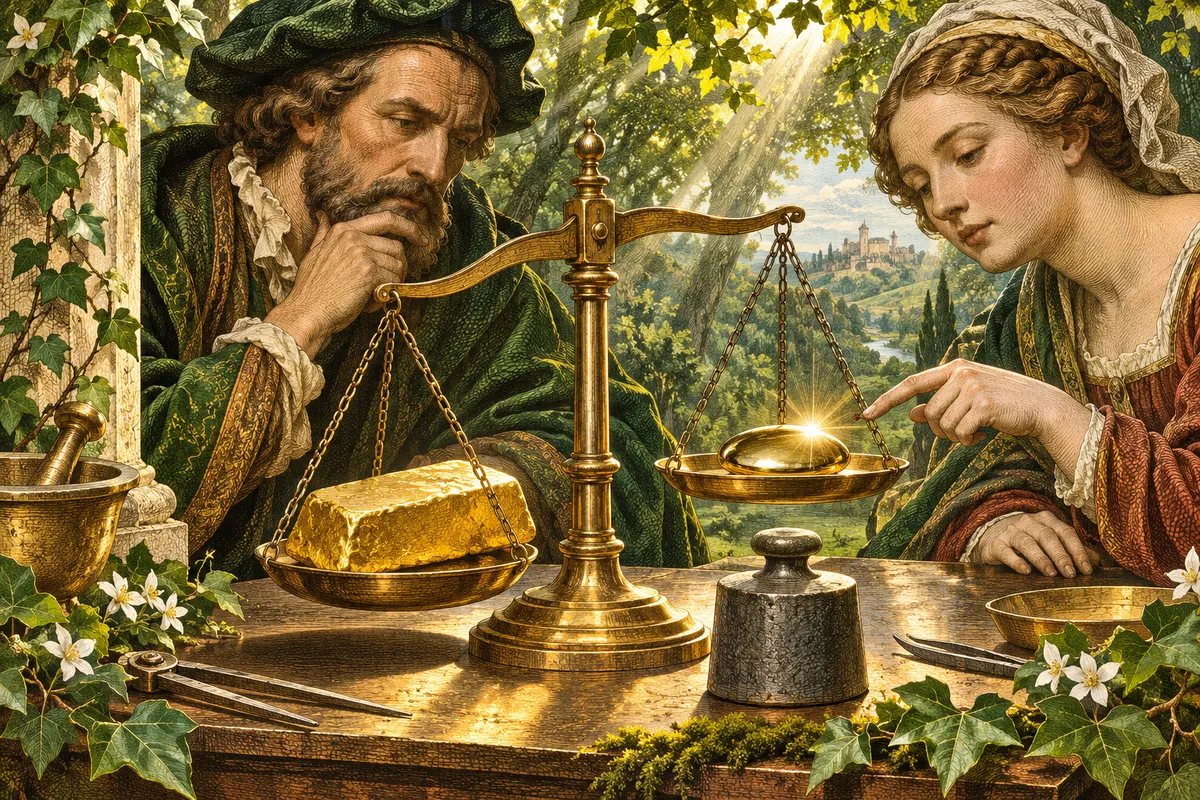
Why gold belongs to two planets
Follow the translator’s “by reason of” on pages 51 and 55 to see how Agrippa assigns a material to a planet.

What makes a chameleon lunar?
Sort the lunar catalogue by colour, moisture, and changing appearance to recover the reasons inside the list.
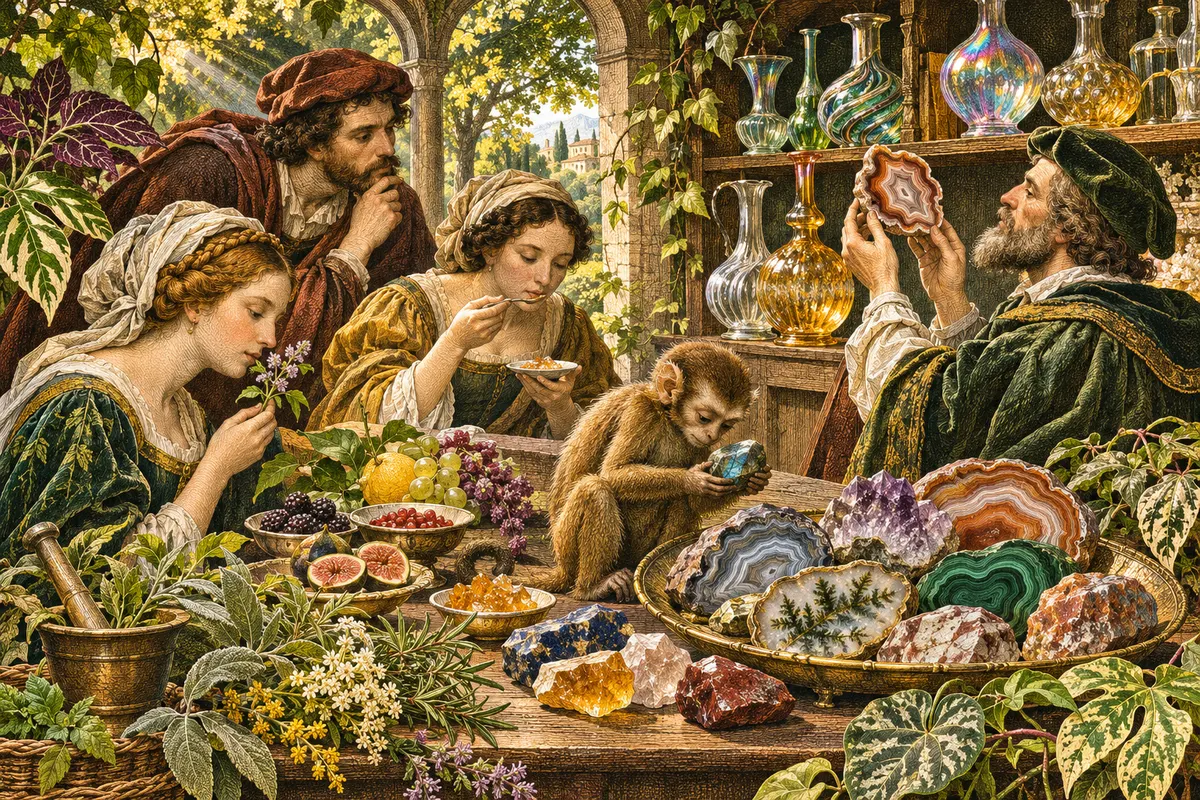
How do you paint Mercury’s taste?
Read across the senses to see how Mercury comes to govern variation as well as particular objects.
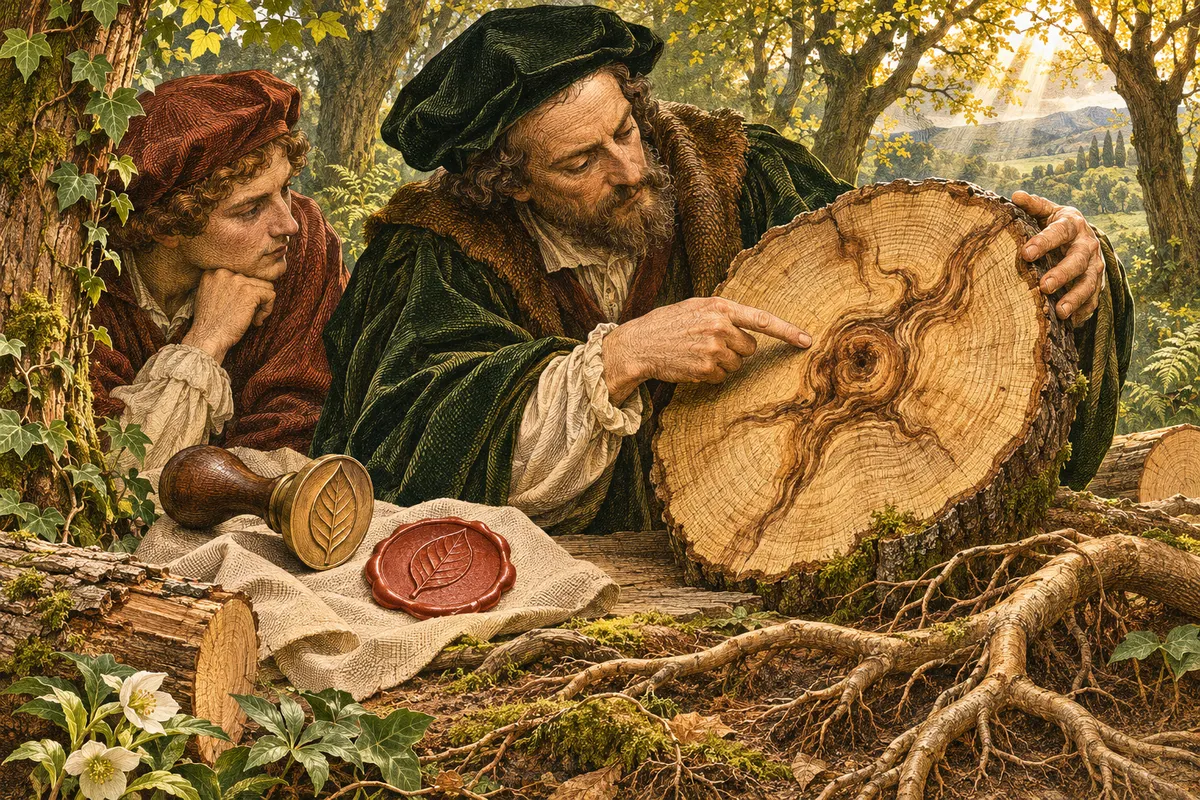
Who made the mark in the wood?
Read a knot of wood as a sign, then ask what would let someone identify the star that supposedly made it.
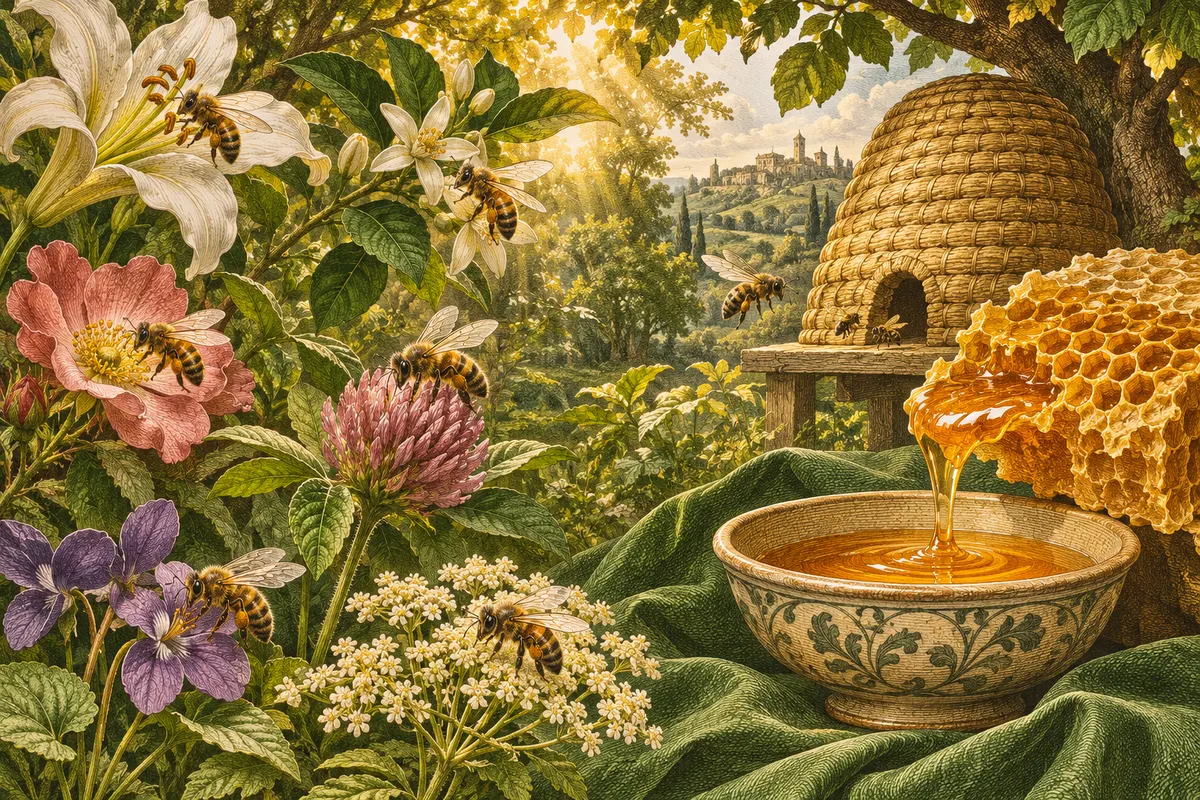
Can many flowers become one thing?
Use the bee’s collection to distinguish the contributions of ingredients from the form of a finished mixture.
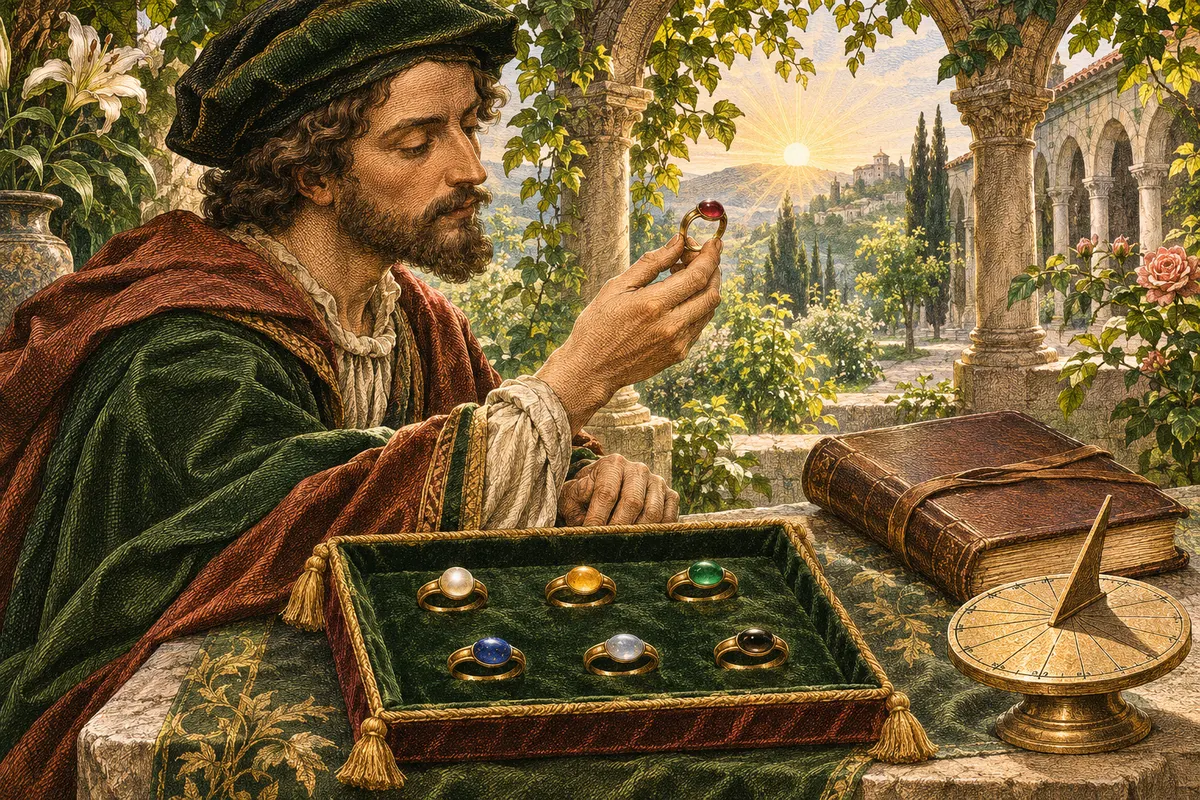
Why would someone need a ring for each day?
Read the reported gift to Apollonius as a collection whose meaning depends on time as well as craftsmanship.
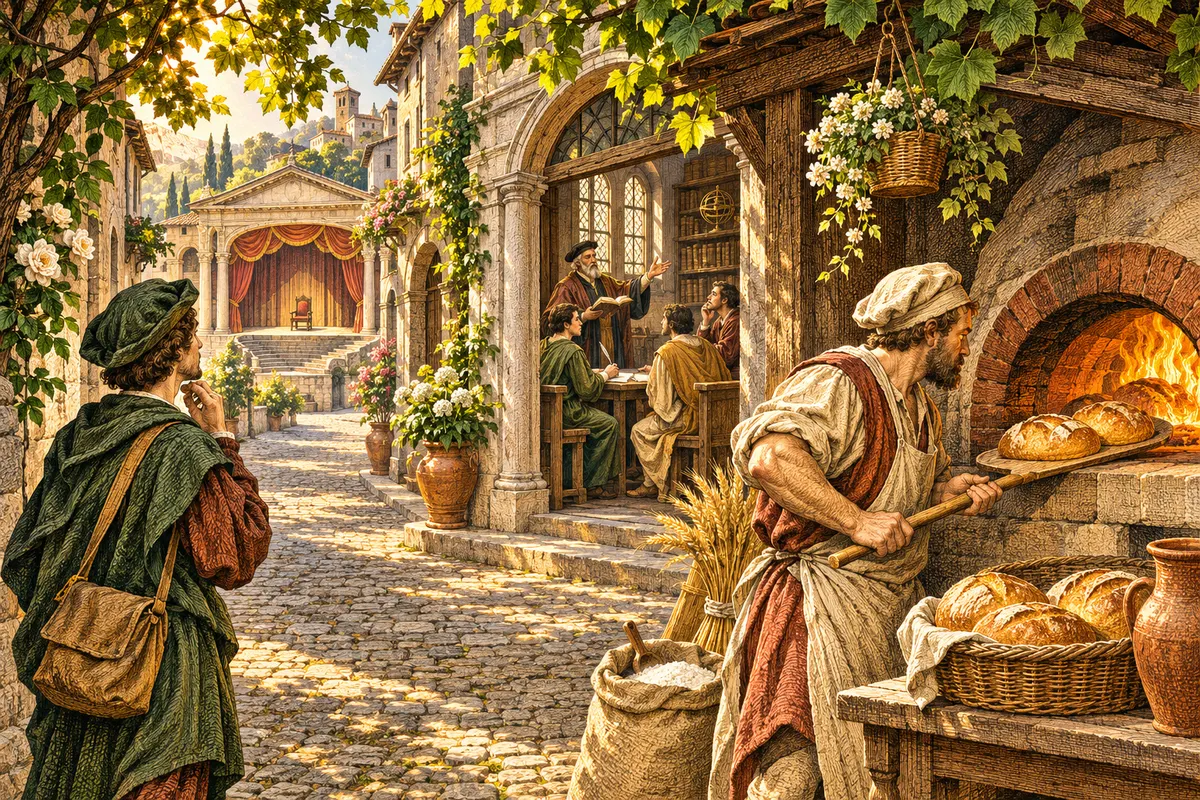
Which planet rules a bakery?
Follow Mars into a bakehouse and Jupiter into a school to discover the different clues in Agrippa’s map of places.

What happens to light when the receiver changes?
Trace light from intelligence to an eye and a dark body to see how a receiver changes its manifestation.

What does a prince’s expression do to a city?
Read the prince, the mourner, and the kneeling figure as three separate links in an argument about posture.
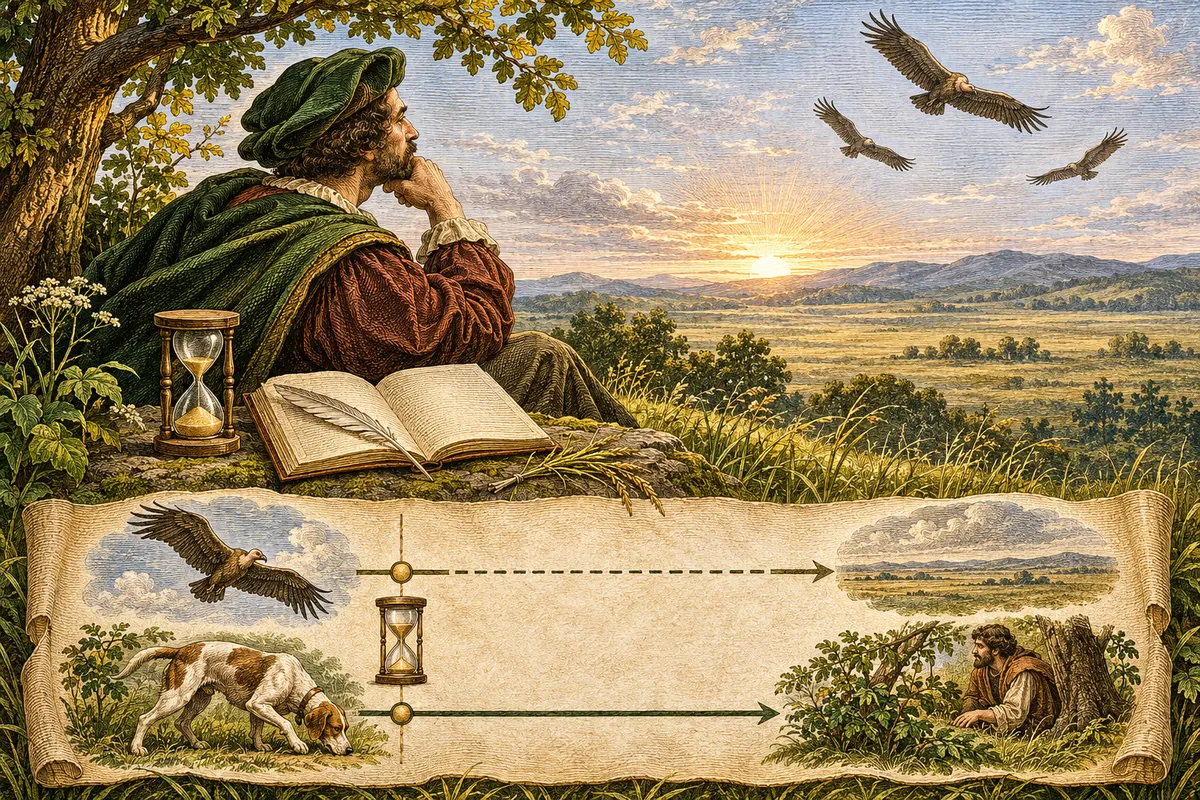
Did the vultures arrive before the battle?
Put Agrippa’s story of vultures on a timeline and compare it with his example of a tracking dog.
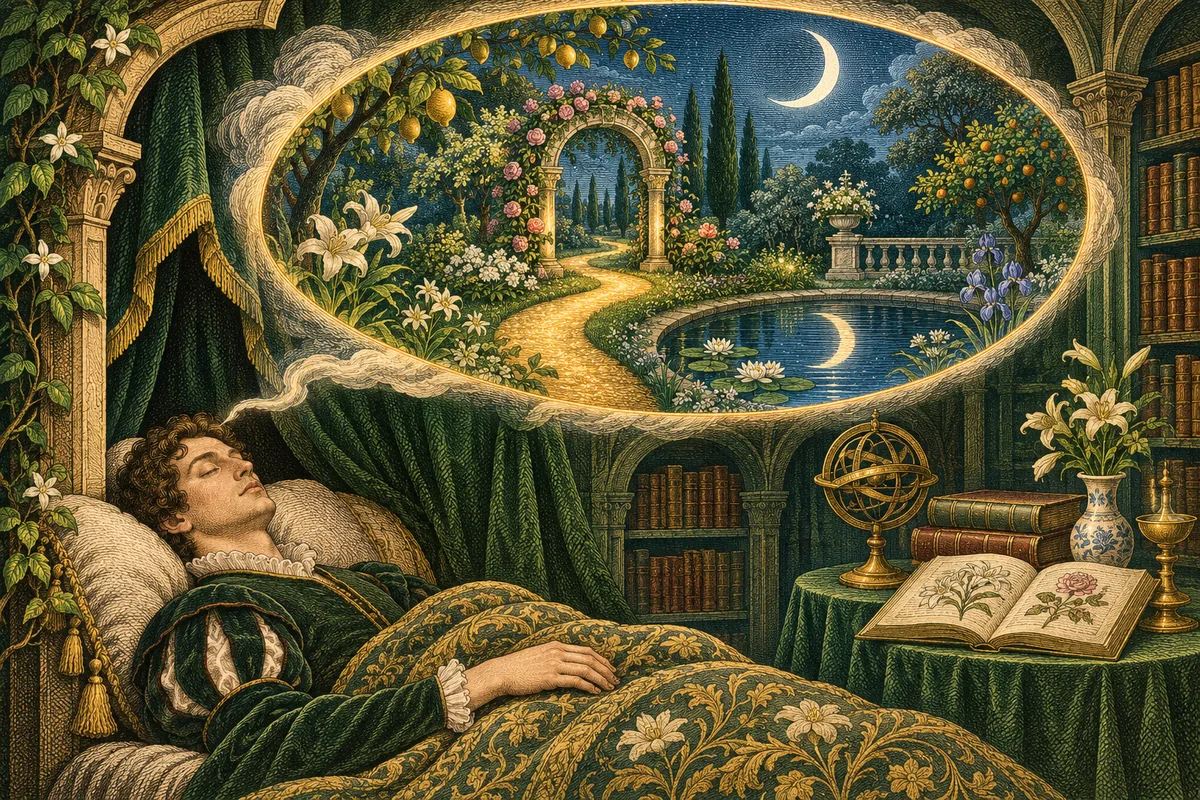
Why can’t one dream dictionary serve everyone?
Compare two dreams of a bridge and reconstruct the recording practice Agrippa takes from Synesius.

How does a bell survive its last note?
Follow a bell’s note through the four inward senses in Agrippa’s account of perception.

How does a locked door turn desire into hope?
Use a missing key to separate desire, hope, and despair in Agrippa’s eleven-part account of the passions.
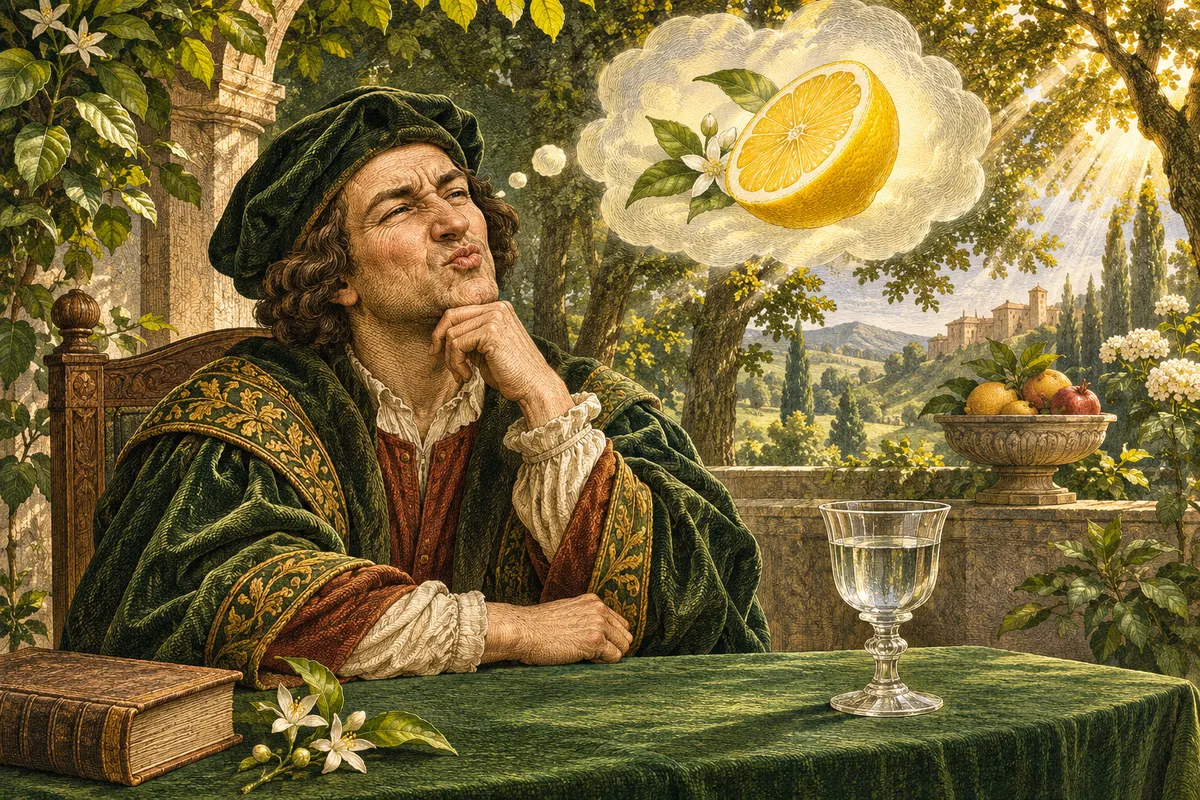
Can an imagined taste change the mouth?
Follow his transition from hearing of sour food to much more ambitious stories of bodily imitation.
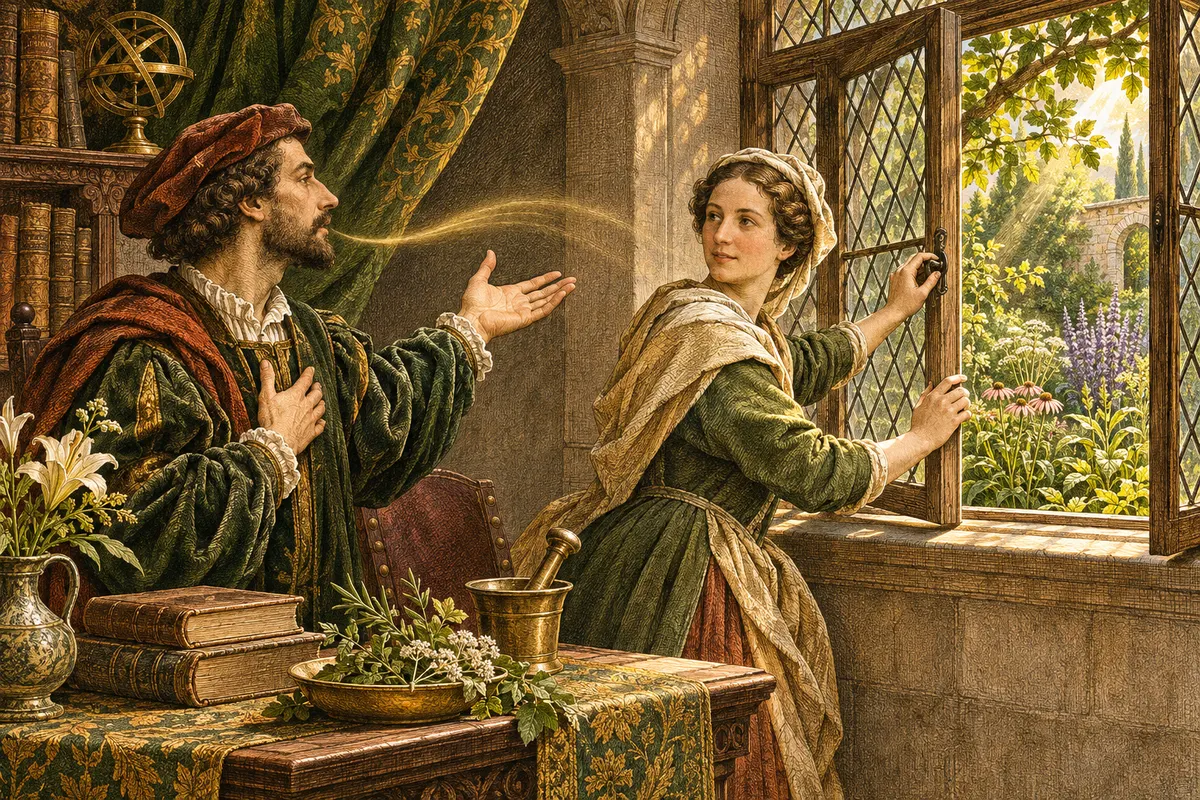
Where is a speech before anyone speaks?
Rehearse a sentence silently, then follow Agrippa’s argument from breath and understanding to the claimed powers of speech.
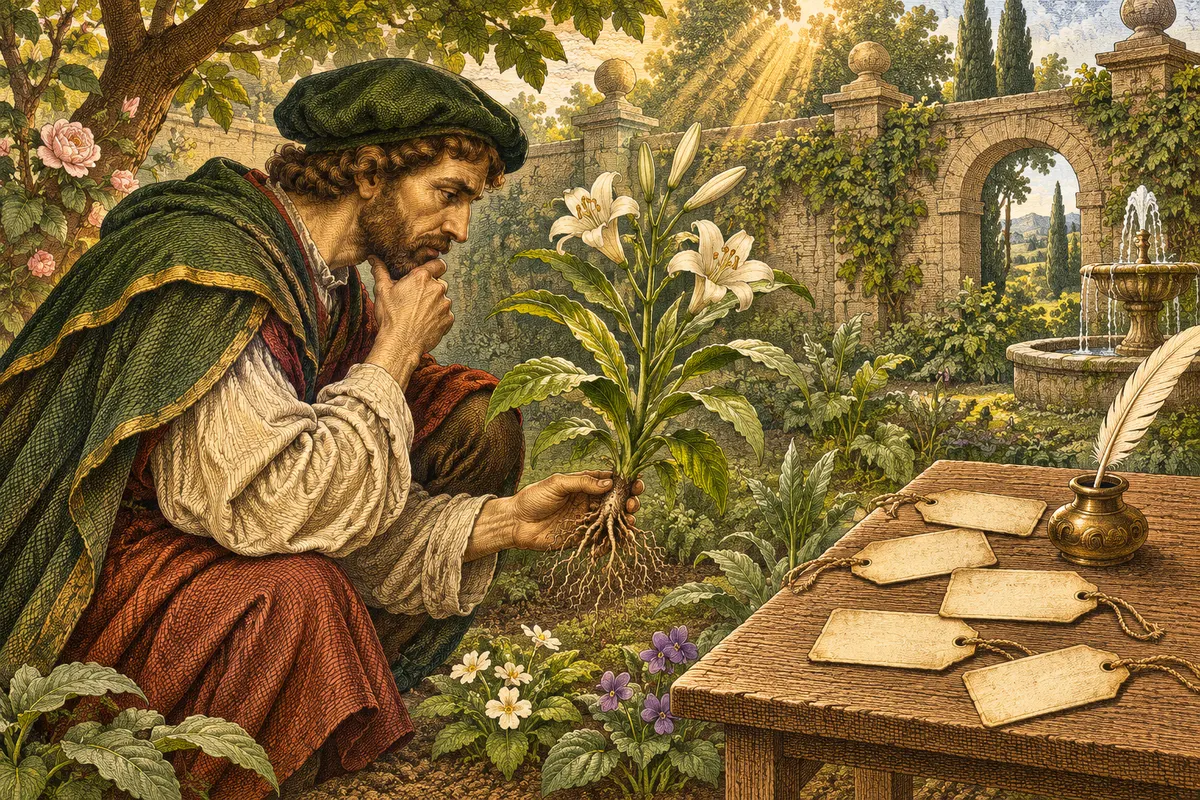
Could a name fit its subject twice?
Follow a name from perception through speech and consider what Adam’s naming of creatures contributes to Agrippa’s argument.
Why write an intention on the object?
Give one drawn picture two possible purposes to see why Agrippa wants the maker’s intention put into words.
The chapter index
Explore the complete contents of the three books, arranged by subject, with English text and both printed editions.