The Agrippa Collection
Follow the three books in order, or start with a question that catches your attention.
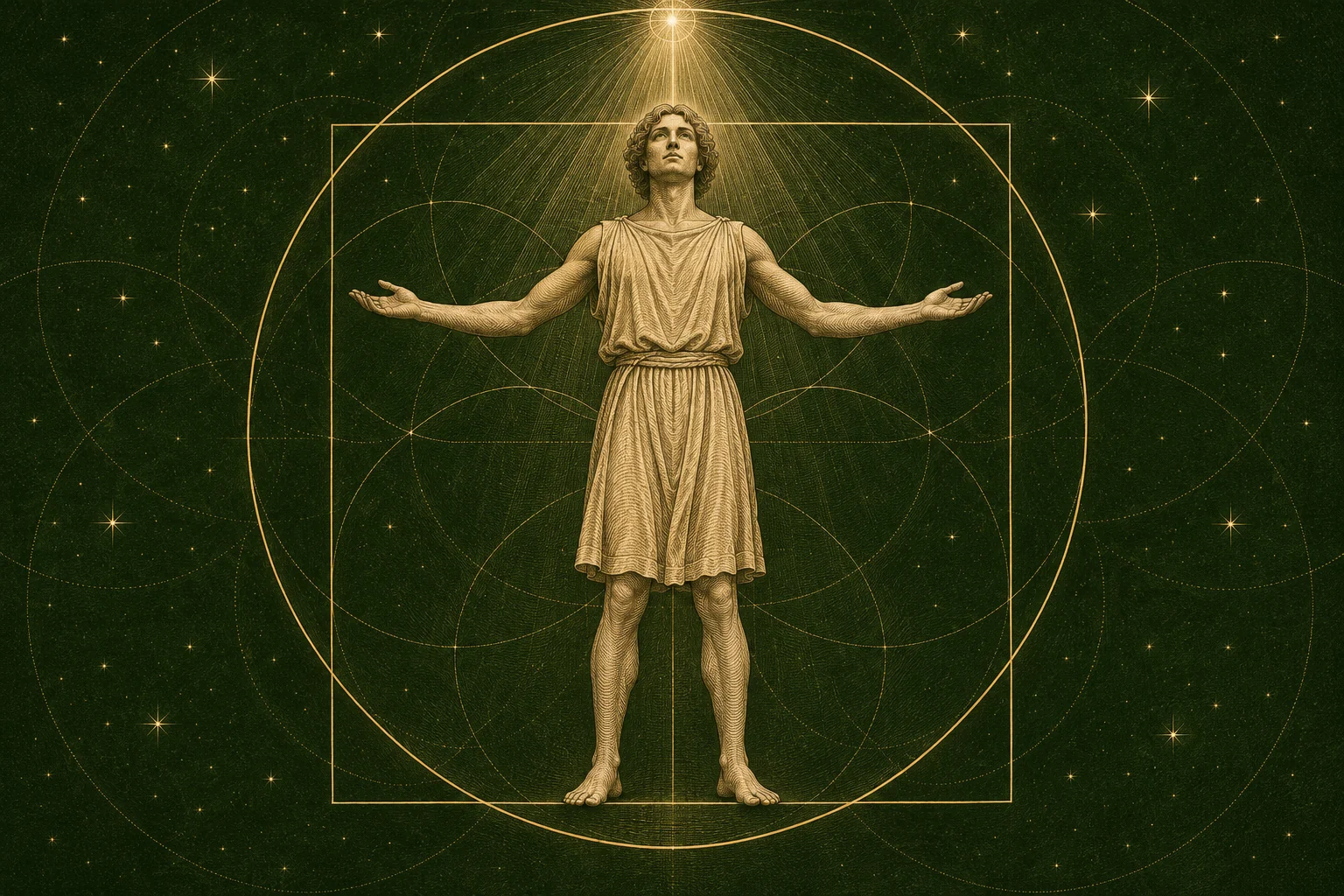 MODERN INTERPRETATION
The hand as a little cosmos.
Look closely at Agrippa’s hand diagram, its planetary signs, and the proportions of the human body.
Explore the handThe complete books
All 199 chapters and the Latin and English editions, included with library membership.
Open the editions74 LESSONS
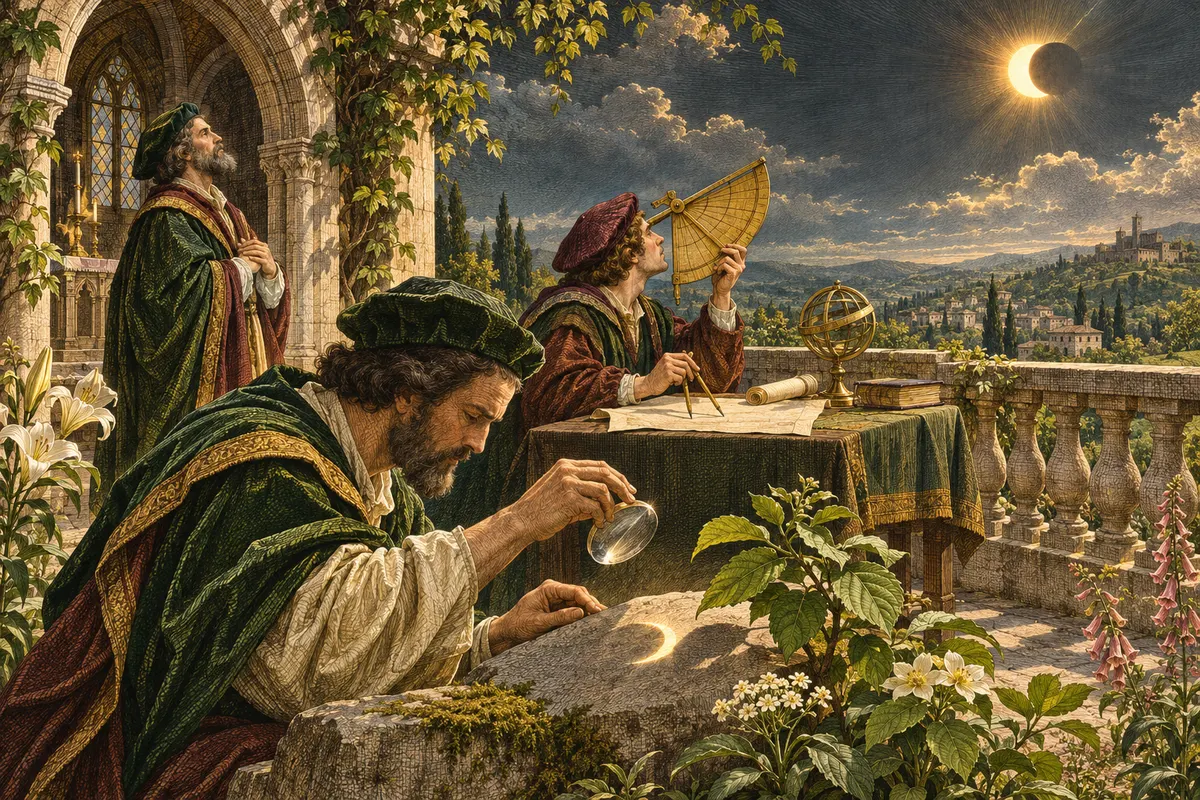
What should a student of magic learn first?
Use an eclipse to separate three kinds of expertise in Agrippa’s curriculum.
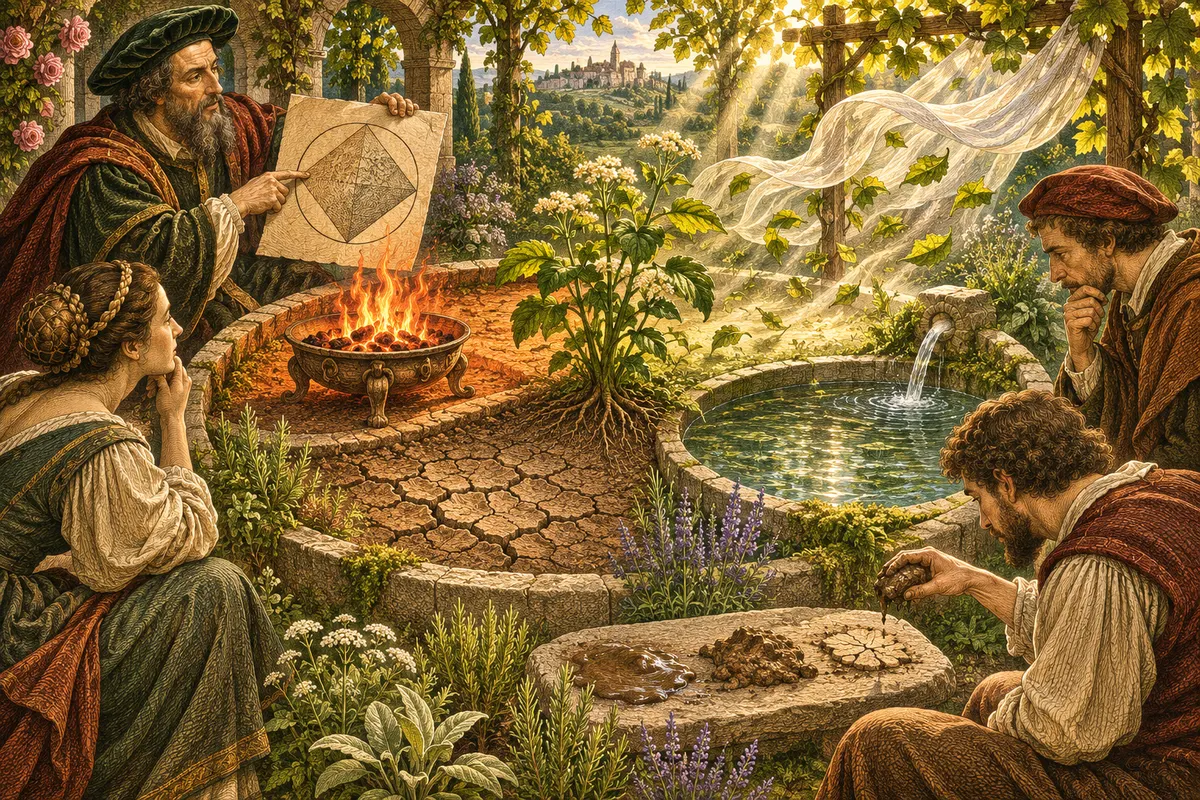
What holds the four elements together?
Draw Agrippa’s four-element diagram, then use a patch of drying mud to test what his diagram explains.

How can one fire have so many effects?
Compare three places Agrippa finds fire and decide which parts of his argument you could reach by observation.
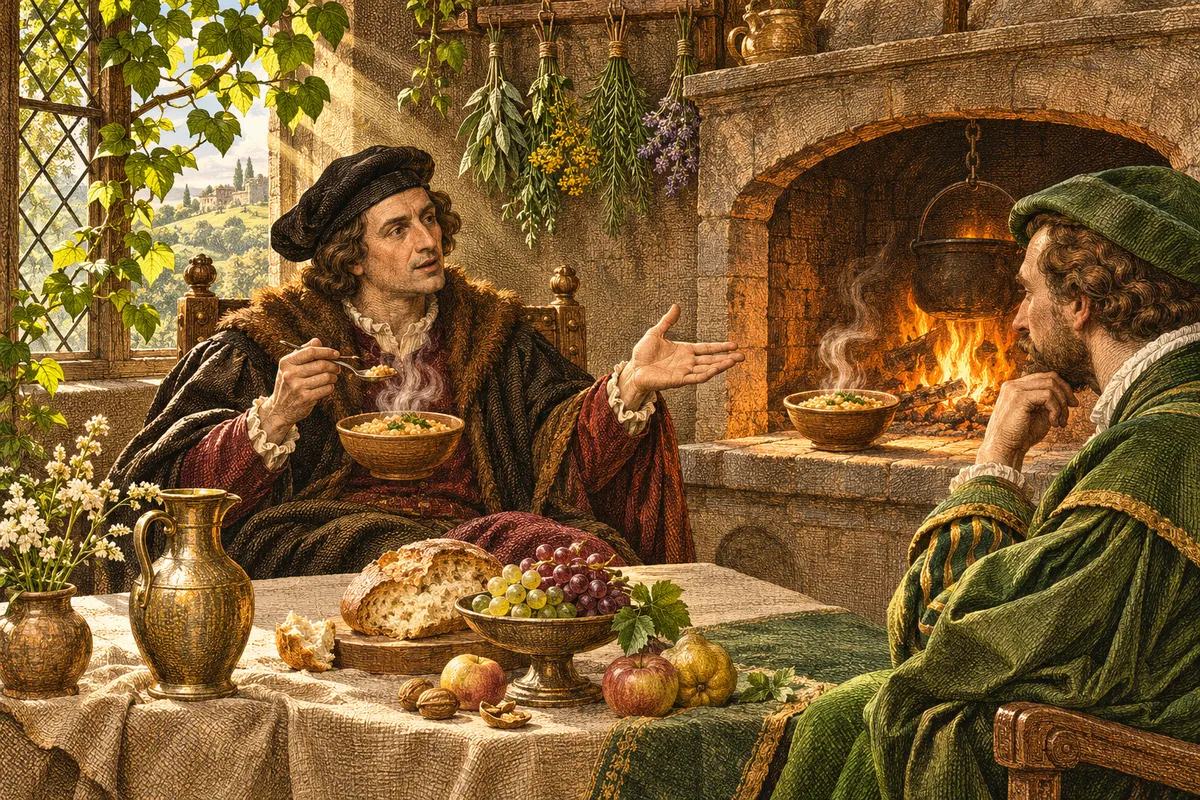
Why compare a stomach with a fireside?
Use Agrippa’s dinner by the hearth to reconstruct an argument for hidden natural powers.
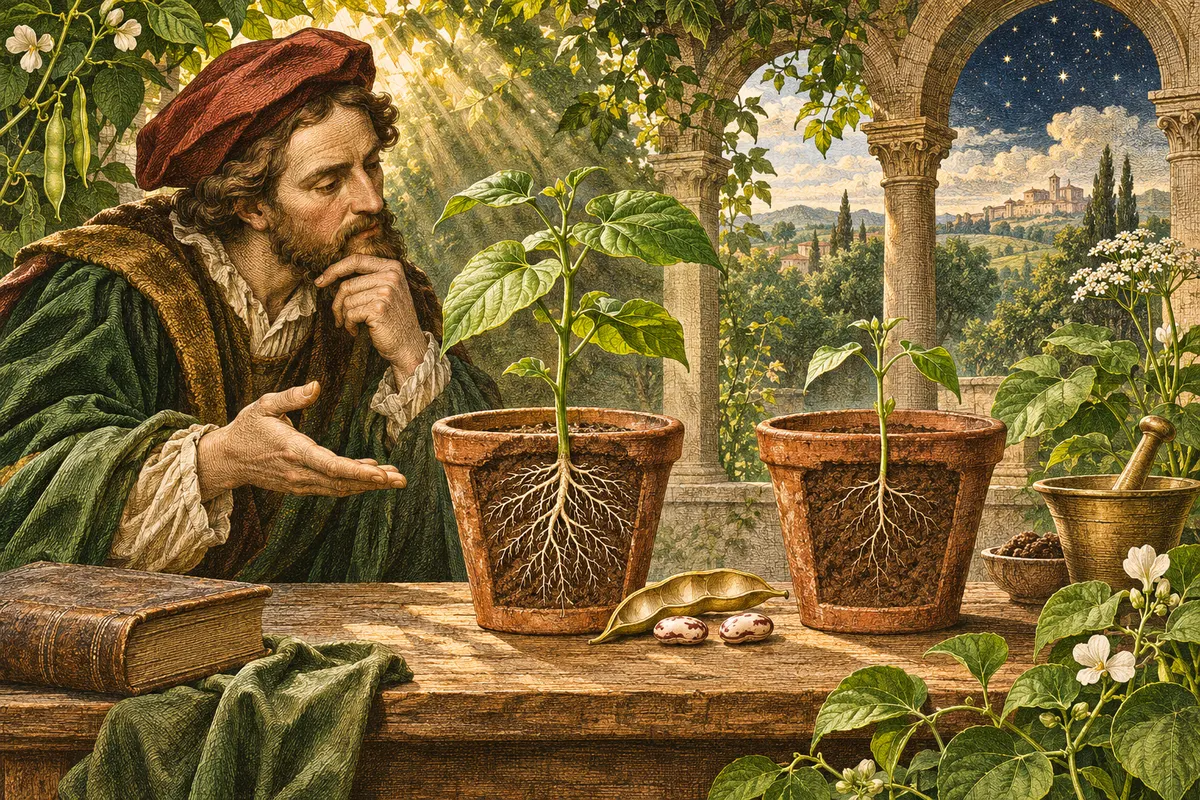
Why should two seeds of one kind differ?
Think through two seedlings and follow Agrippa’s comparison between a responsive body and a responsive world.
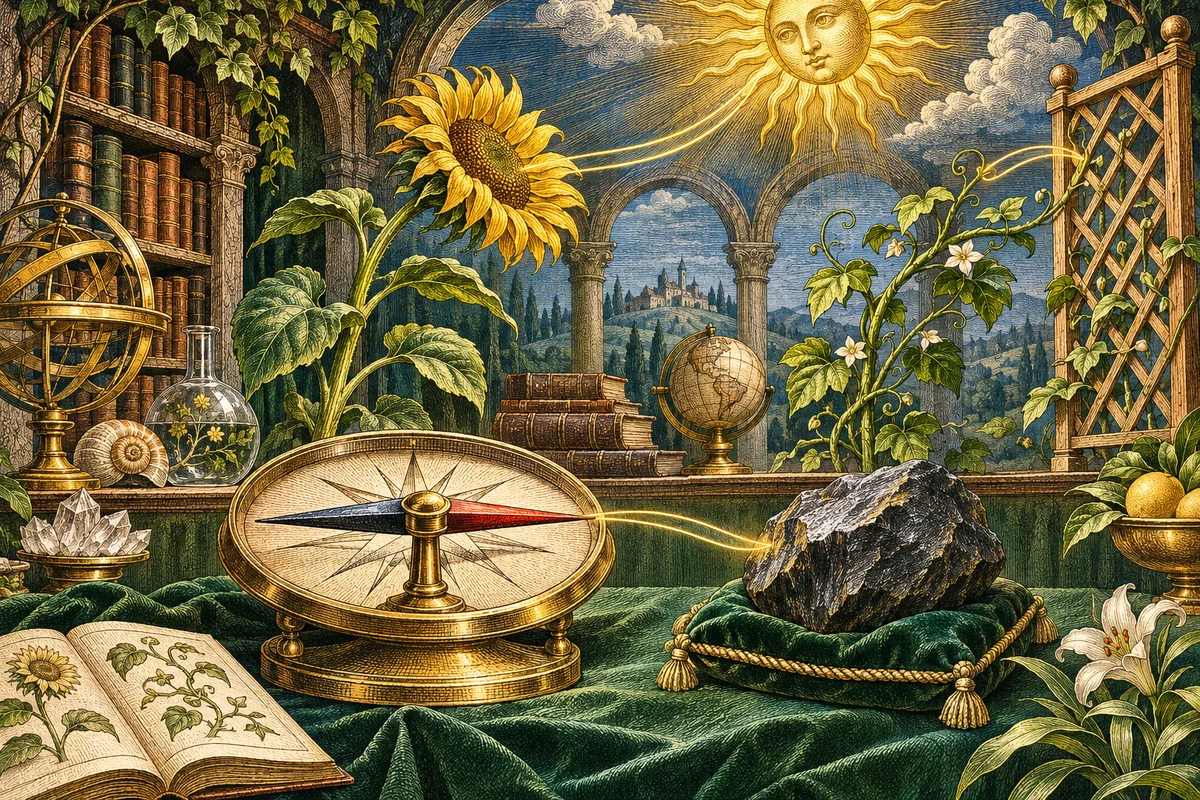
What a magnet could teach
Read the lodestone, diamond, and amber together to distinguish an observed motion from Agrippa’s explanation for a material’s power.

How could a soul move a stone?
Build the missing middle of Agrippa’s chain of causes, then see what the word quintessence contributes.
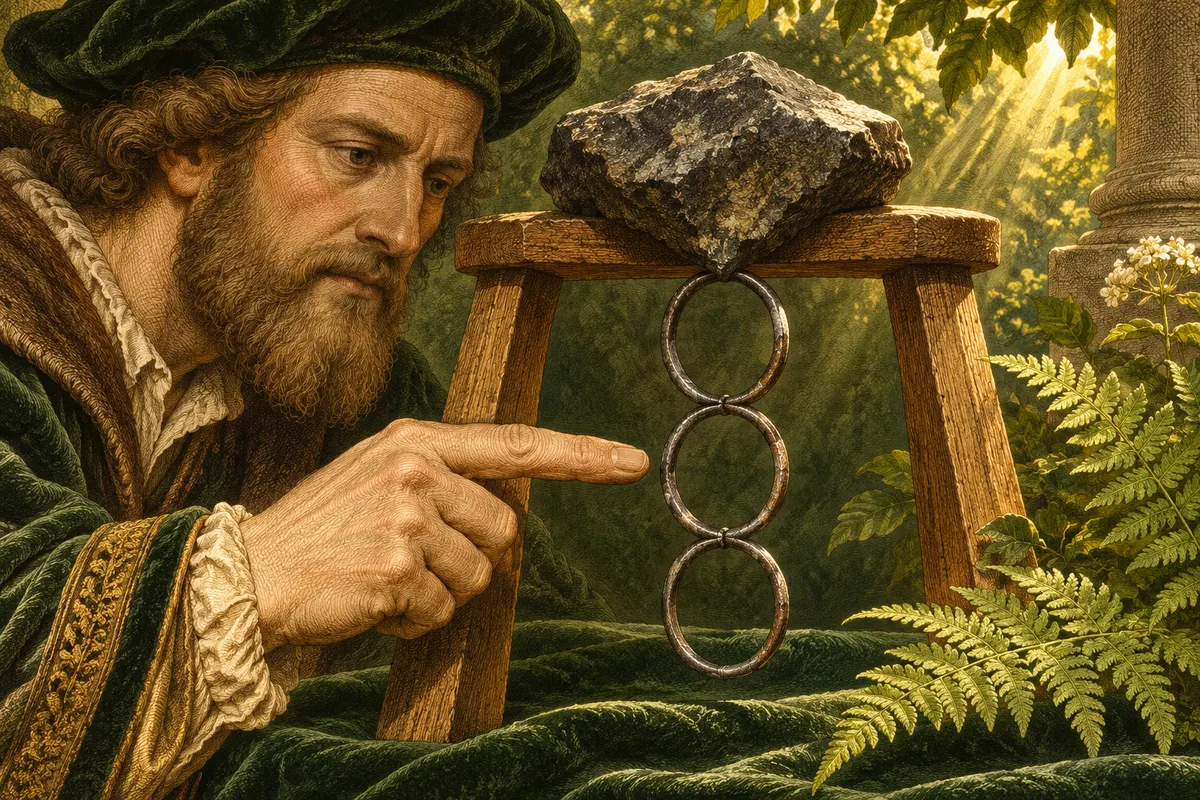
When does a receiver become an agent?
Distinguish an object moving from an object acquiring a power to move something else.
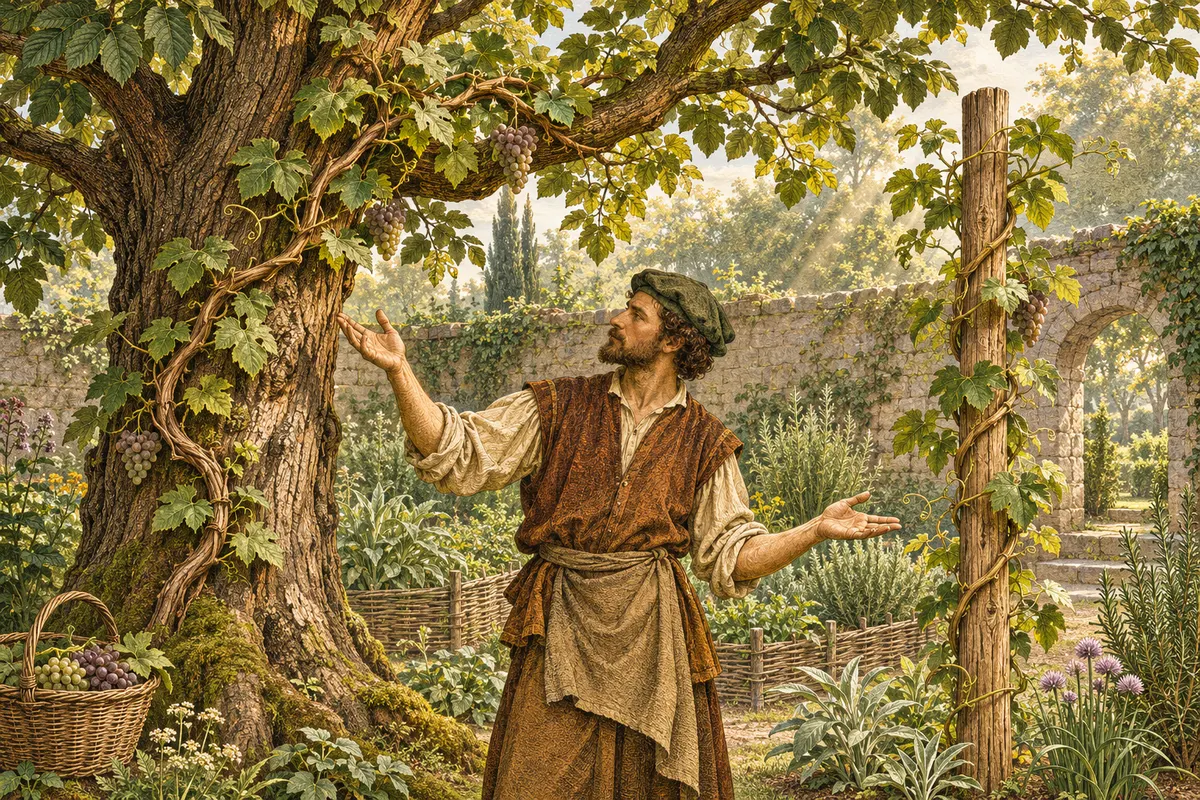
What does it mean for a vine to love an elm?
Follow a vine up an elm to uncover the work that the words friendship and enmity do in natural magic.
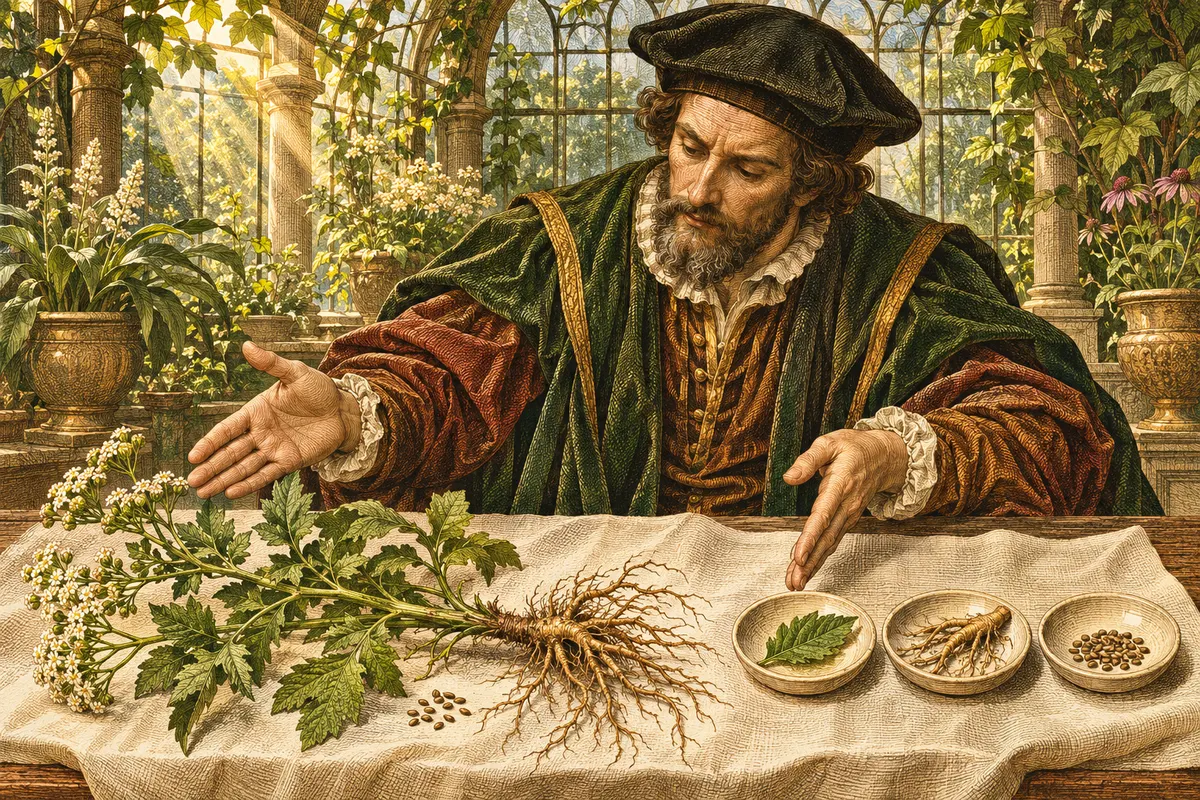
Where does a creature’s power reside?
Draw the boundary around a claimed effect and see how changing that boundary changes the claim.
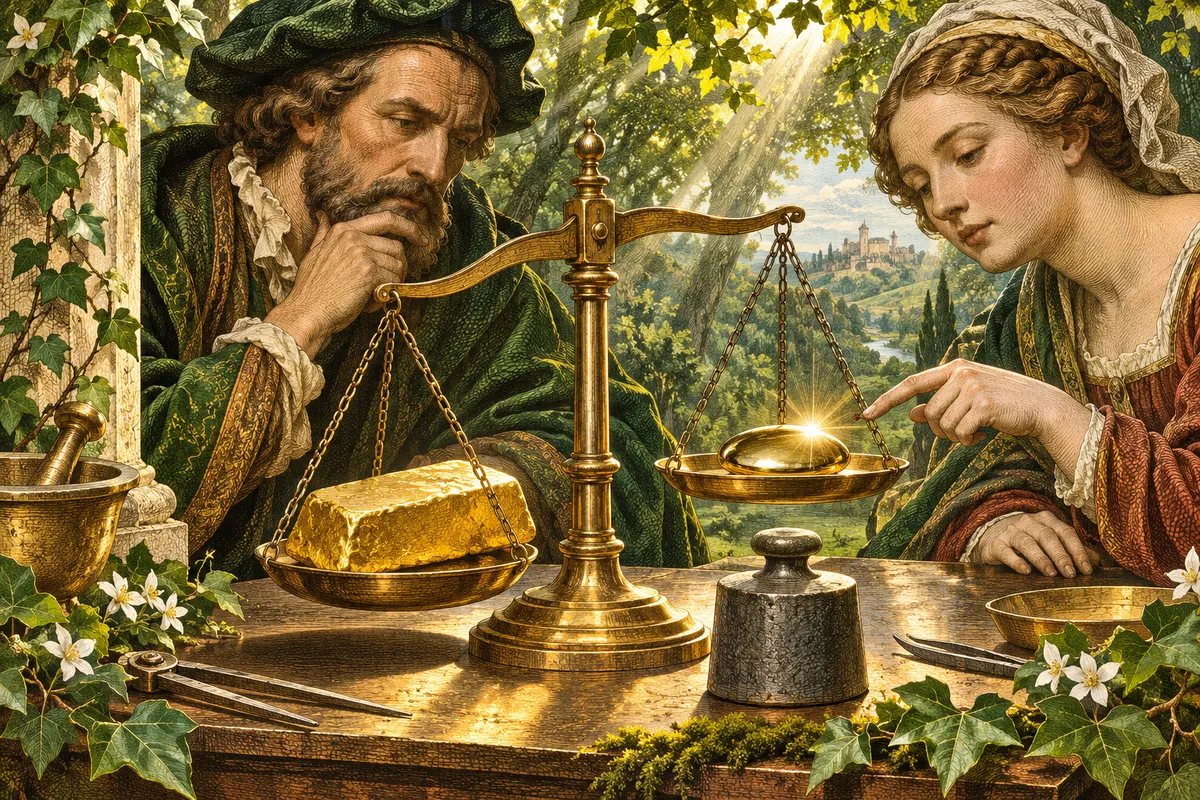
Why gold belongs to two planets
Follow the translator’s “by reason of” on pages 51 and 55 to see how Agrippa assigns a material to a planet.

What makes a chameleon lunar?
Sort the lunar catalogue by colour, moisture, and changing appearance to recover the reasons inside the list.
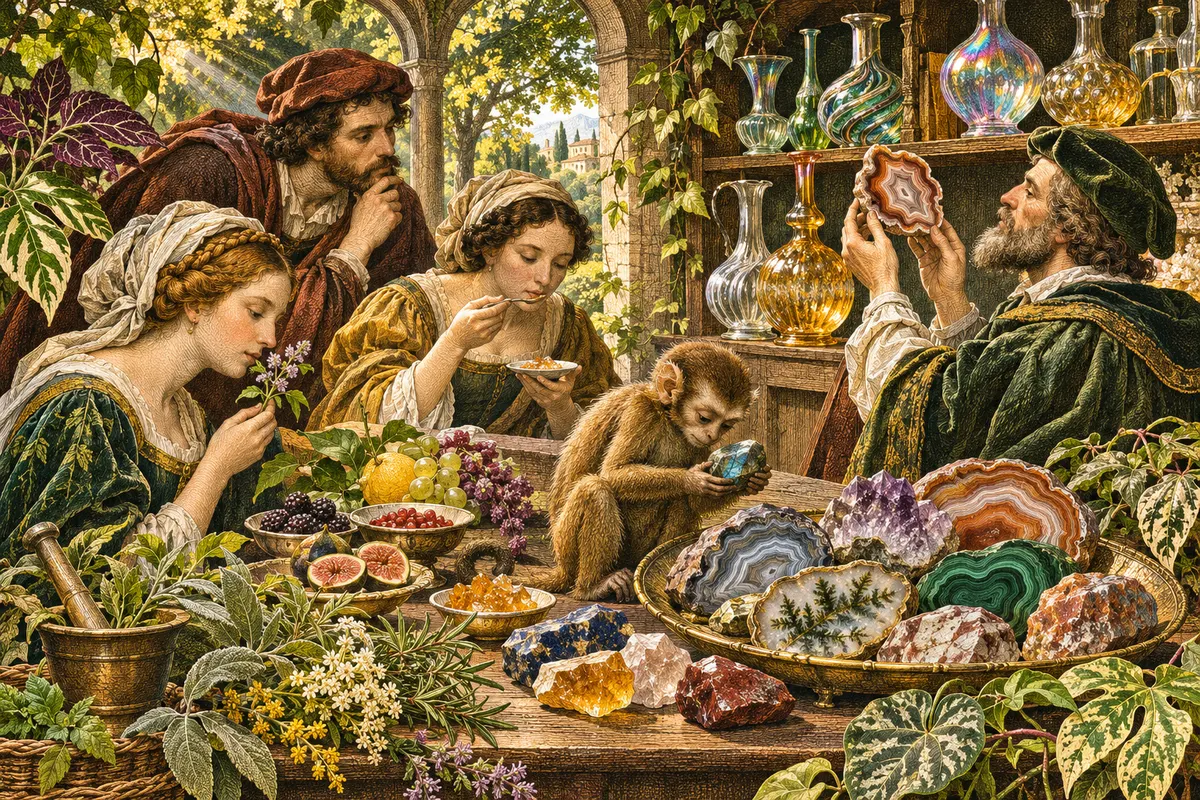
How do you paint Mercury’s taste?
Read across the senses to see how Mercury comes to govern variation as well as particular objects.
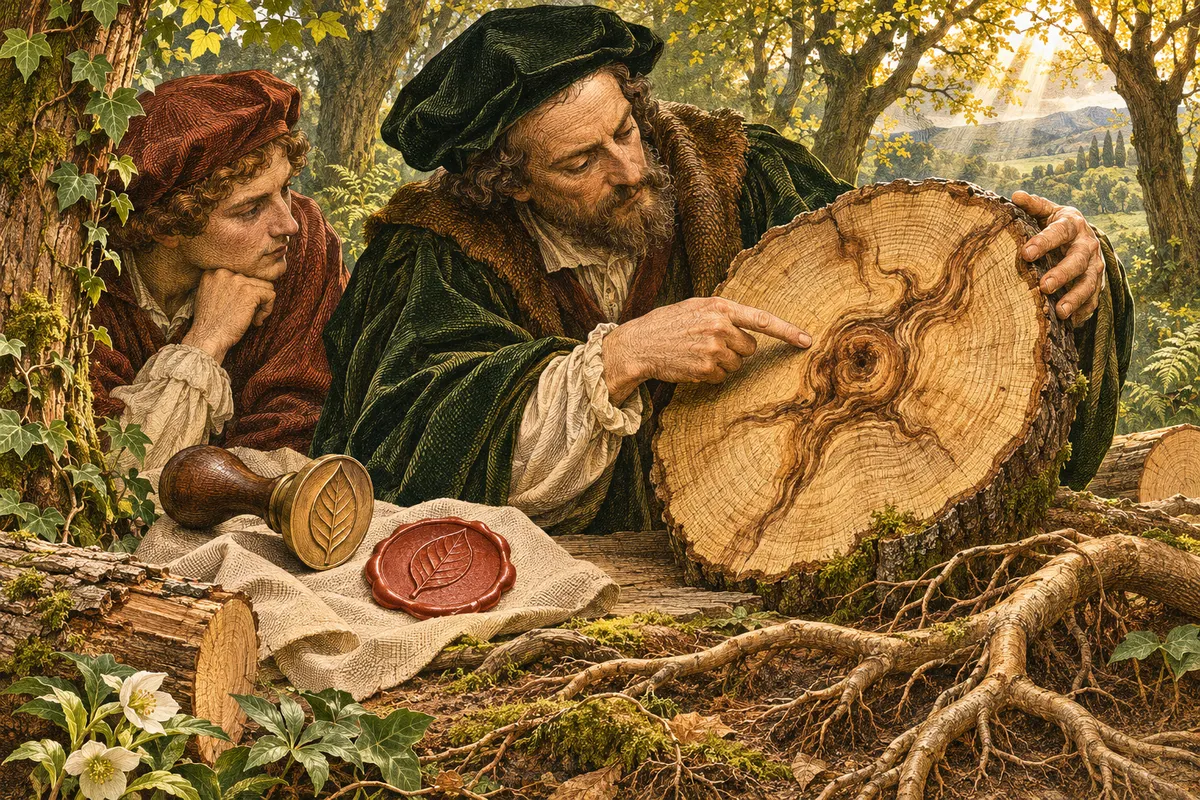
Who made the mark in the wood?
Read a knot of wood as a sign, then ask what would let someone identify the star that supposedly made it.
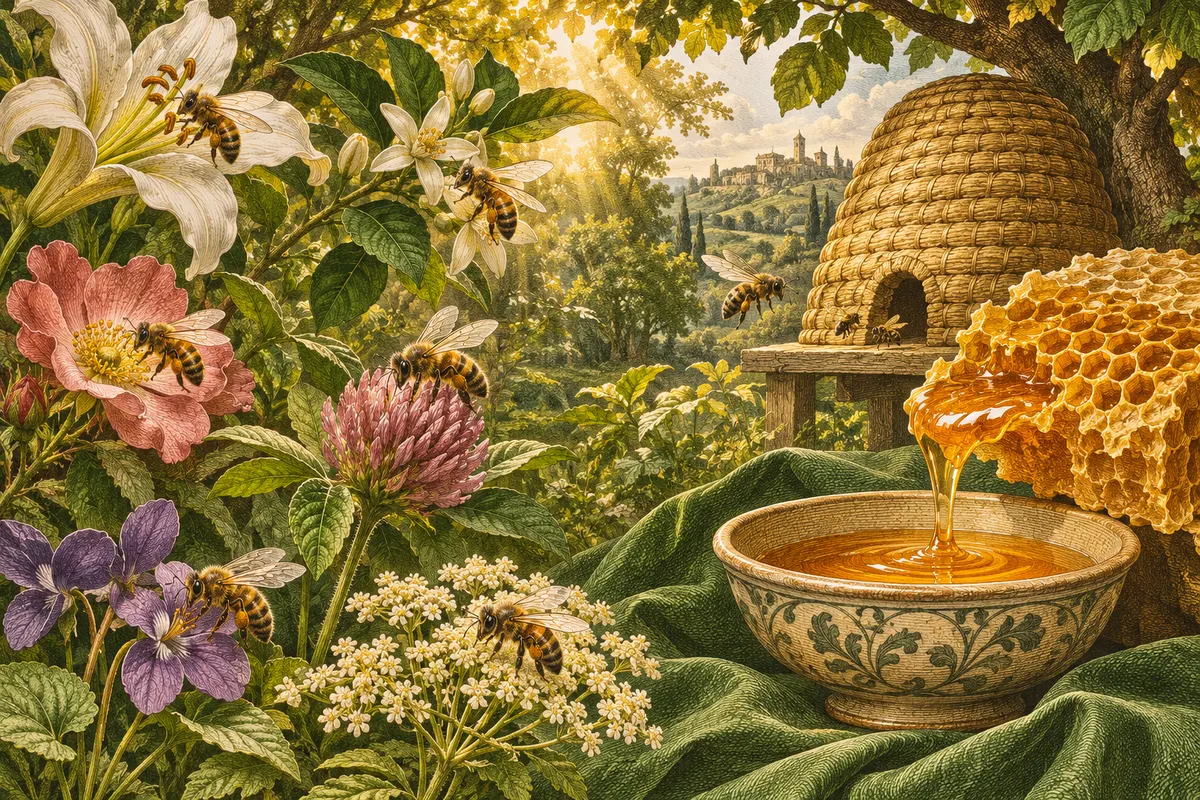
Can many flowers become one thing?
Use the bee’s collection to distinguish the contributions of ingredients from the form of a finished mixture.
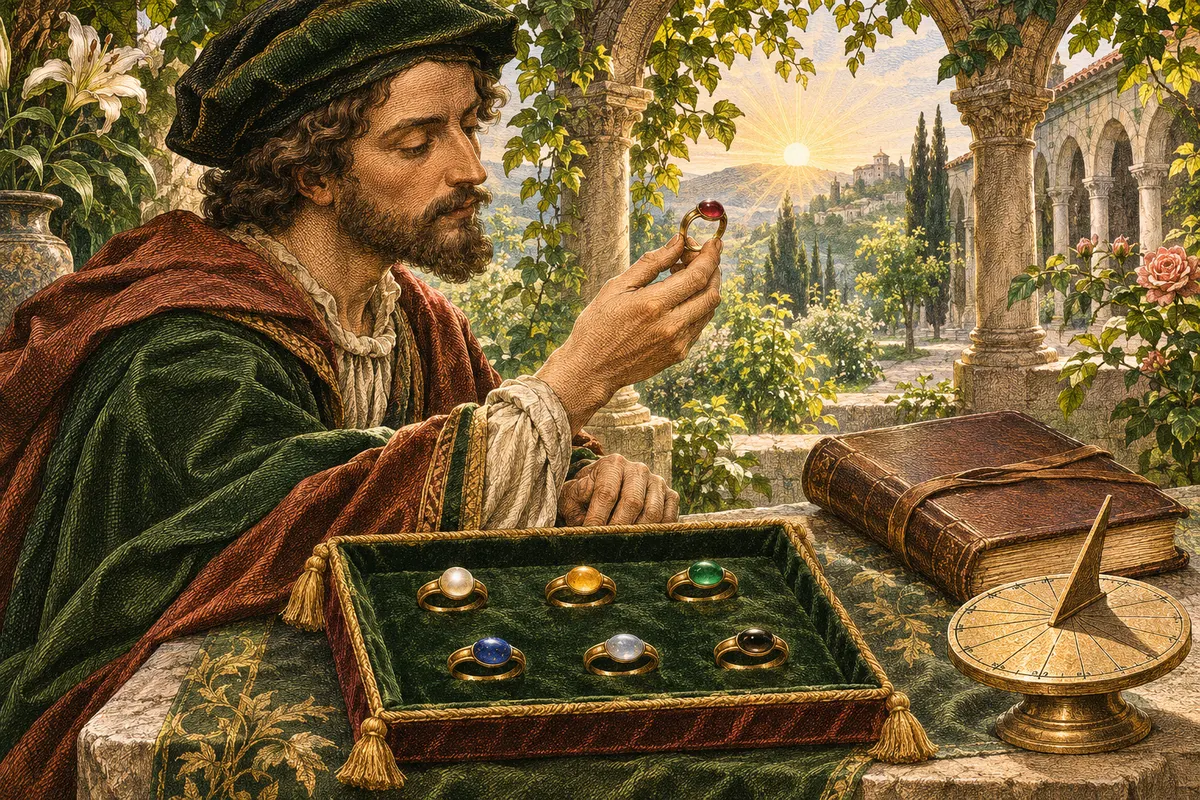
Why would someone need a ring for each day?
Read the reported gift to Apollonius as a collection whose meaning depends on time as well as craftsmanship.
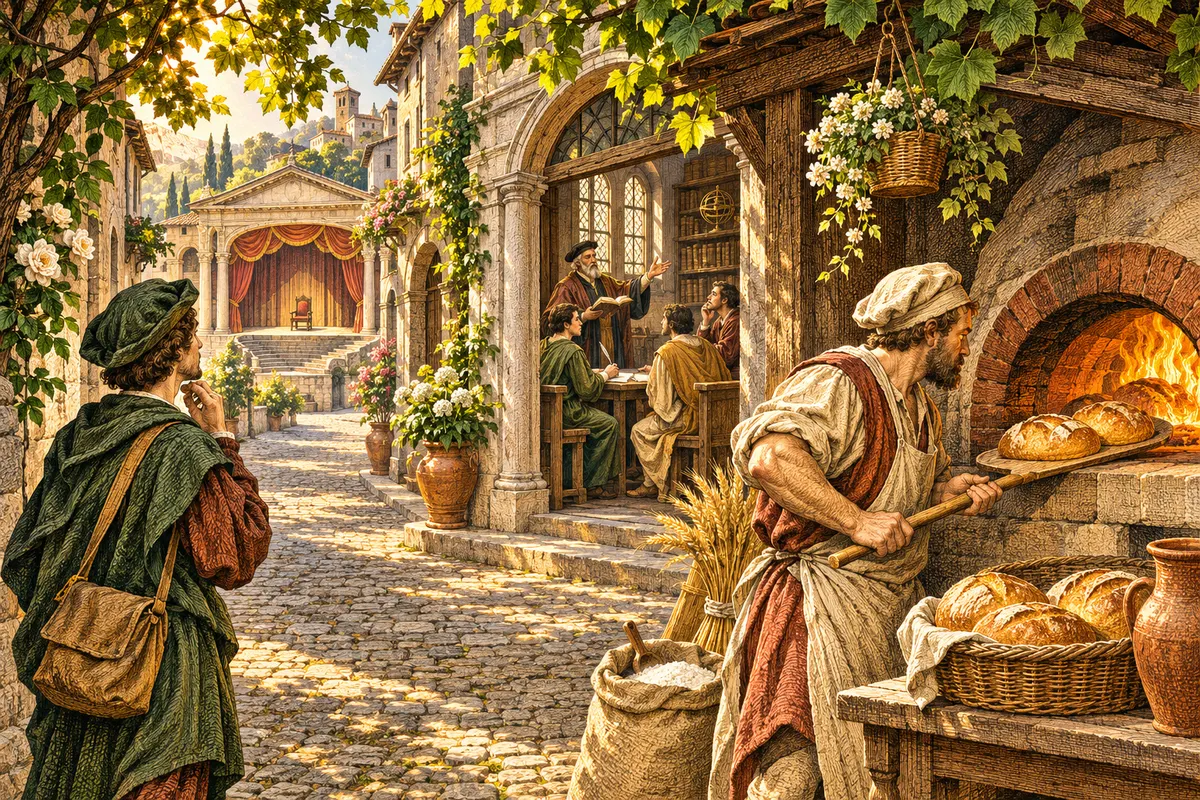
Which planet rules a bakery?
Follow Mars into a bakehouse and Jupiter into a school to discover the different clues in Agrippa’s map of places.

What happens to light when the receiver changes?
Trace light from intelligence to an eye and a dark body to see how a receiver changes its manifestation.

What does a prince’s expression do to a city?
Read the prince, the mourner, and the kneeling figure as three separate links in an argument about posture.
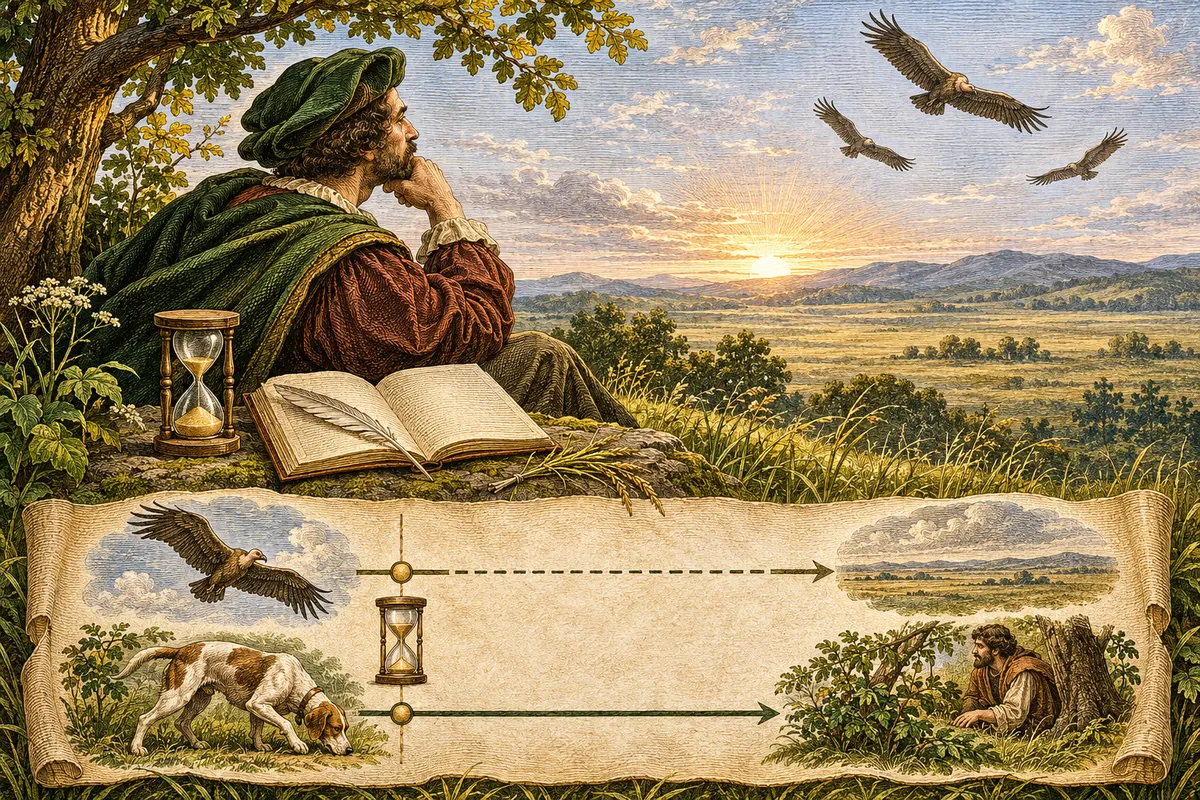
Did the vultures arrive before the battle?
Put Agrippa’s story of vultures on a timeline and compare it with his example of a tracking dog.
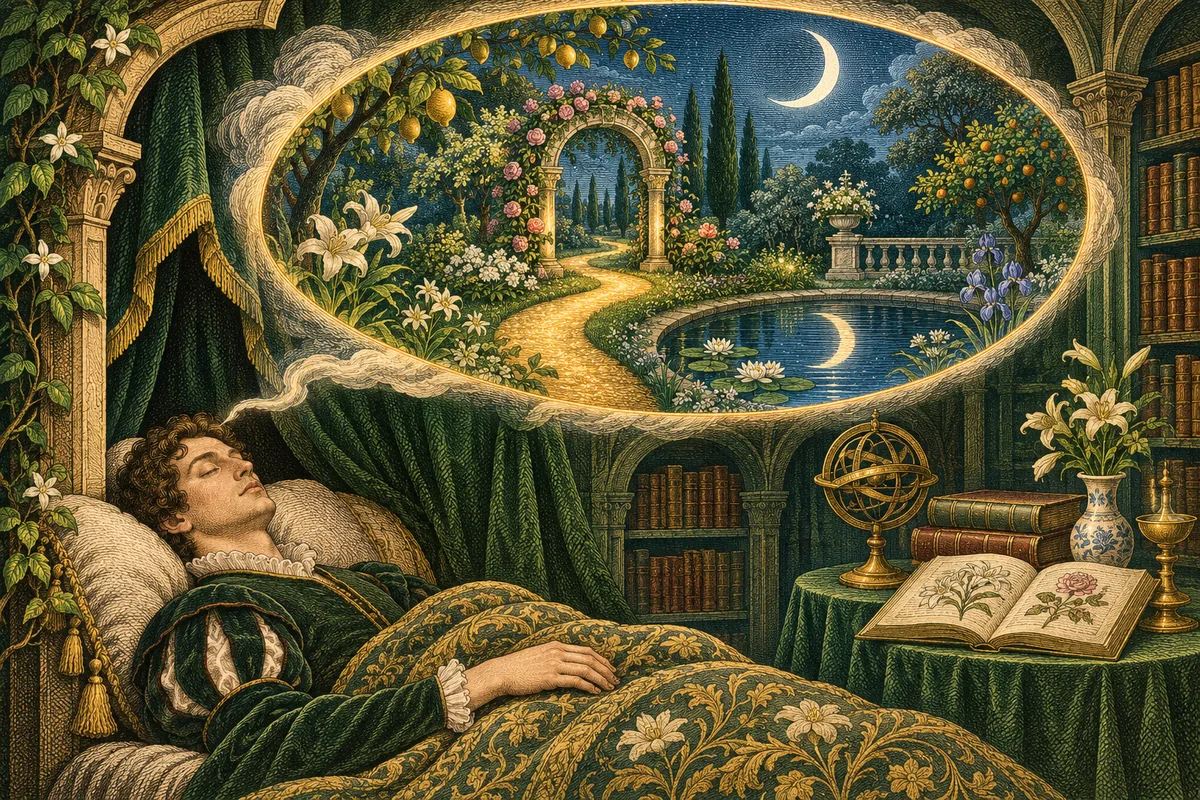
Why can’t one dream dictionary serve everyone?
Compare two dreams of a bridge and reconstruct the recording practice Agrippa takes from Synesius.
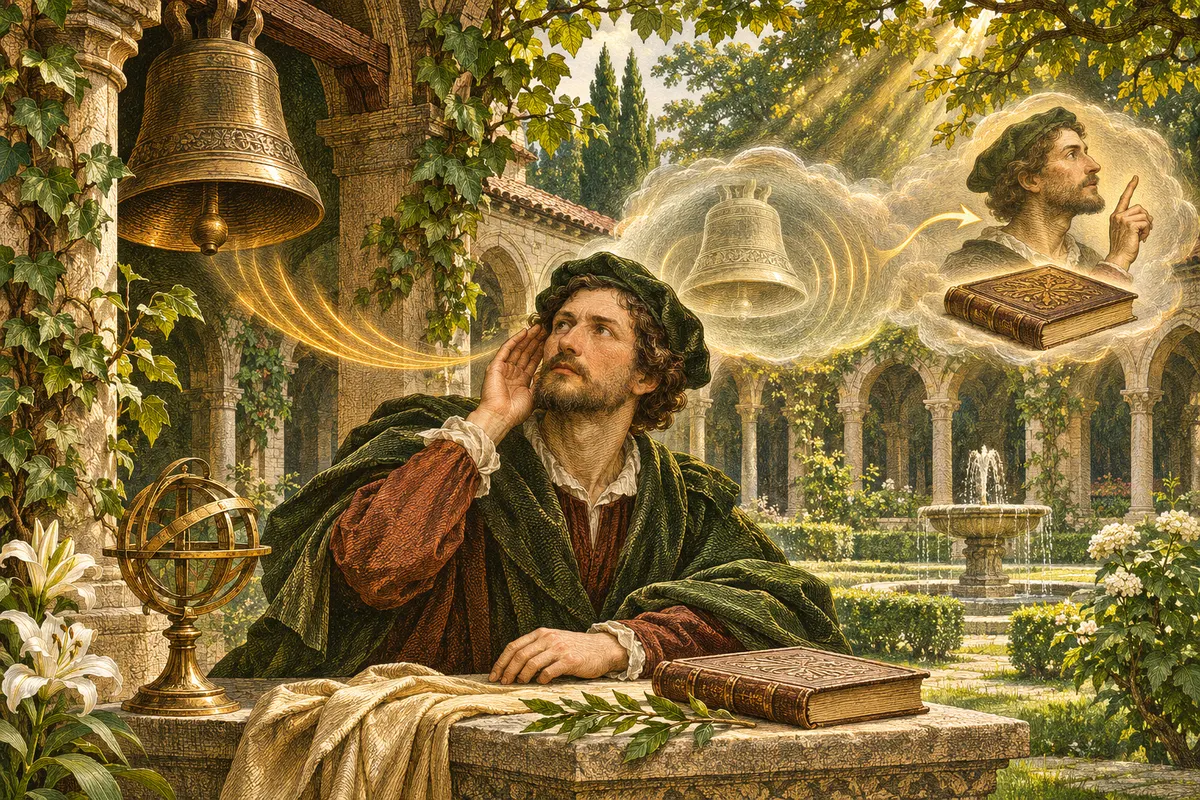
How does a bell survive its last note?
Follow a bell’s note through the four inward senses in Agrippa’s account of perception.

How does a locked door turn desire into hope?
Use a missing key to separate desire, hope, and despair in Agrippa’s eleven-part account of the passions.
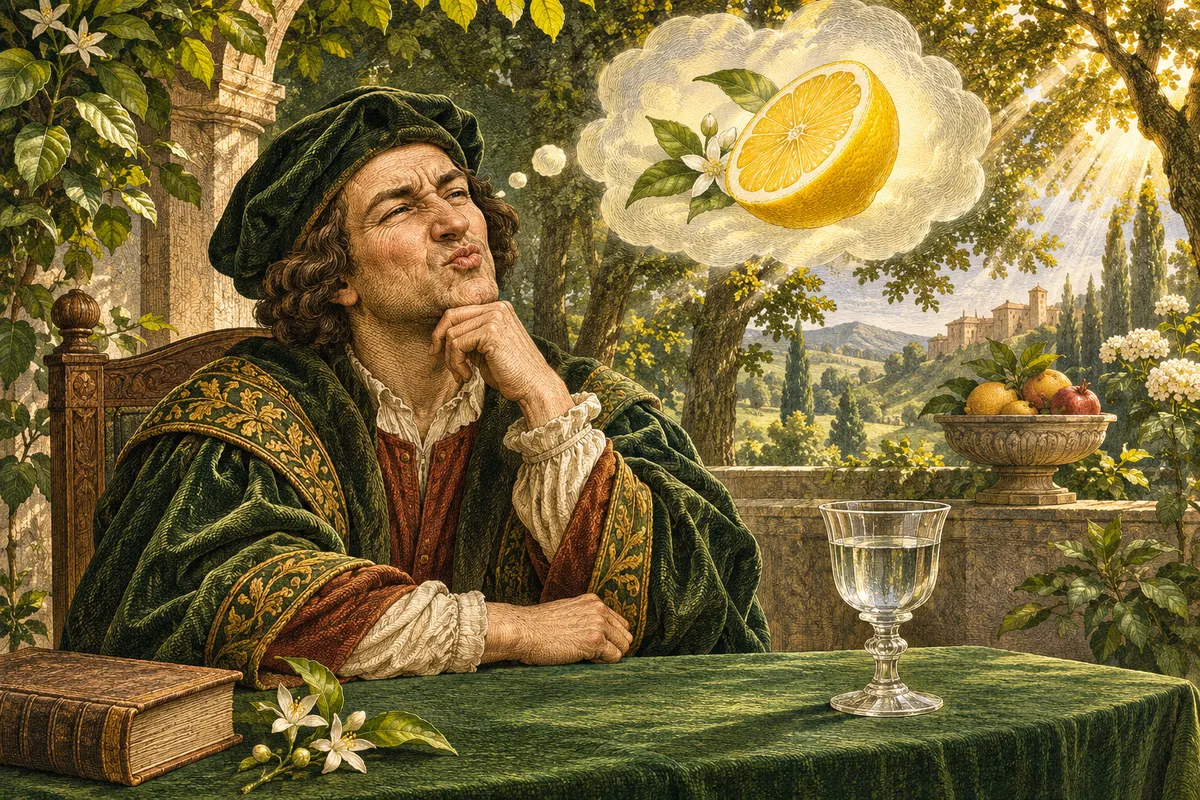
Can an imagined taste change the mouth?
Follow his transition from hearing of sour food to much more ambitious stories of bodily imitation.
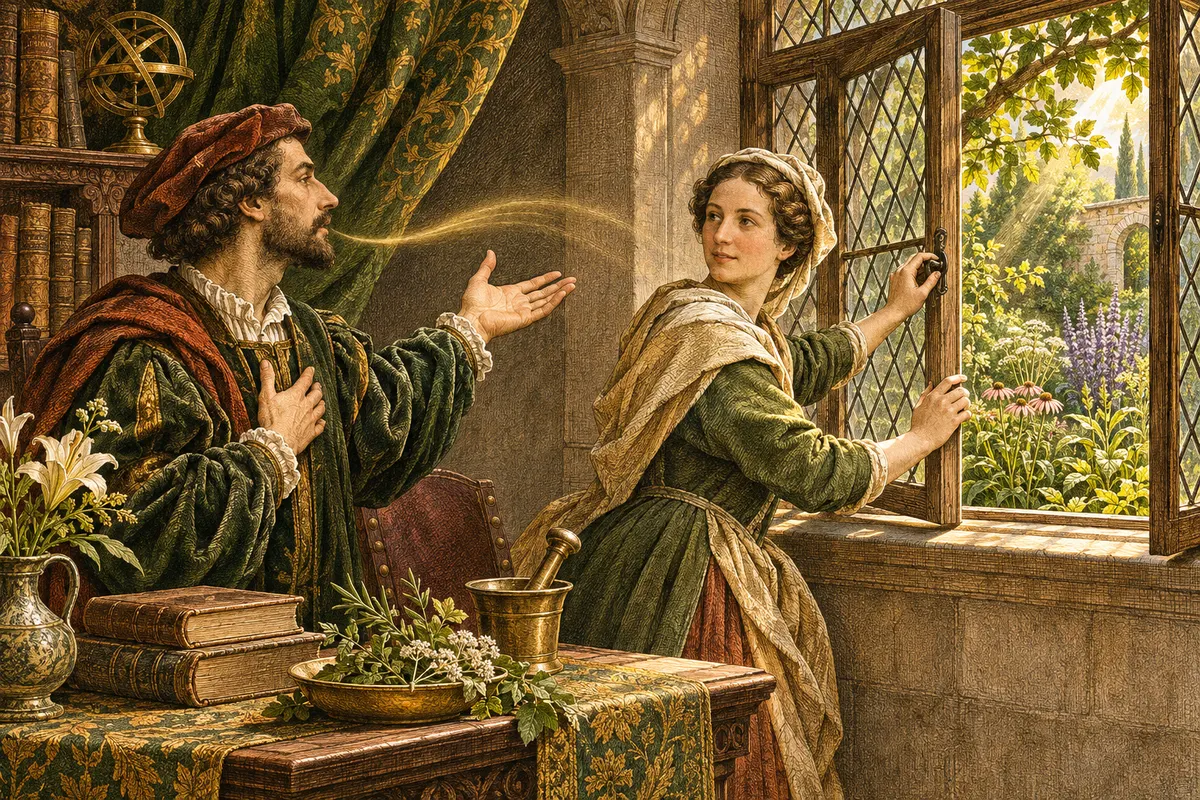
Where is a speech before anyone speaks?
Rehearse a sentence silently, then follow Agrippa’s argument from breath and understanding to the claimed powers of speech.
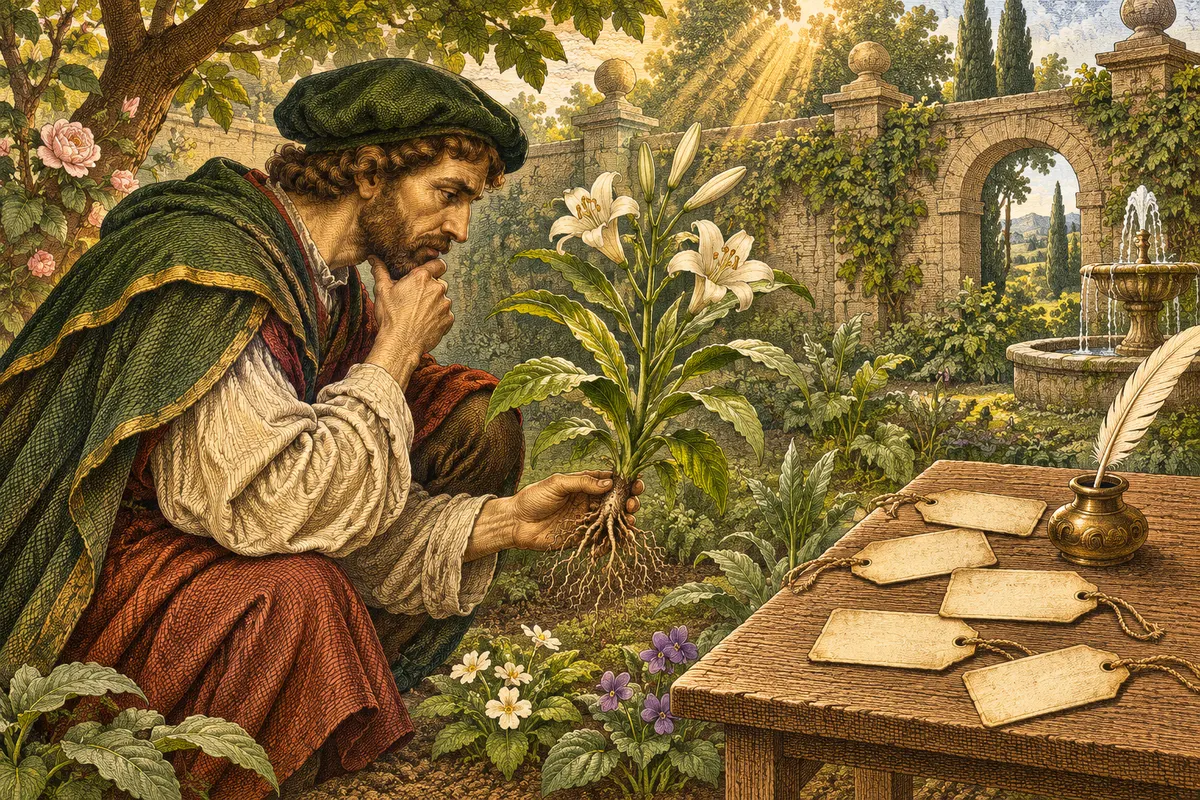
Could a name fit its subject twice?
Follow a name from perception through speech and consider what Adam’s naming of creatures contributes to Agrippa’s argument.
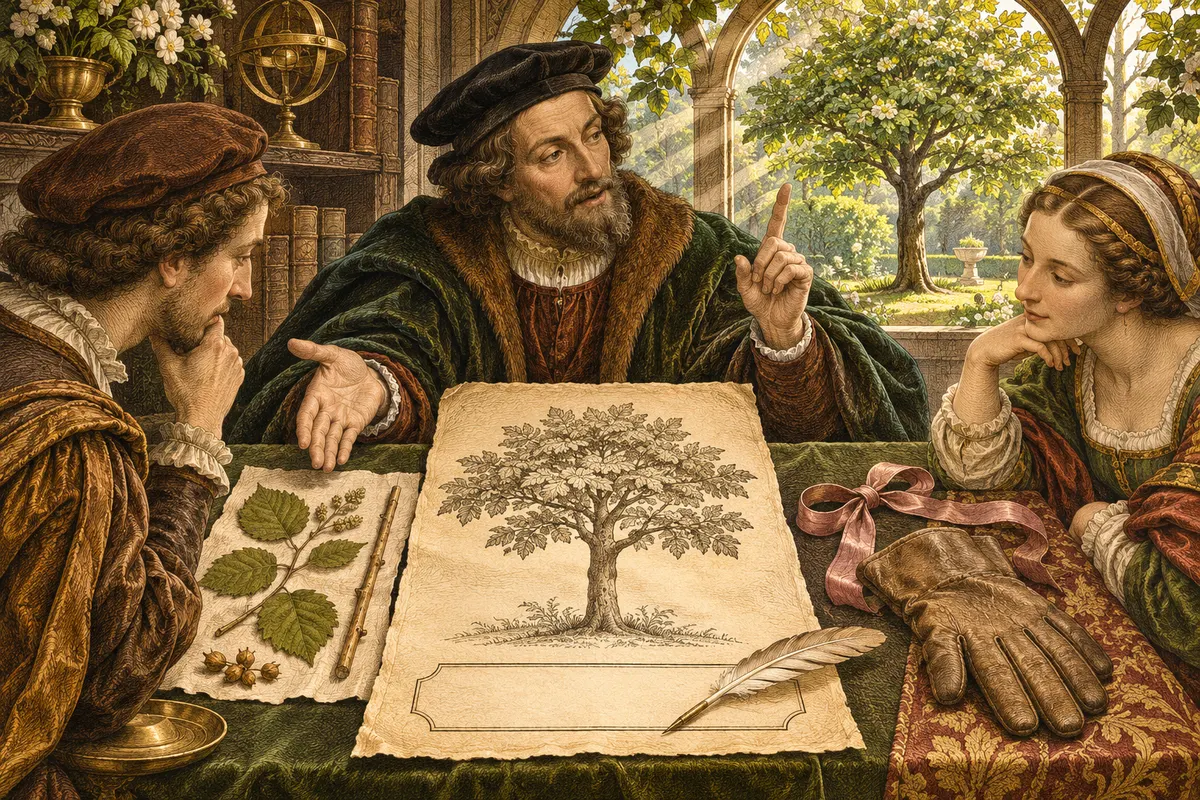
Why write an intention on the object?
Give one drawn picture two possible purposes to see why Agrippa wants the maker’s intention put into words.
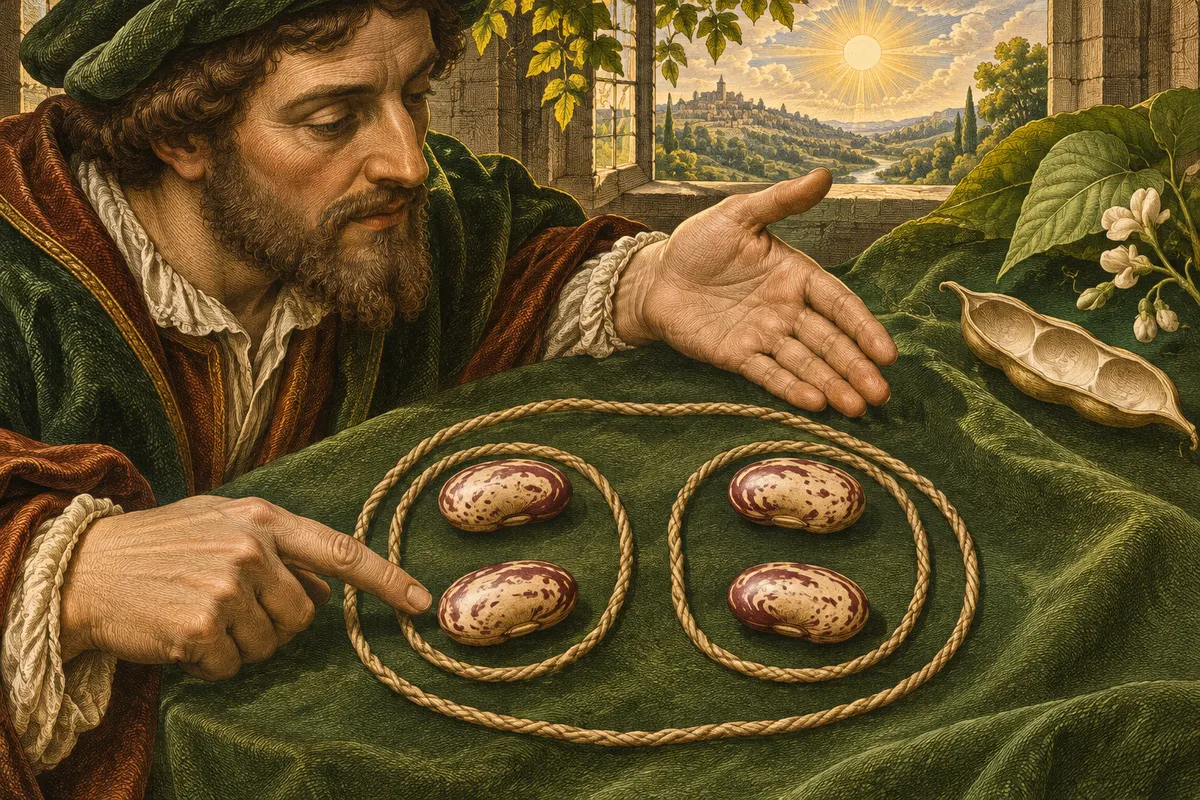
What do we count as one?
Count a handful of beans twice, changing the unit. The exercise opens Agrippa’s argument about one and many.
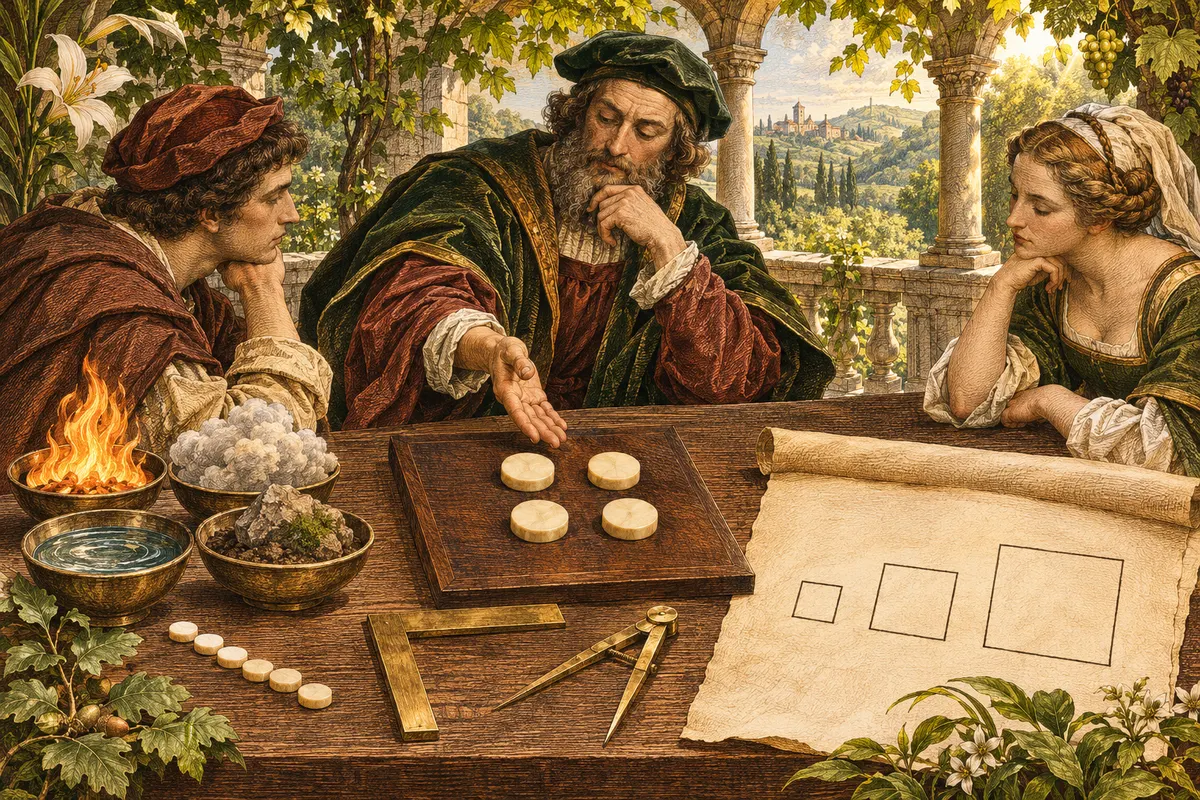
How can unequal steps be equal?
The steps from one to two and from two to four look unequal until you change what you measure.

What makes six perfect?
Six begins as a sum you can check. Turn the page and it has become a way of arranging the heavens.
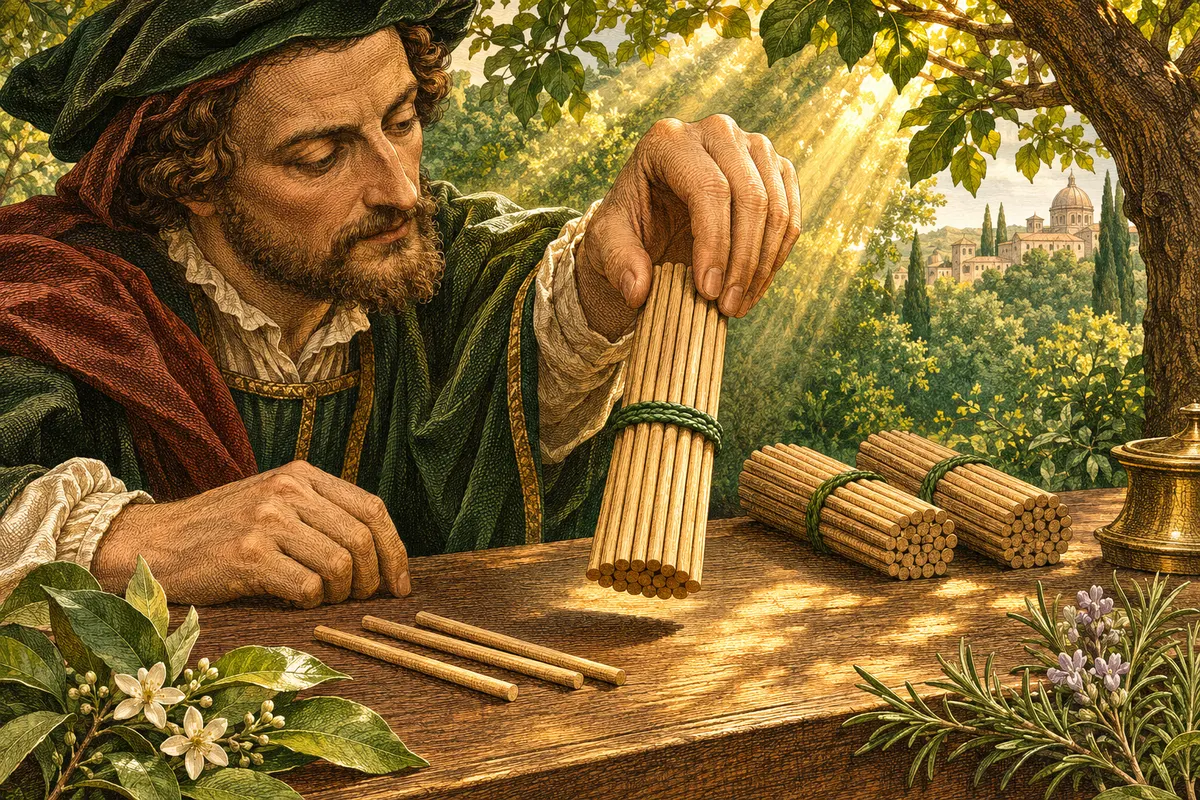
What starts when ten is finished?
Agrippa gives ten two jobs. It finishes one group and becomes the unit for counting the next.

How much can a bent finger say?
Agrippa initially distrusts a silent gesture. Bede’s rules give him another way to read it.
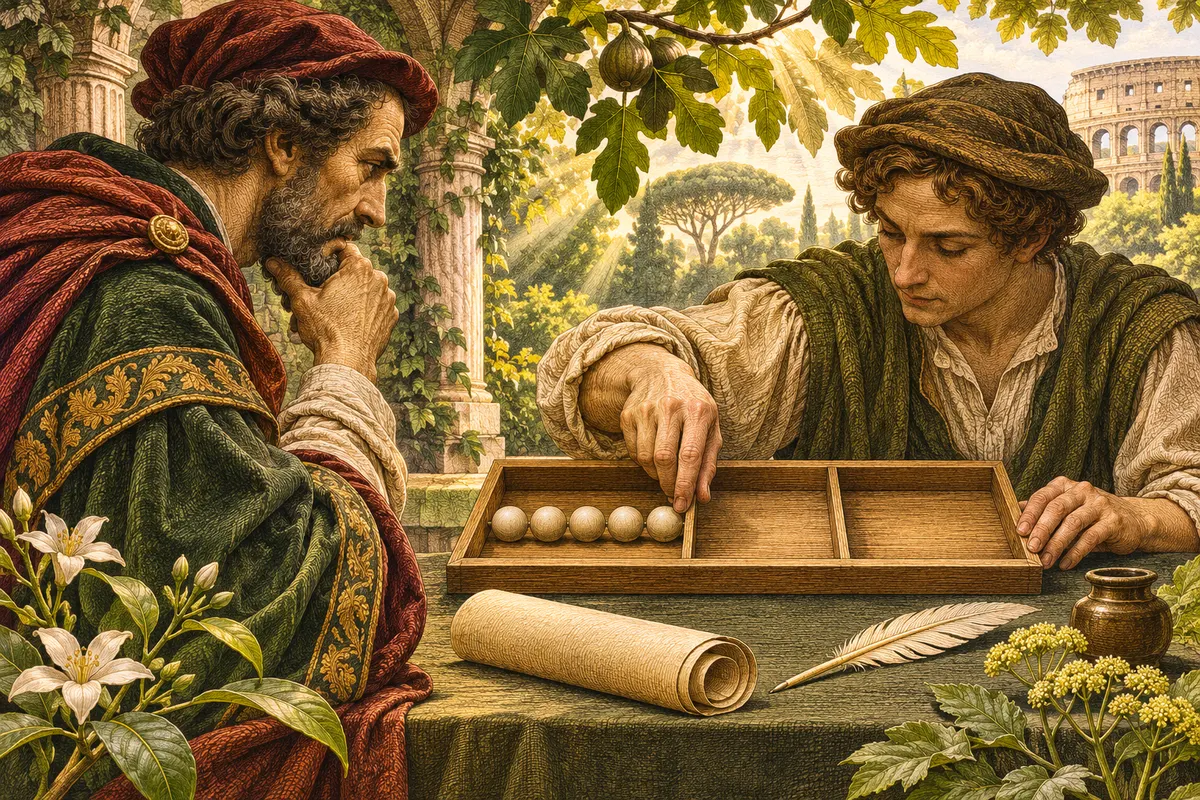
What does an empty place do?
A page of Roman signs leads Agrippa to an apparently empty mark that changes the value beside it.

A planet from a remainder
The same set of letters can give a planet or a sign. The result depends on the question and the divisor.
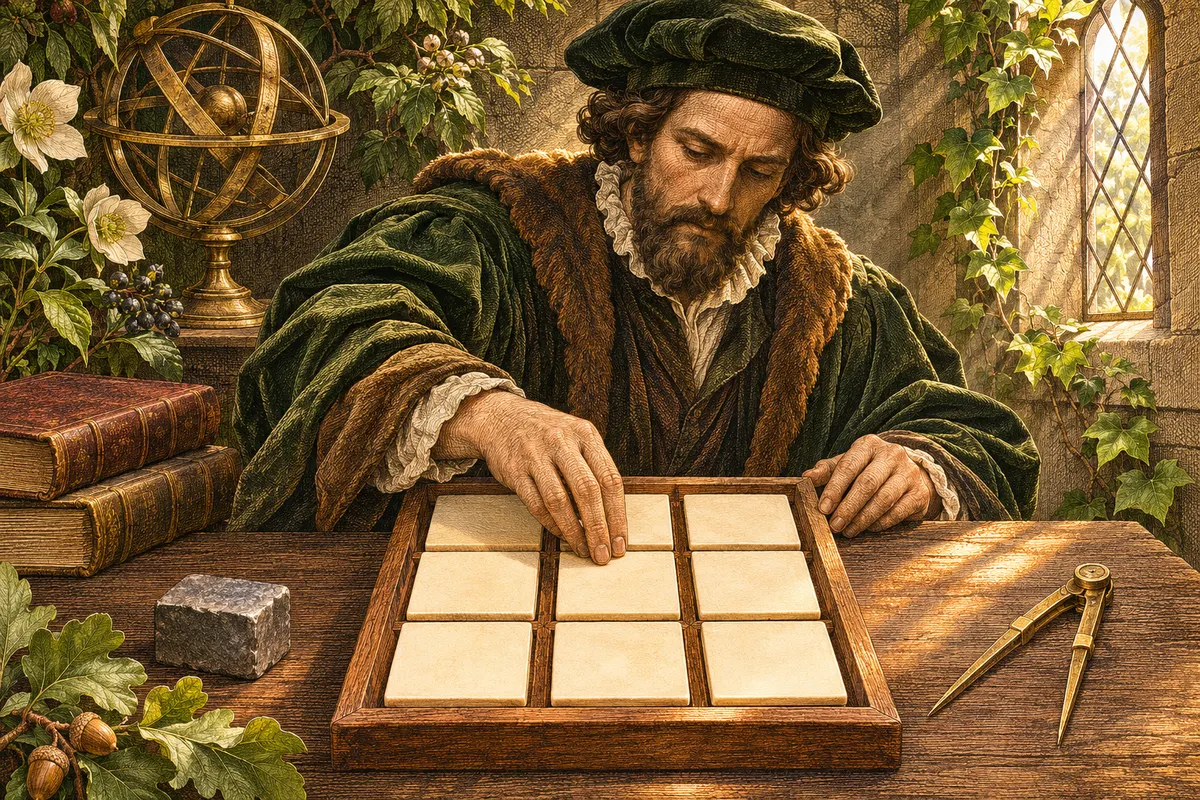
Inside Saturn’s square
Calculate the eight lines in the 1651 square, then read their place in Agrippa’s account of numbers, names, and planetary influence.

Where does a circle begin?
A pencil leaves the page and a line has a beginning. What happens to that beginning when the line closes?
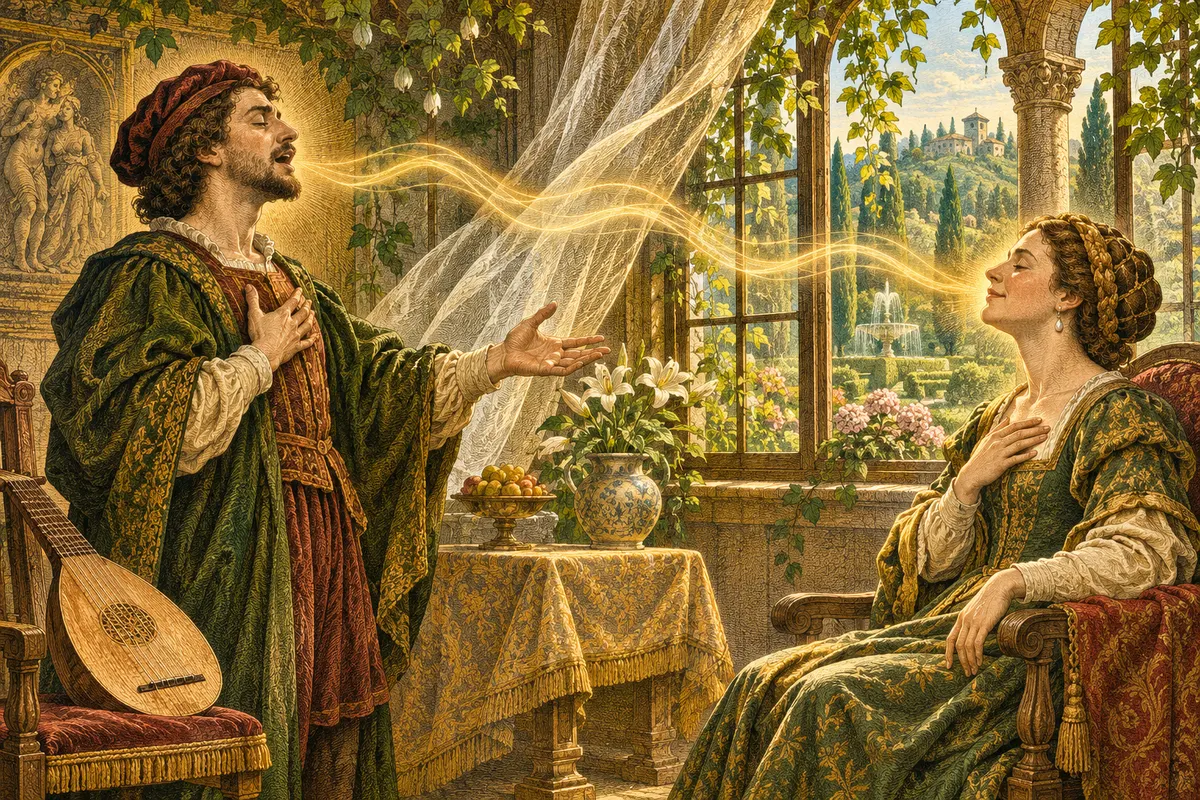
What does a singer send?
Agrippa follows a song from the person who gives it voice to the person who hears it.
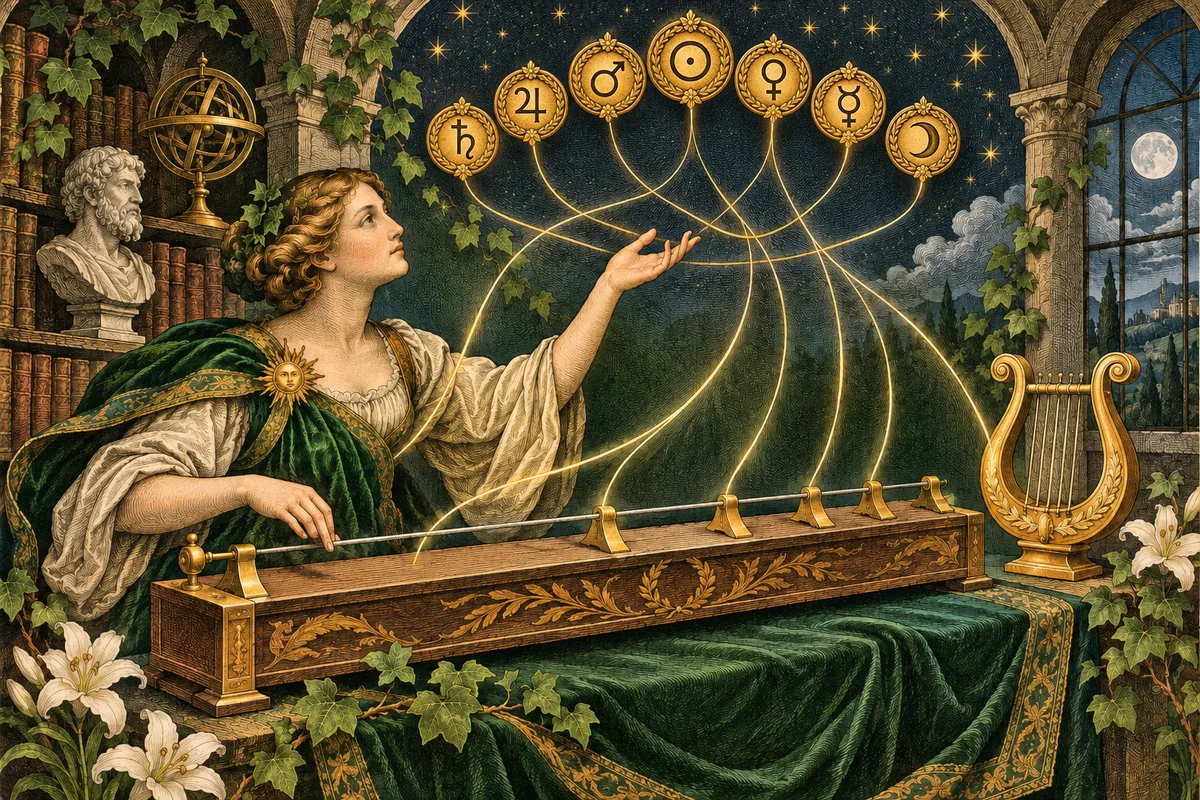
What would Saturn sound like?
Read aloud two planetary voices, then use two pairs of notes to hear the octave associated with the Sun and the fifth associated with Venus.
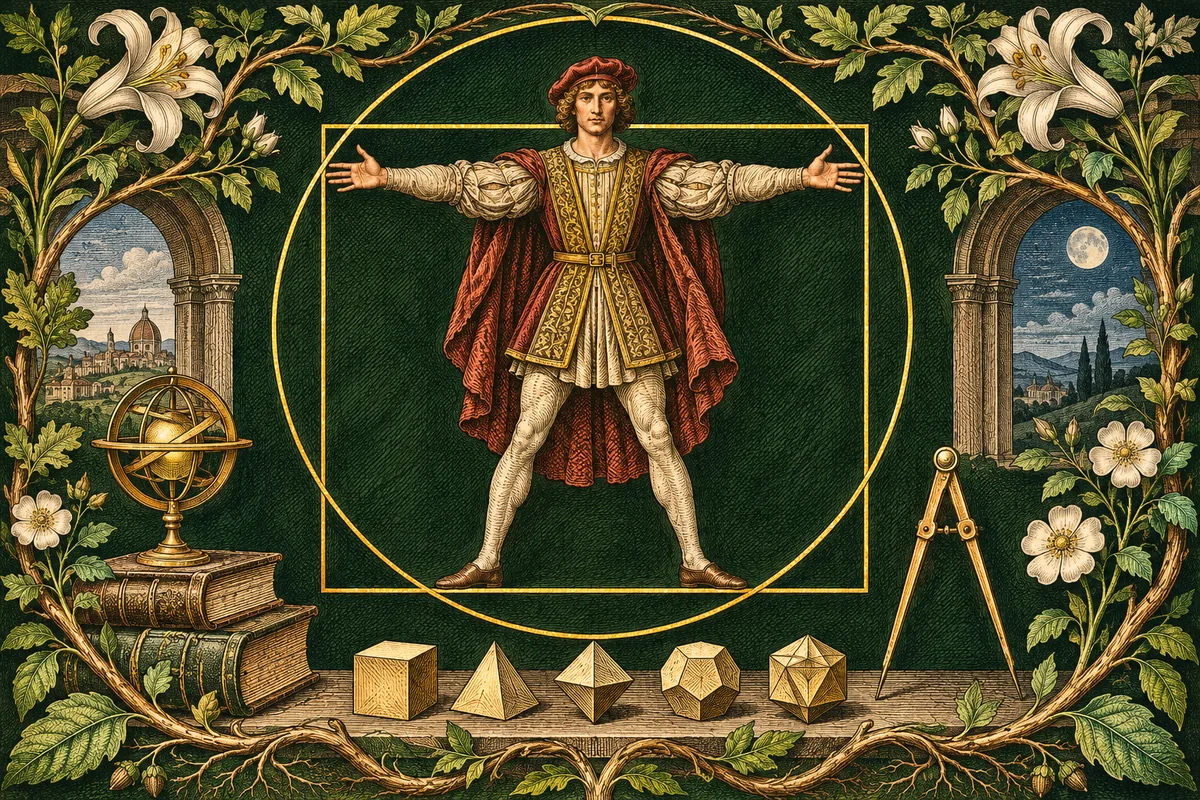
How to read a body in a square
The picture gives you a figure, a frame and two diagonals. Each does a different job in Agrippa’s argument.
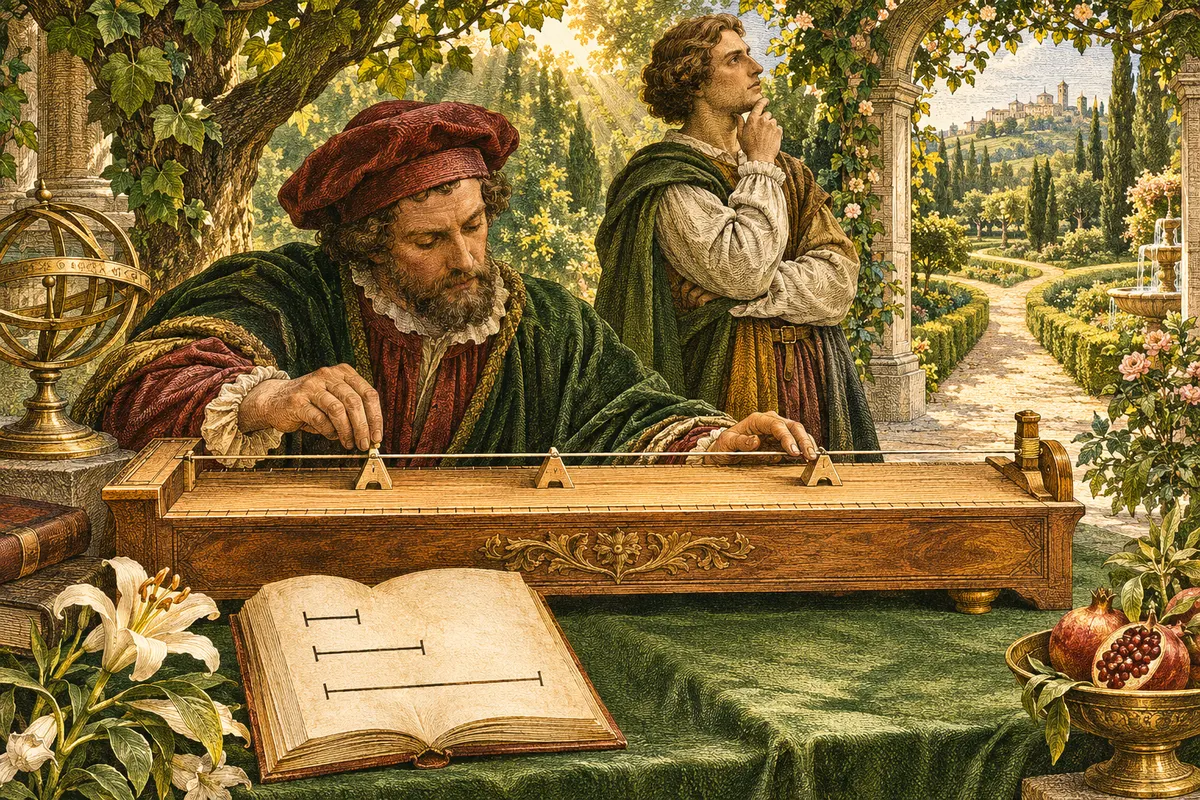
Can a decision be in tune?
Desire, anger and reason become three positions in a musical model of a person making choices.
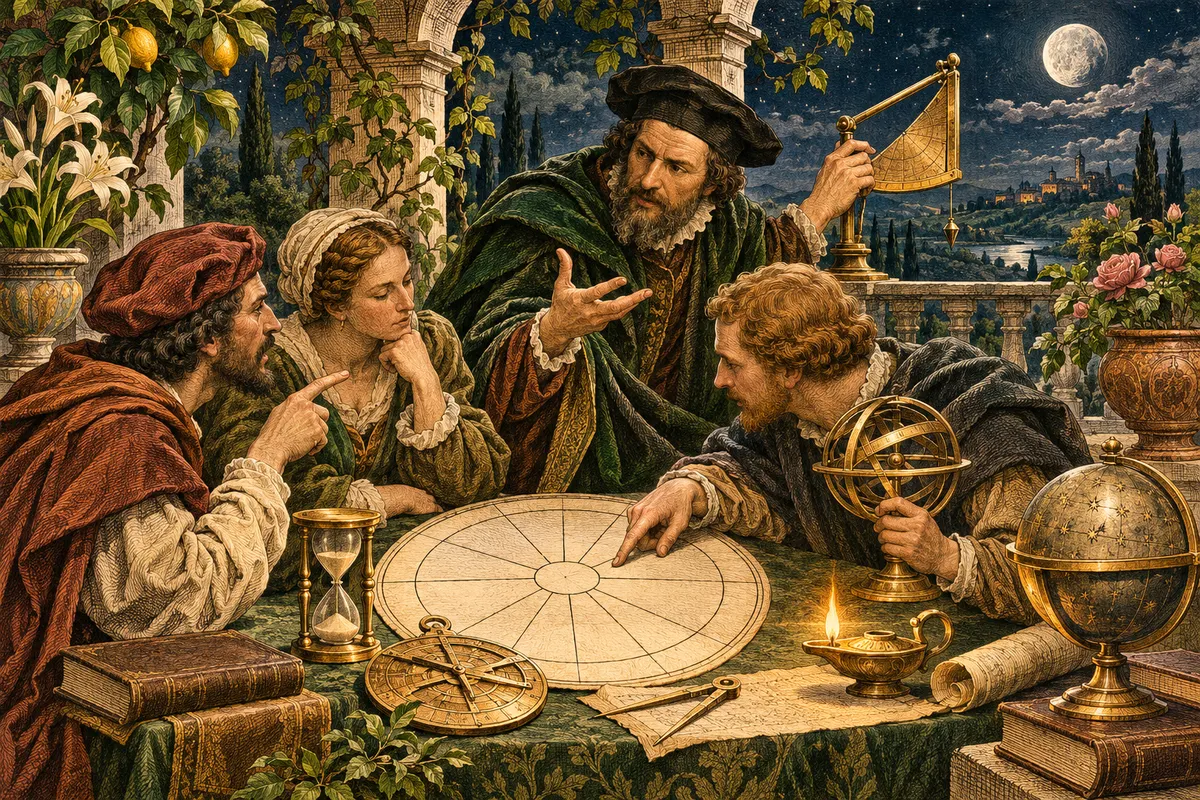
When is a planet strong?
Agrippa gives three people reading the same chart several reasons to argue about the meaning of one planet.
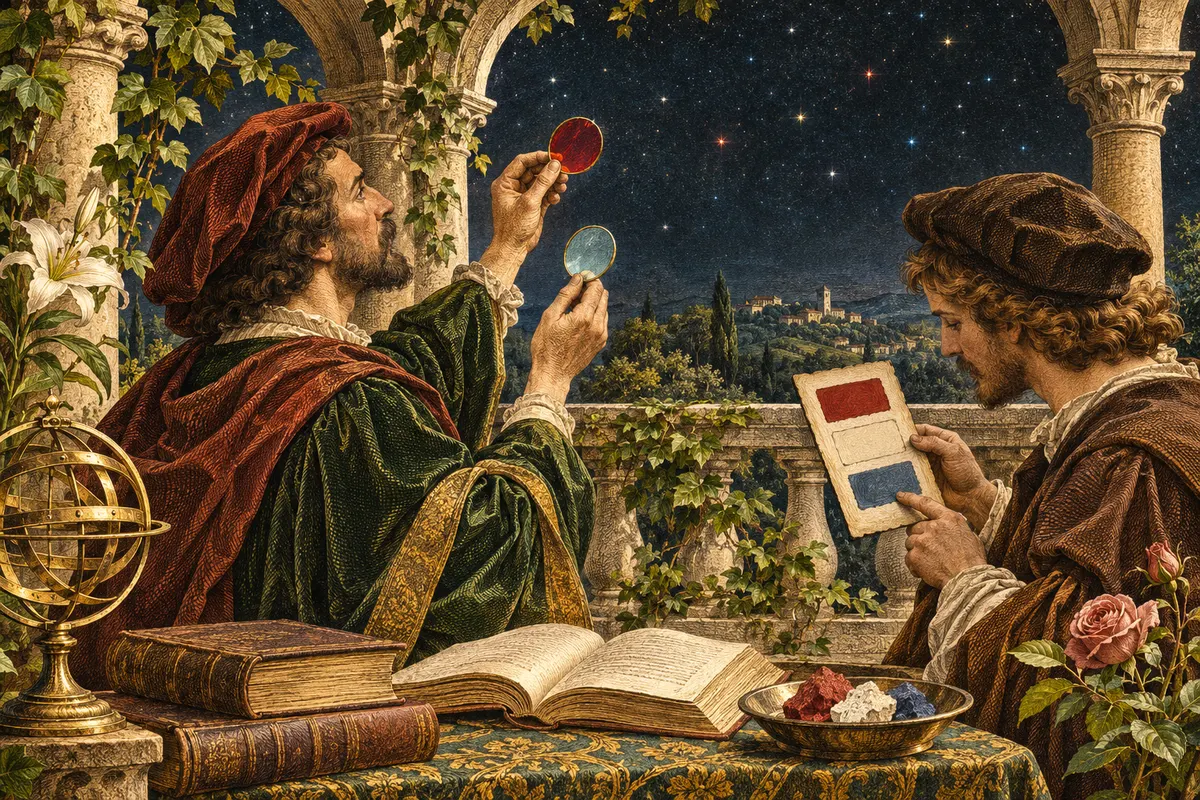
How does a star acquire two natures?
A fixed star can be described as both martial and Venusian in Agrippa’s catalogue. His color key is only the beginning.
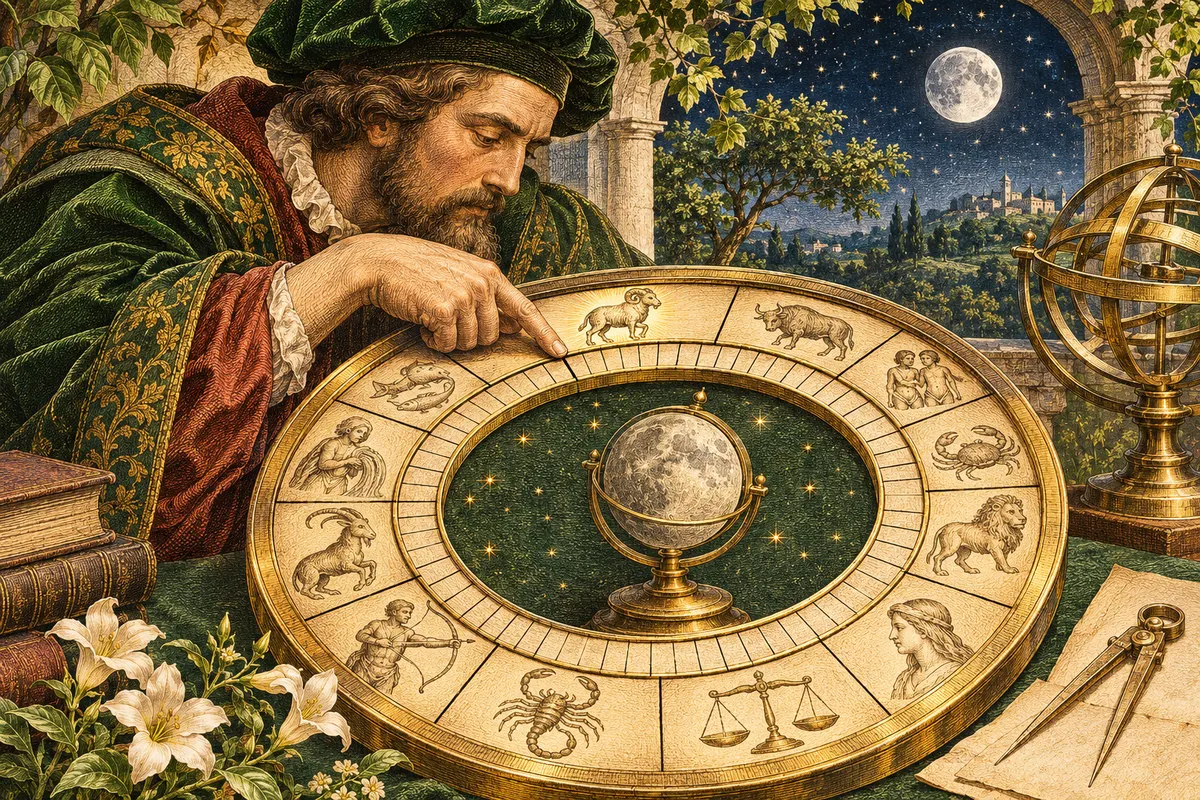
Give the Moon an address
Agrippa lays twenty-eight lunar stations across a zodiac with twelve signs. Follow their boundaries through Aries.
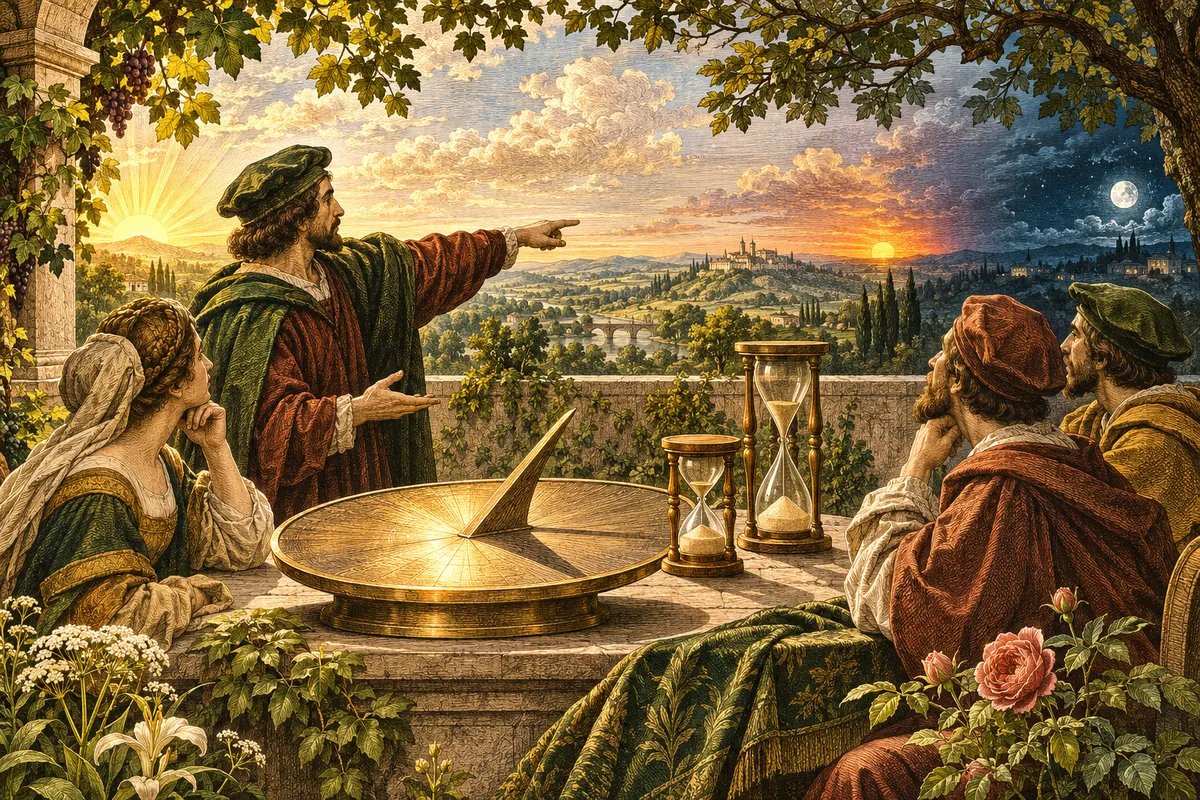
How long is a planetary hour?
Two readers can agree on the planet assigned to an hour and still disagree about when the hour begins.
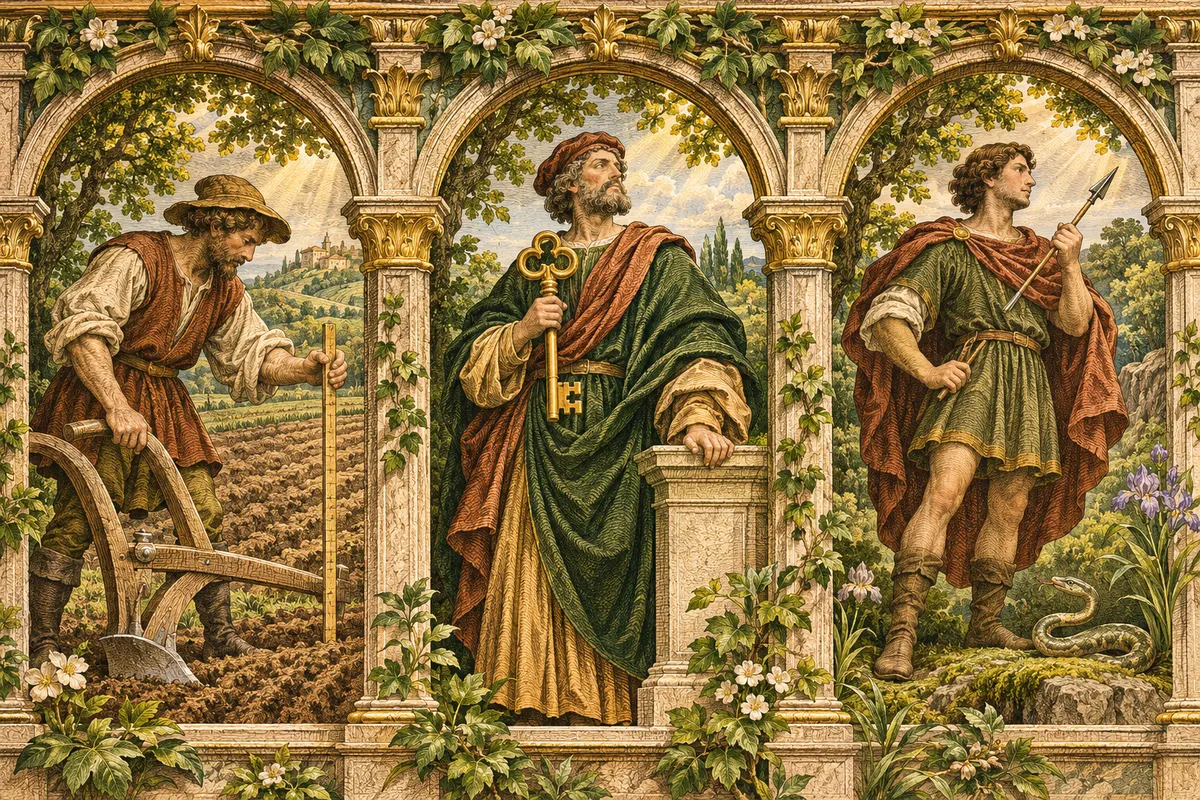
Who holds the key in Taurus?
A farmer, a key bearer and an armed figure occupy three different parts of a single sign.
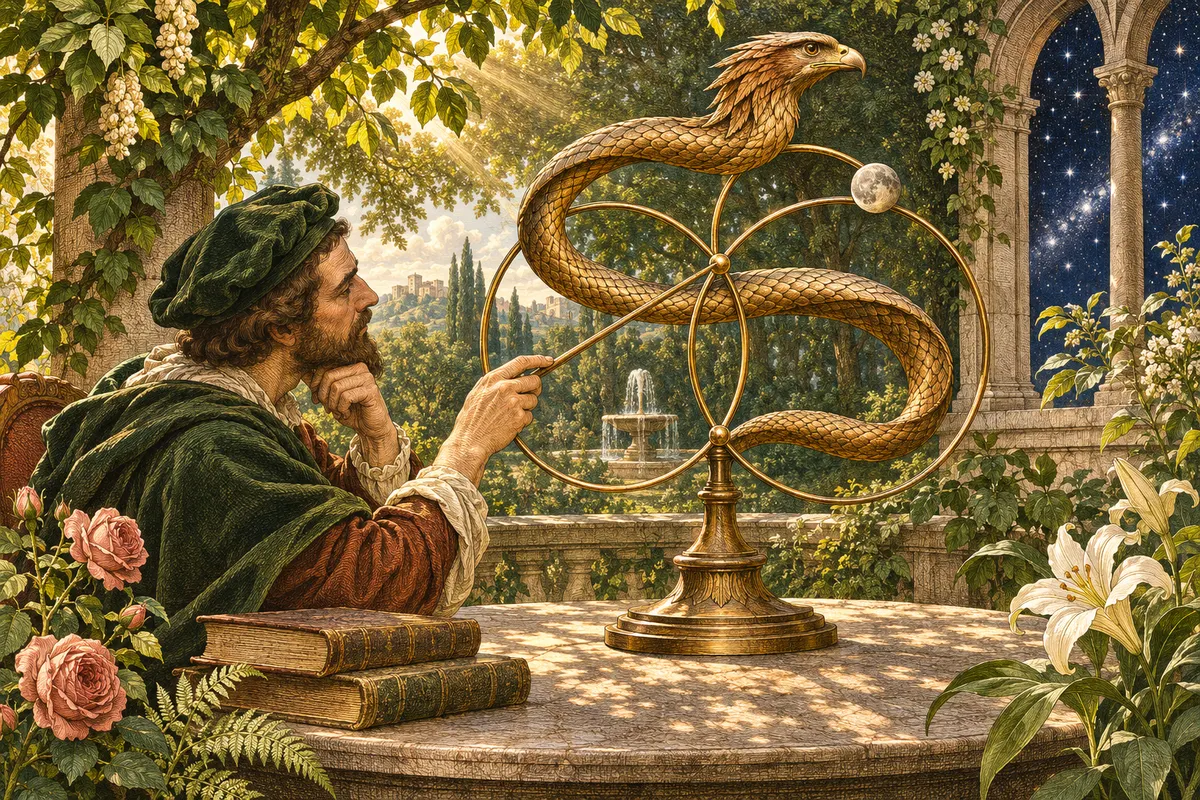
Why give the Moon a dragon?
A serpent with a hawk’s head sits among the lines of type. The chapter asks you to read its body, its outline and its habits.
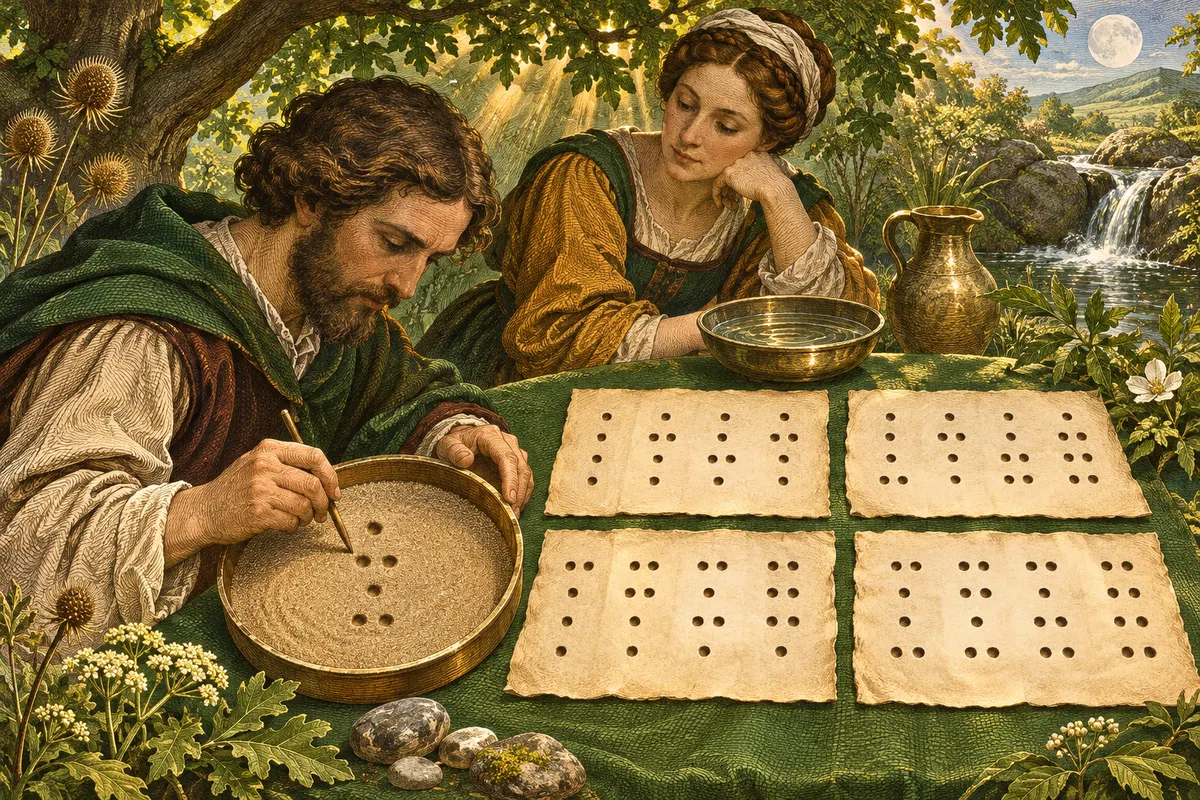
Why are there sixteen figures?
A four-row figure loses almost all the information in a count. What survives is enough to choose one row of a table.
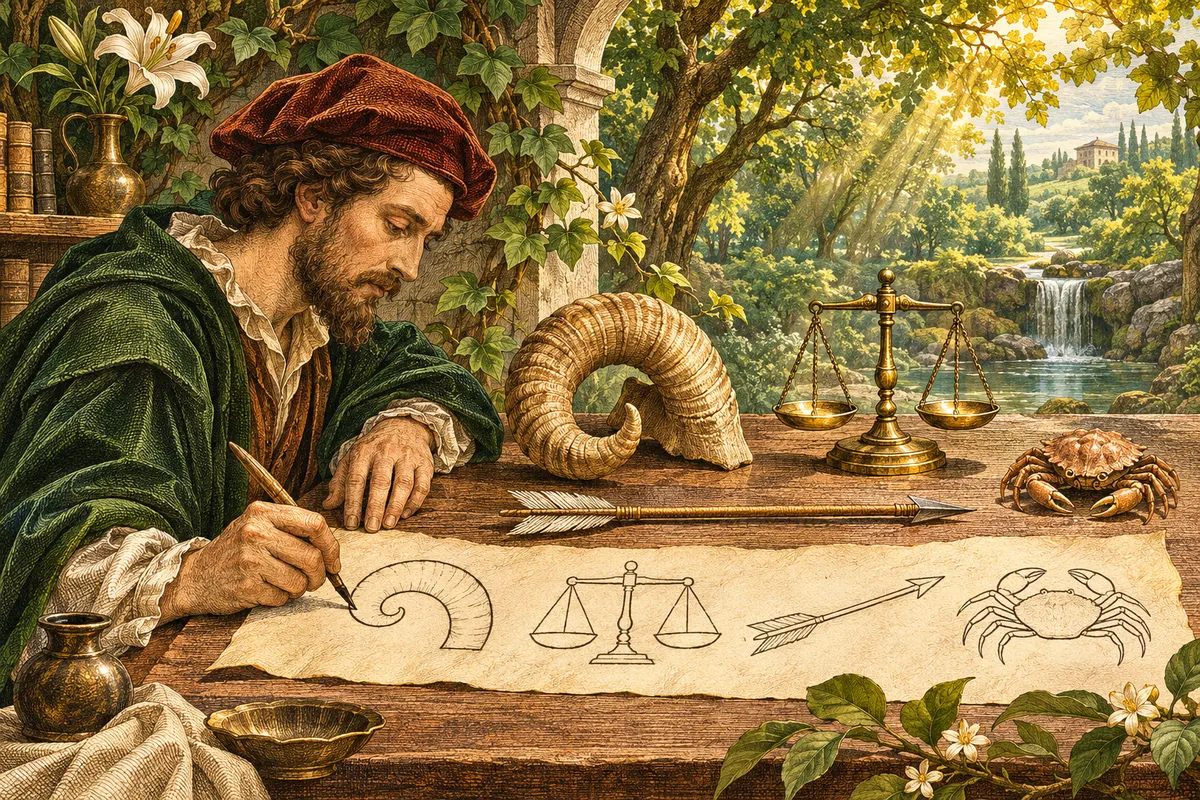
A whole animal in two strokes
Horns, a dart and a movement through water give Agrippa different routes from image to written character.
Reading a cosmos as a body
Agrippa places several poets on one page and asks their lines to answer a philosophical question about motion and life.
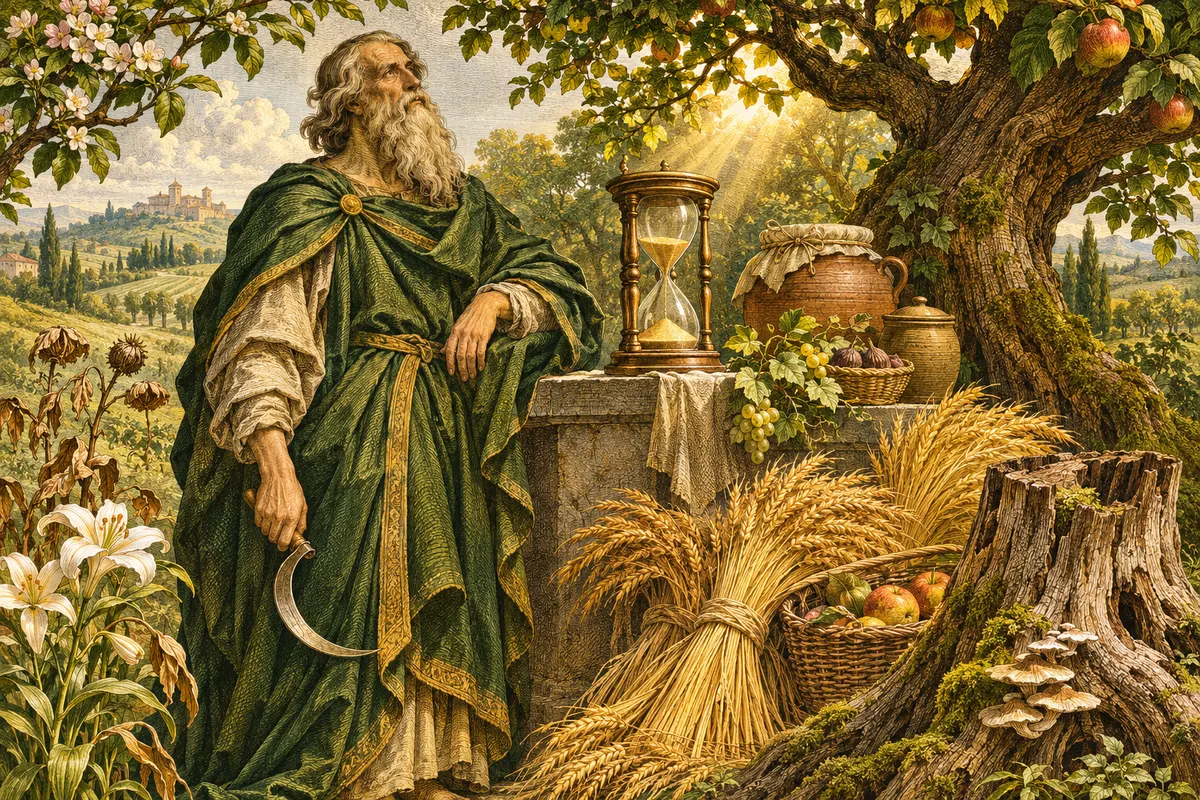
Why does Saturn keep a secret?
Timekeeper, keeper of secrets and revealer all belong to the same catalogue entry. Read the actions inside the names.
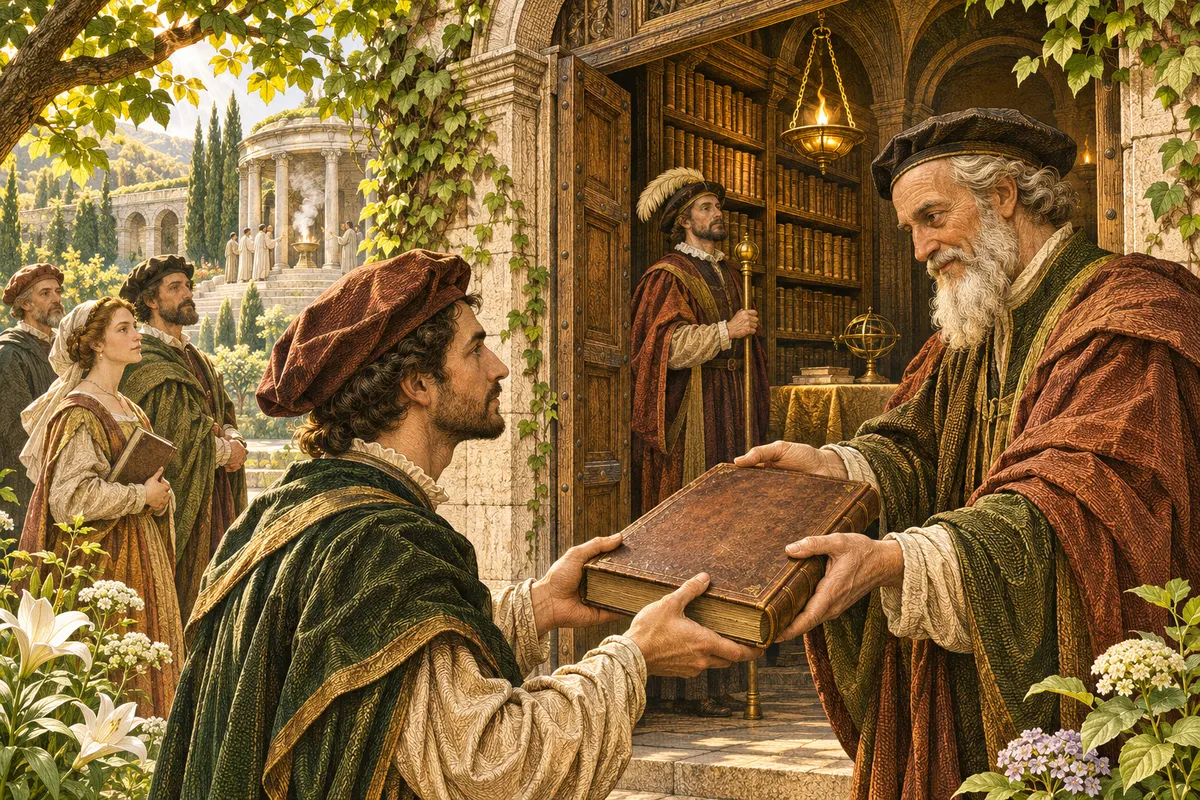
Who may hear a sacred teaching?
Compare a poem, a temple ceremony, and a rule about giving books to readers.

What makes a magician qualified?
Separate presumed natural aptitude, achievement through study, and standing conferred by a rite.
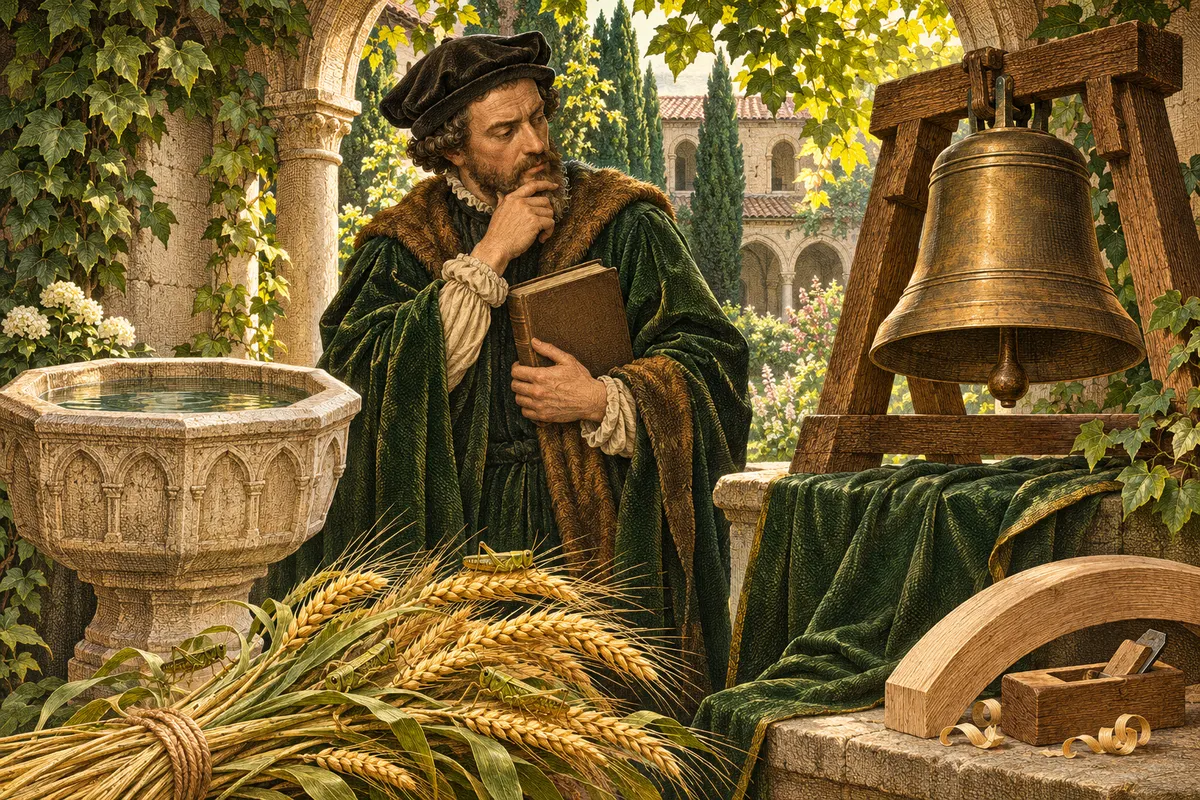
Why would someone excommunicate a locust?
Read the cases of locusts and bells beside his instructions about borrowing from other authors.
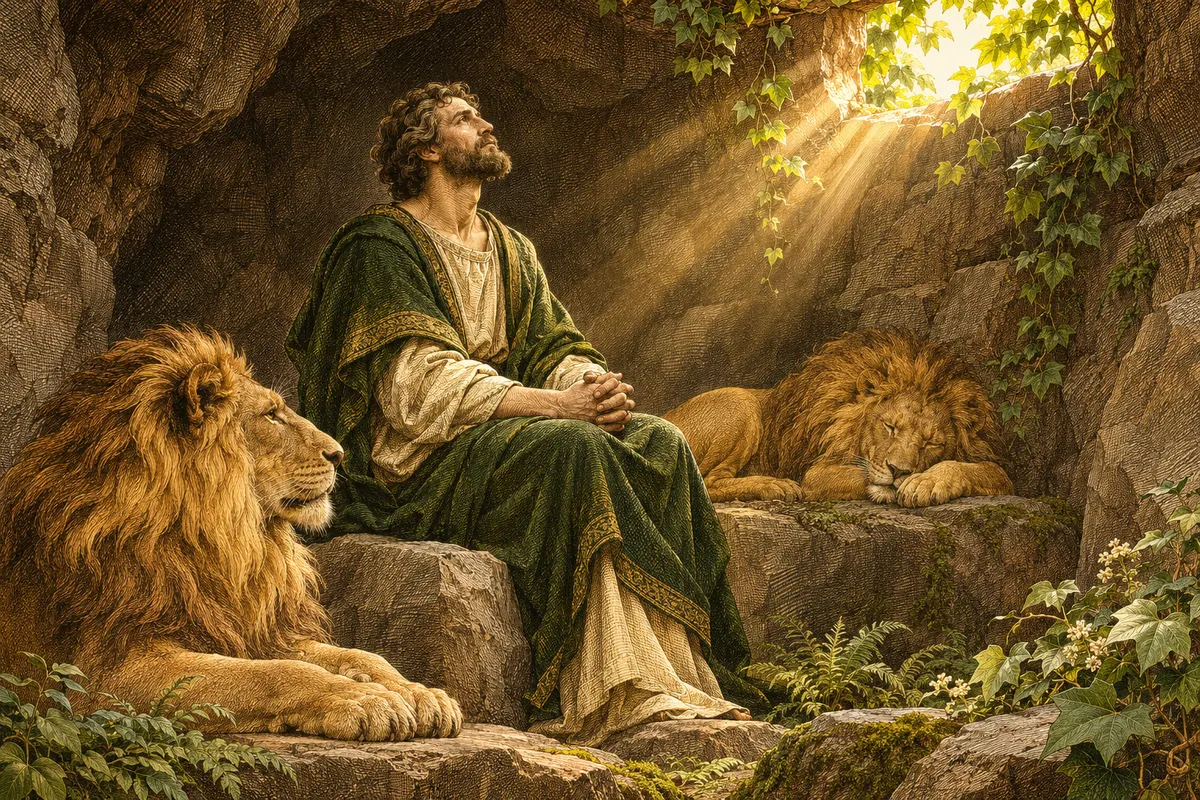
Three different jobs for love, hope, and faith
Identify the direction of love, the persistence of hope, and the source Agrippa assigns to faith.
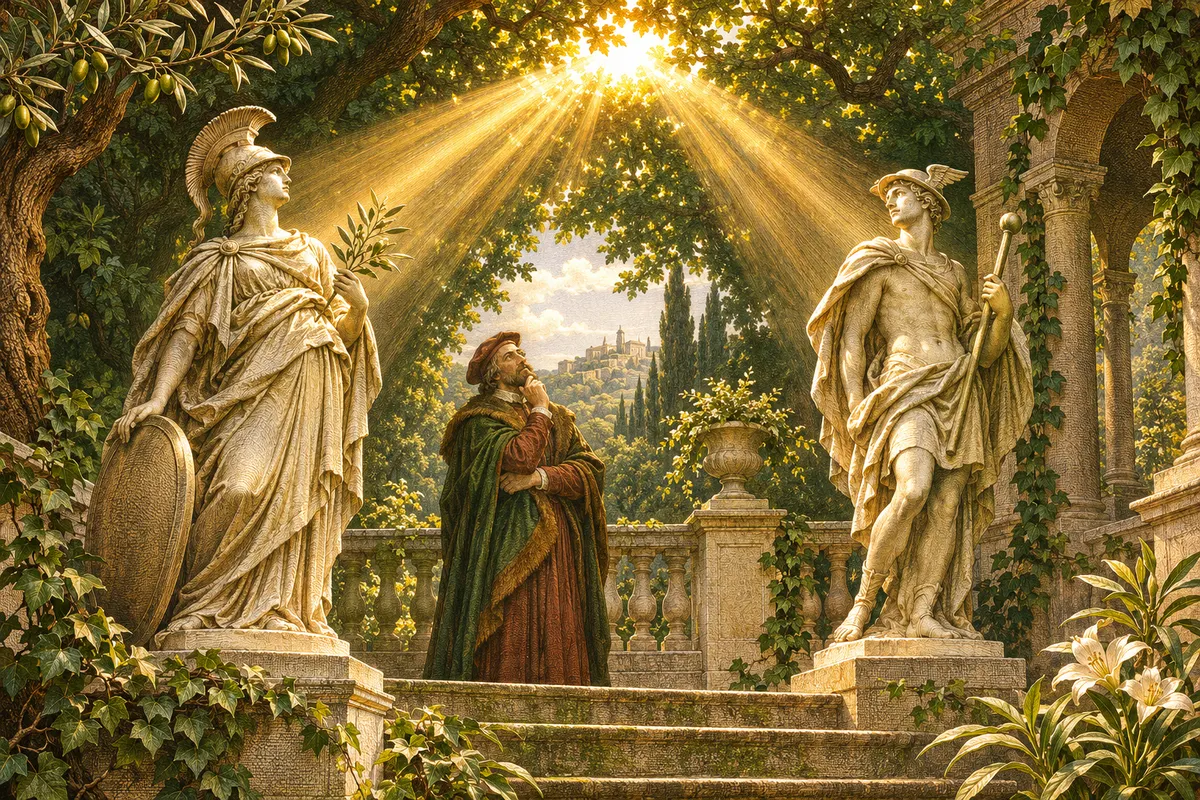
How many powers can one God have?
Reconstruct the image of rays going out from one source and apply it to the pair Pallas and wisdom.
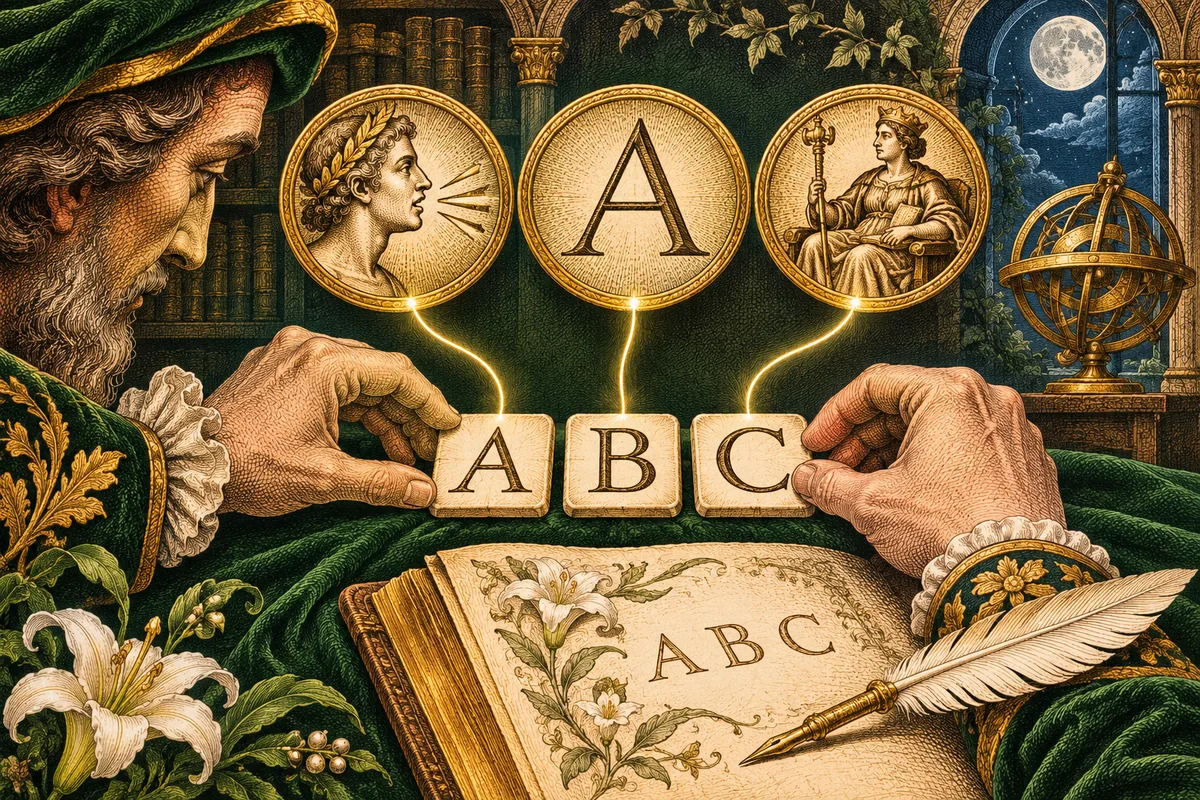
How Agrippa reads Amen
Read the Hebrew type on page 372, extract the three initials, and follow Agrippa from the lettering of a name to its use in prayer.

Why give God a garment?
Follow the different meanings Agrippa gives to a divine member and to the hem of a garment.

Who governs, who guards?
Sort three angelic duties by their reach, from contemplating divine wisdom to caring for a single living thing.
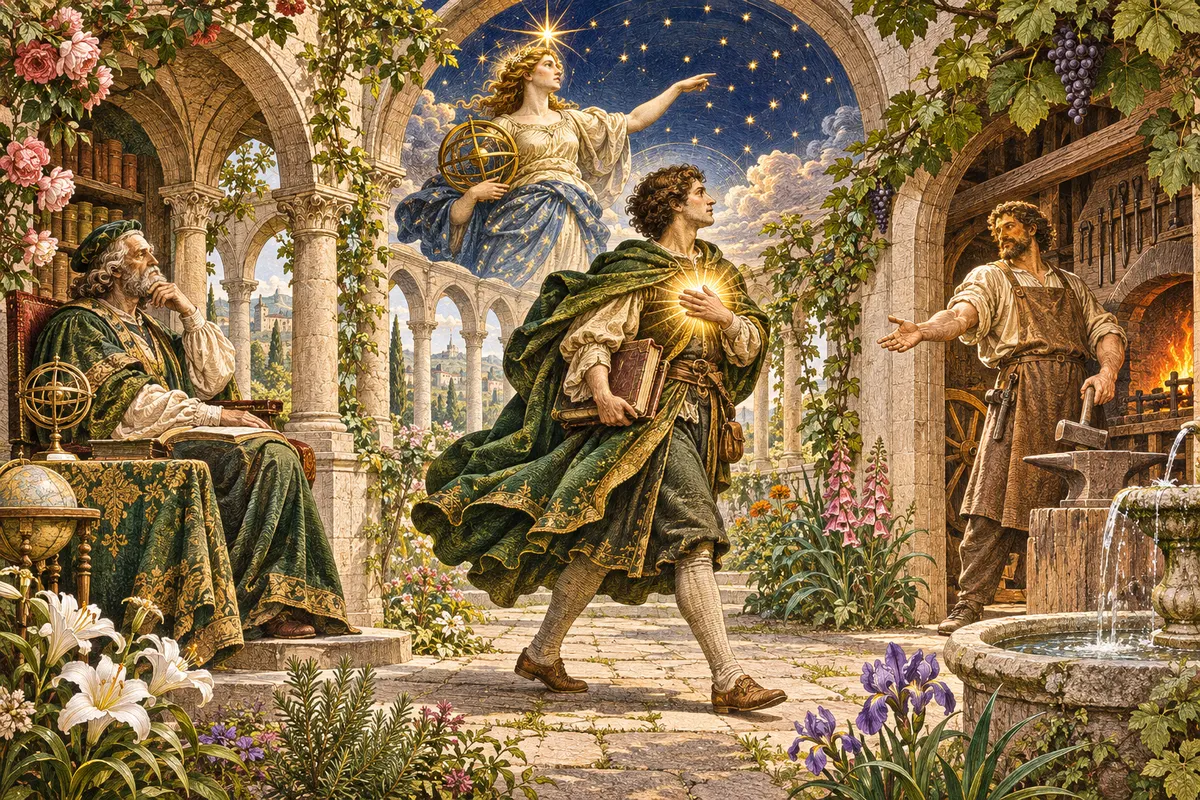
A guardian for birth and another for a calling
Separate the guardian of the soul, the genius of a nativity, and the patron of a chosen profession.

Could an angel whisper?
Follow the body parts, shrinking distances, and scriptural exception that make up Agrippa’s argument on page 413.

Three rows, seventy-two names
Build a miniature version of the letter arrangement before returning to the three verses of Exodus.

A human being as a lesser world
Follow two different comparisons on one page, from the universe to a human being and from divine reason to a human mind.
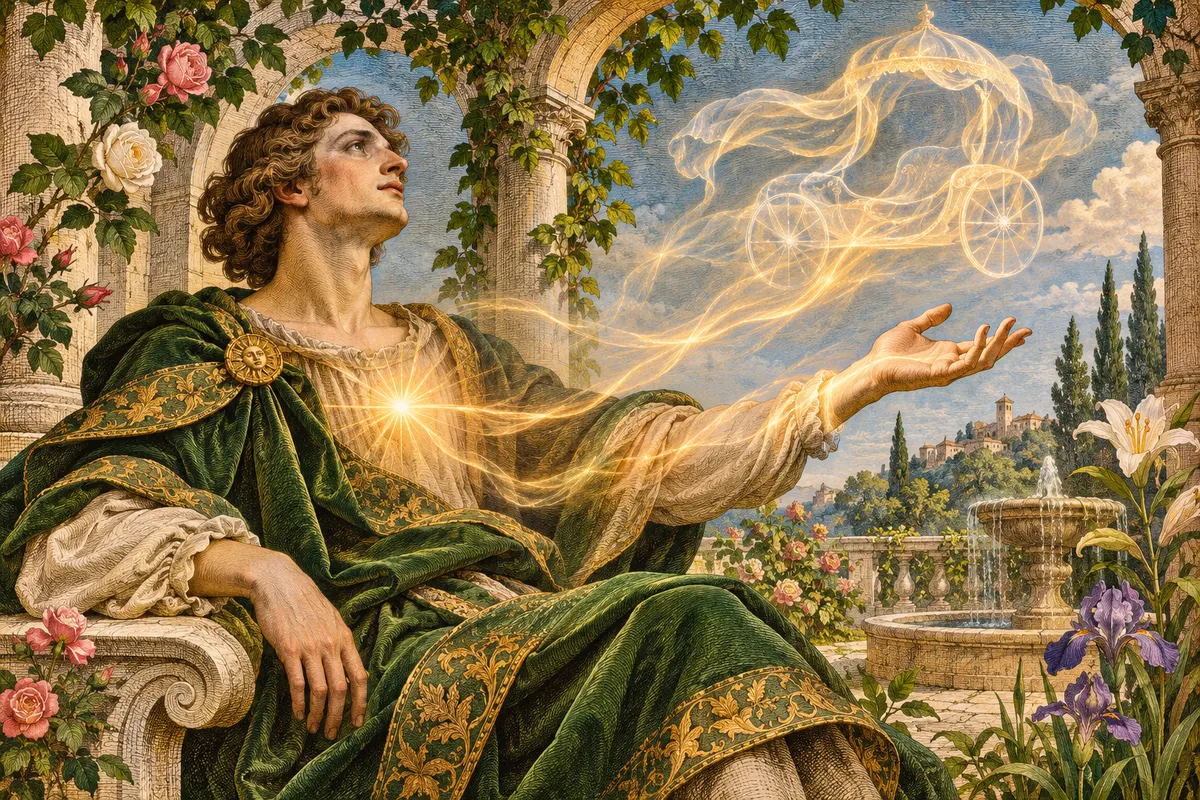
The chariot of the soul
Build the sequence Agrippa puts between a divine soul and a living hand, beginning with what he calls its chariot.
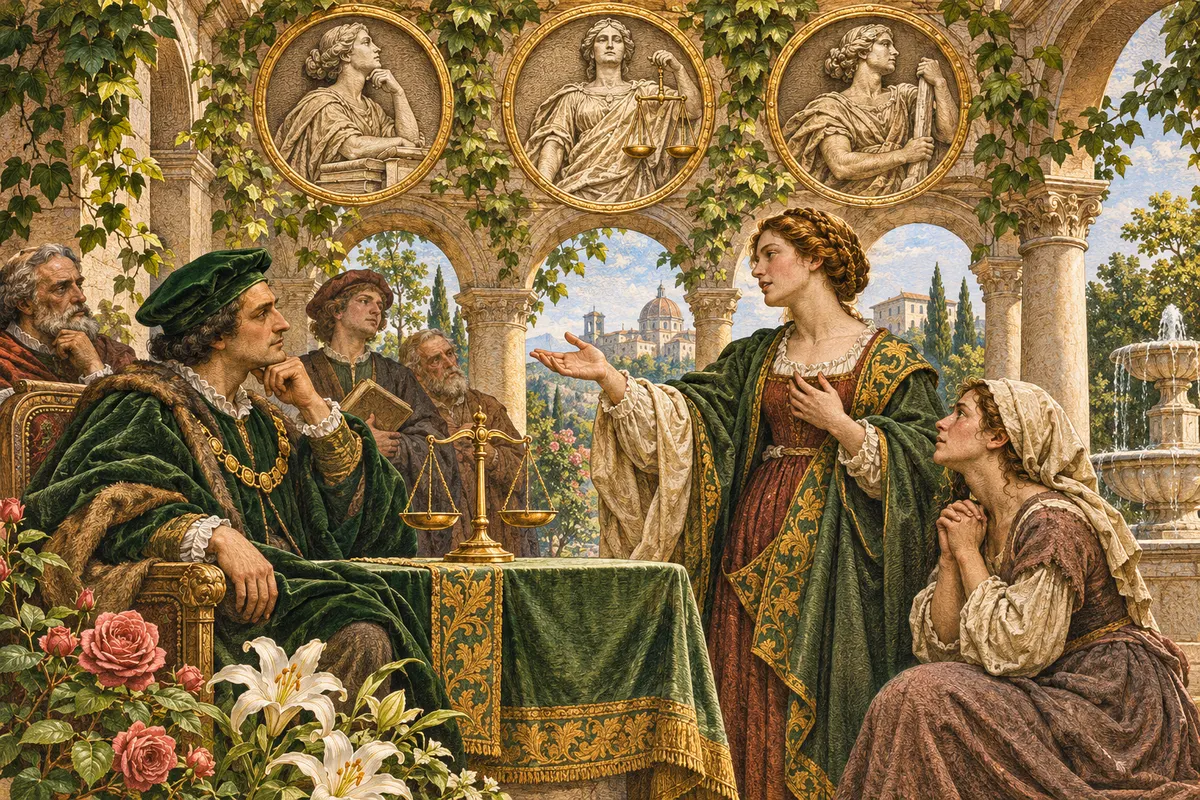
A planet as an instrument
Read a catalogue of virtues as an account of mediation by comparing the entries under Jupiter and Mars.

Where can a good influence go wrong?
Read Agrippa’s argument about reception against the accusation voiced in his quotation from Homer.
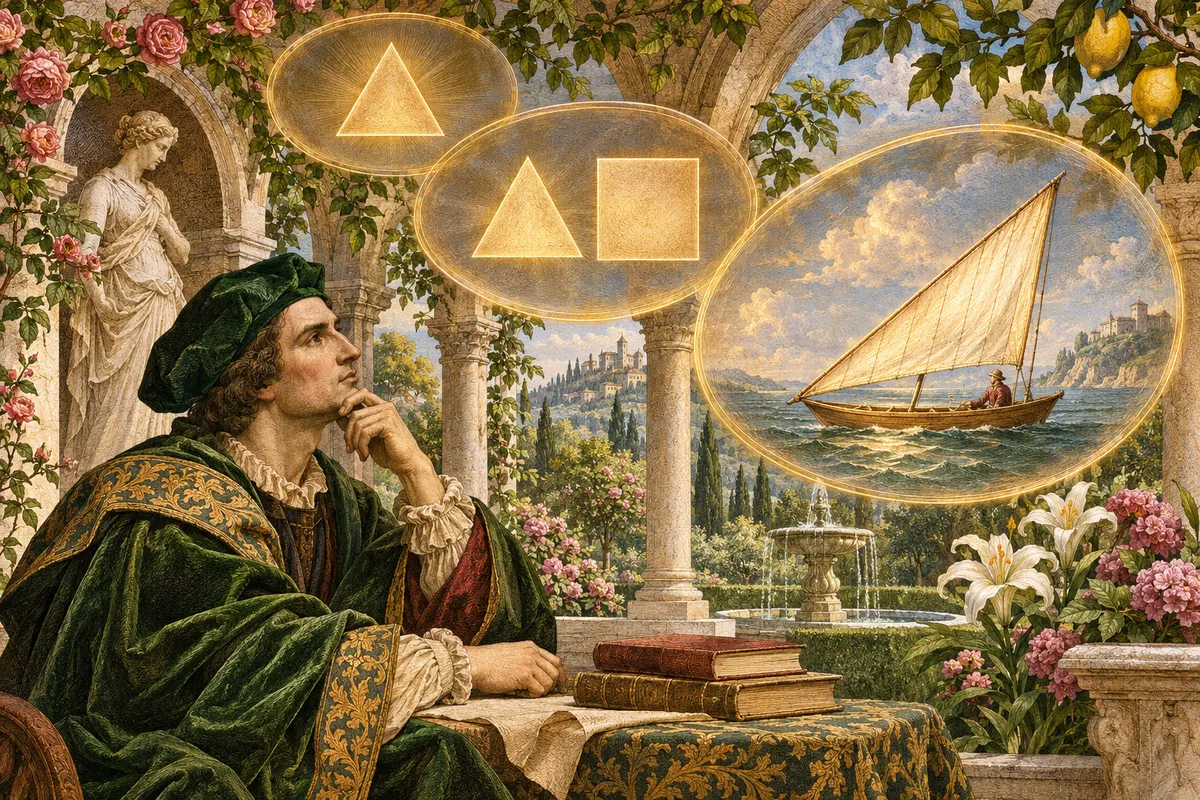
From a thought to an image
Trace a single idea through mind, reason, and imagination before examining the bodily claim Agrippa adds.
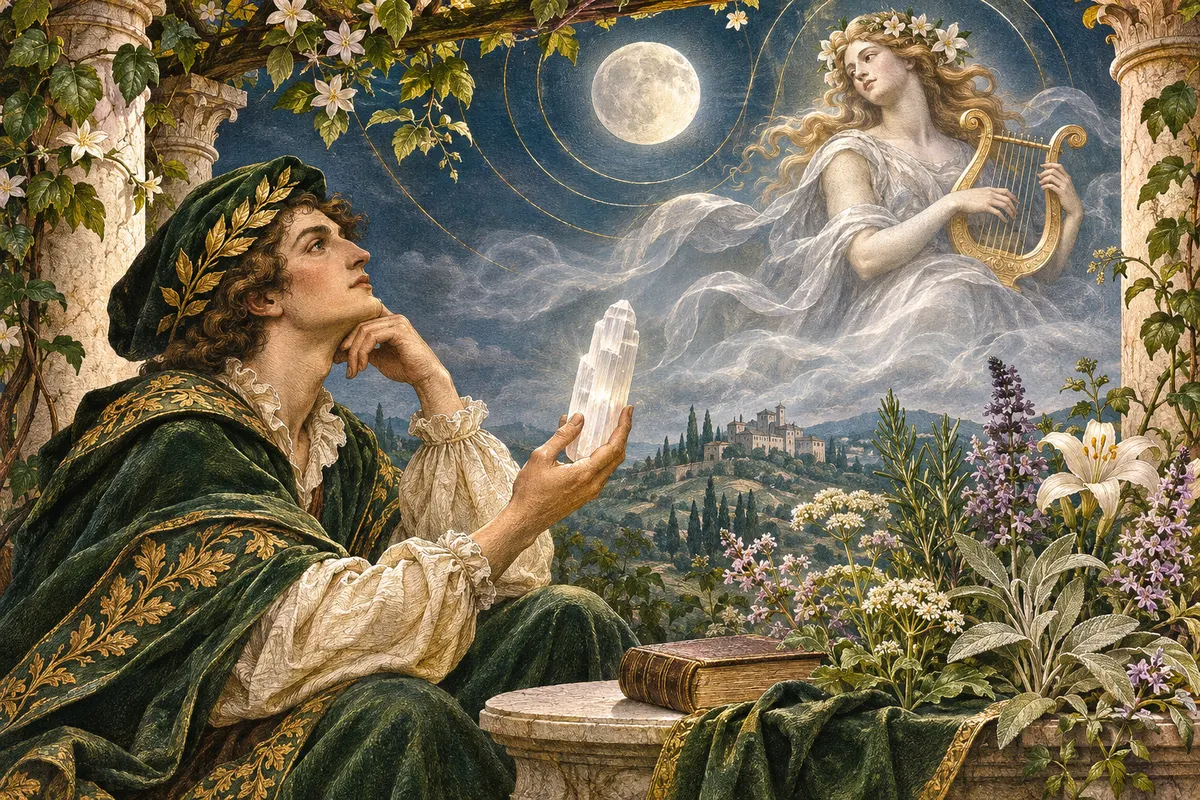
What the Muses give a mind
Read the paired motions of detachment and attachment, then follow a lunar stone into Agrippa’s account of the Muses.

Why is Love without eyes?
Read the Venus chapter alongside its figure of eyeless Love to distinguish intense affection from a theological account of resemblance.
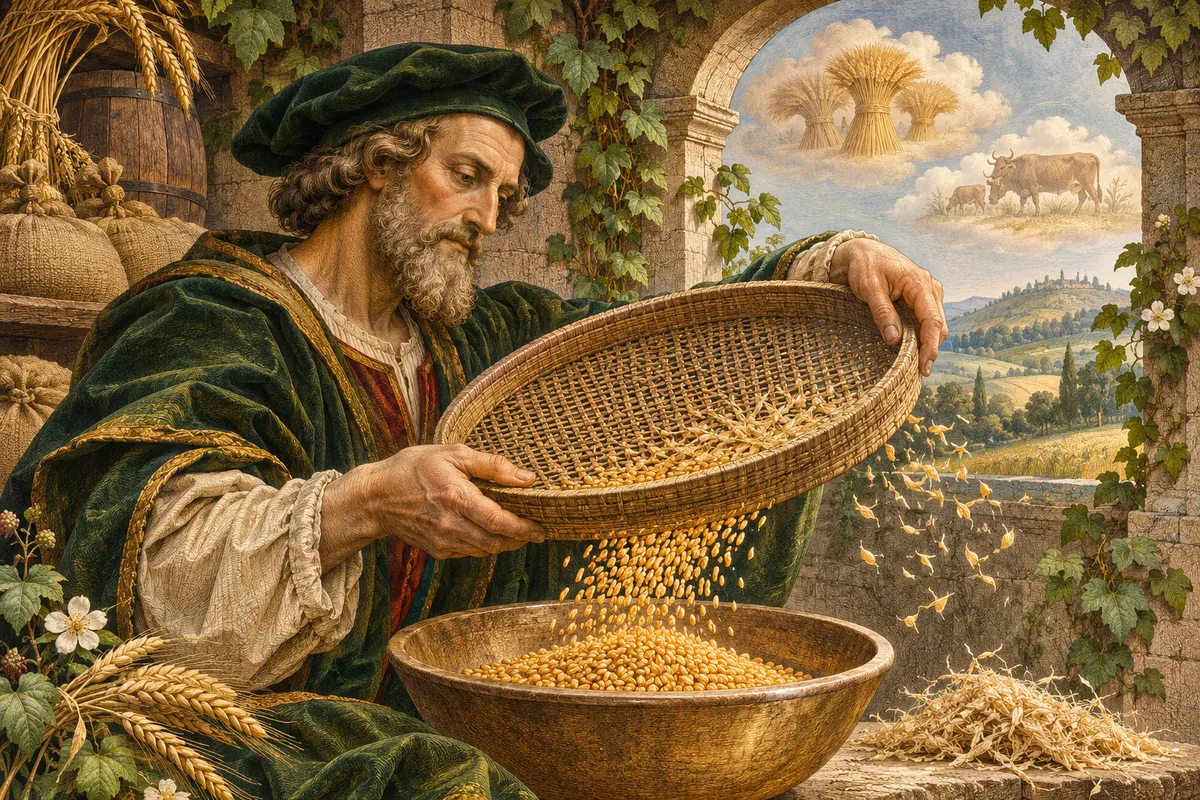
Grain and chaff in a dream
Compare the two stories involving Joseph on page 514 to see what repetition and imperfect fulfillment mean to Agrippa.
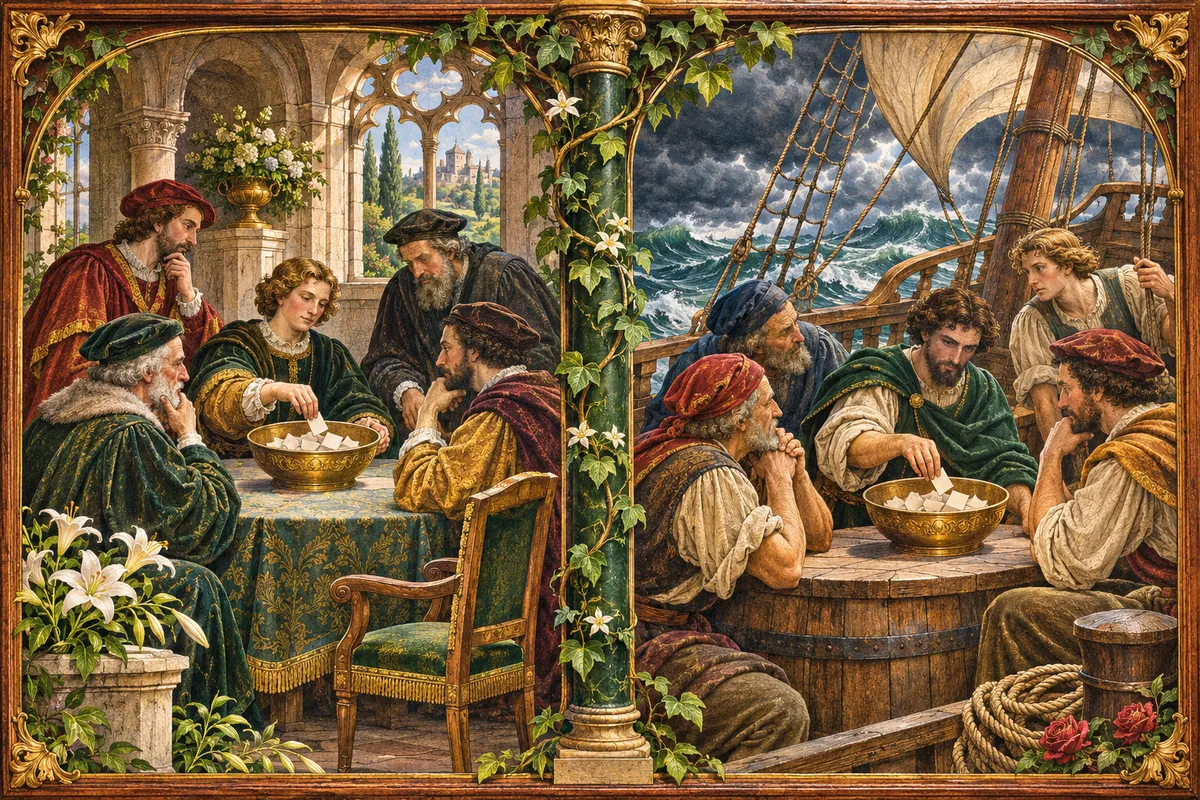
What can a lot decide?
Compare the appointment of Matthias with the sailors’ lot in the story of Jonah to distinguish selection from diagnosis.
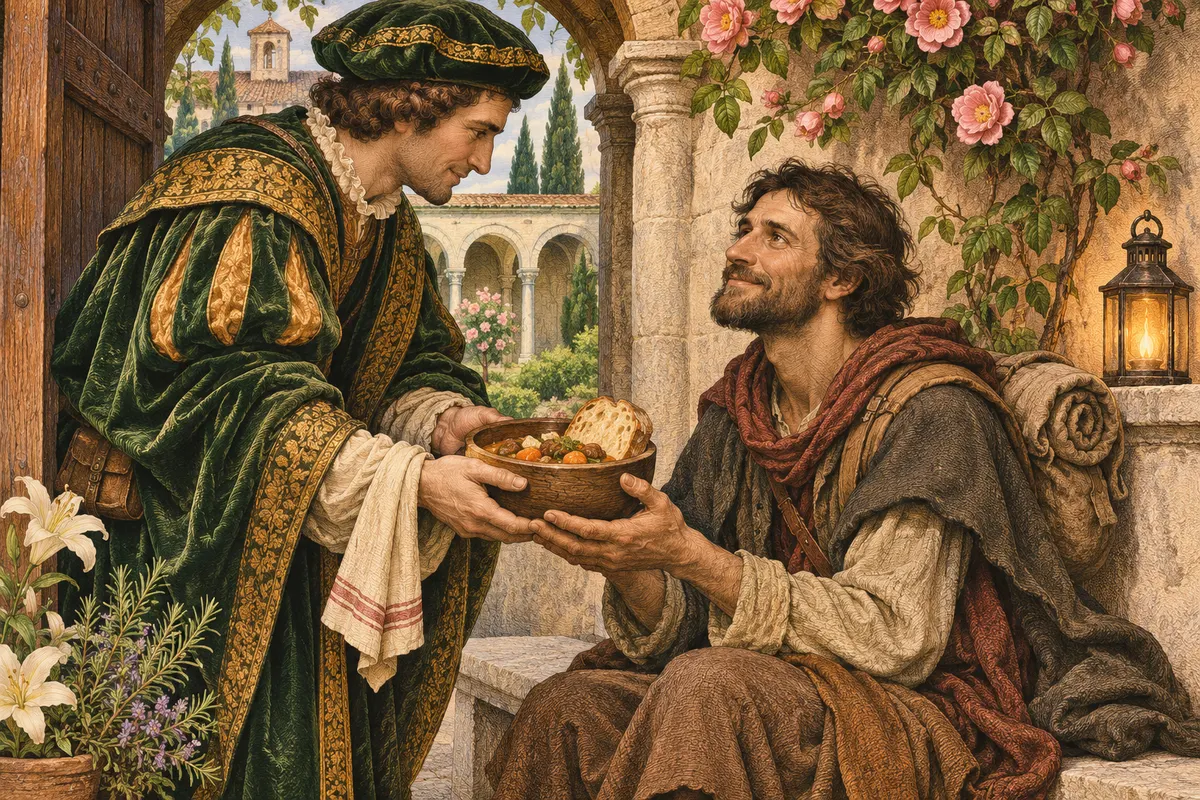
What does feeding a stranger have to do with purification?
Follow Agrippa from an inward change of heart to an outward act of mercy, then compare his Christian and Homeric examples.
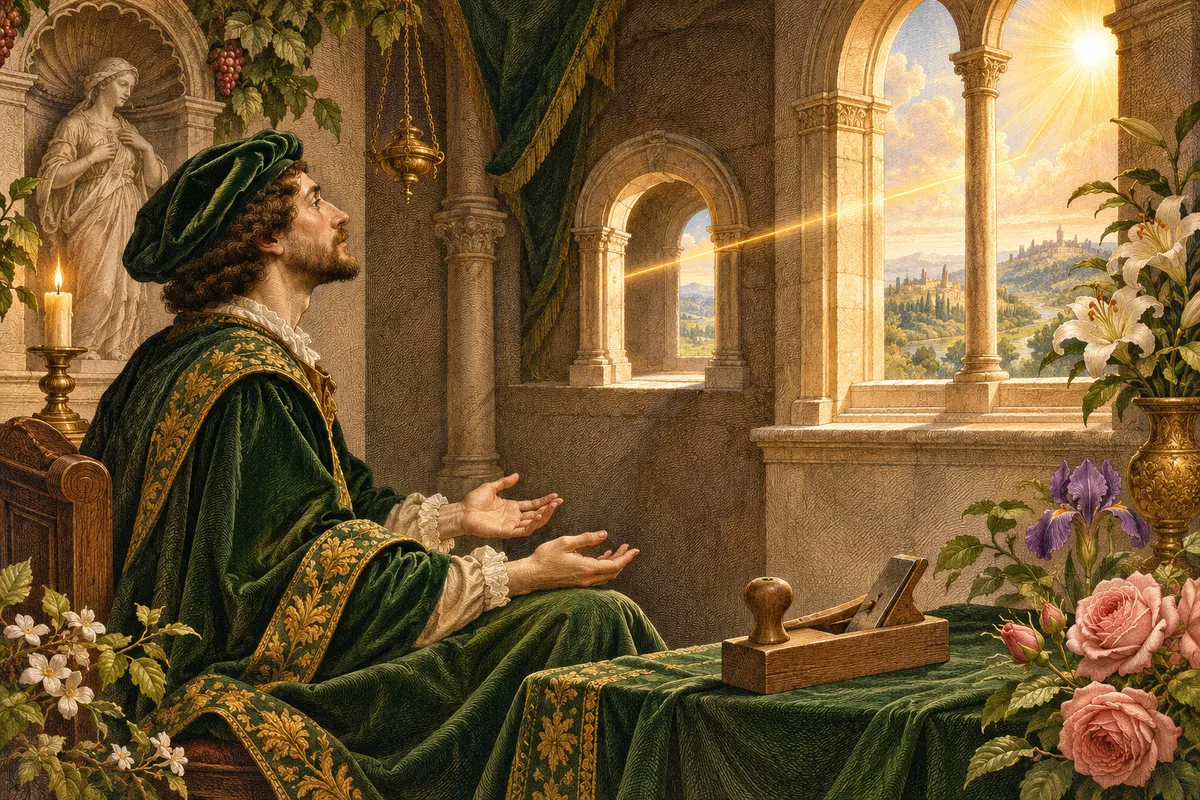
Can a vow be made in silence?
Read his comparison of a maker and an instrument to locate the roles of worshipper and divine agent.
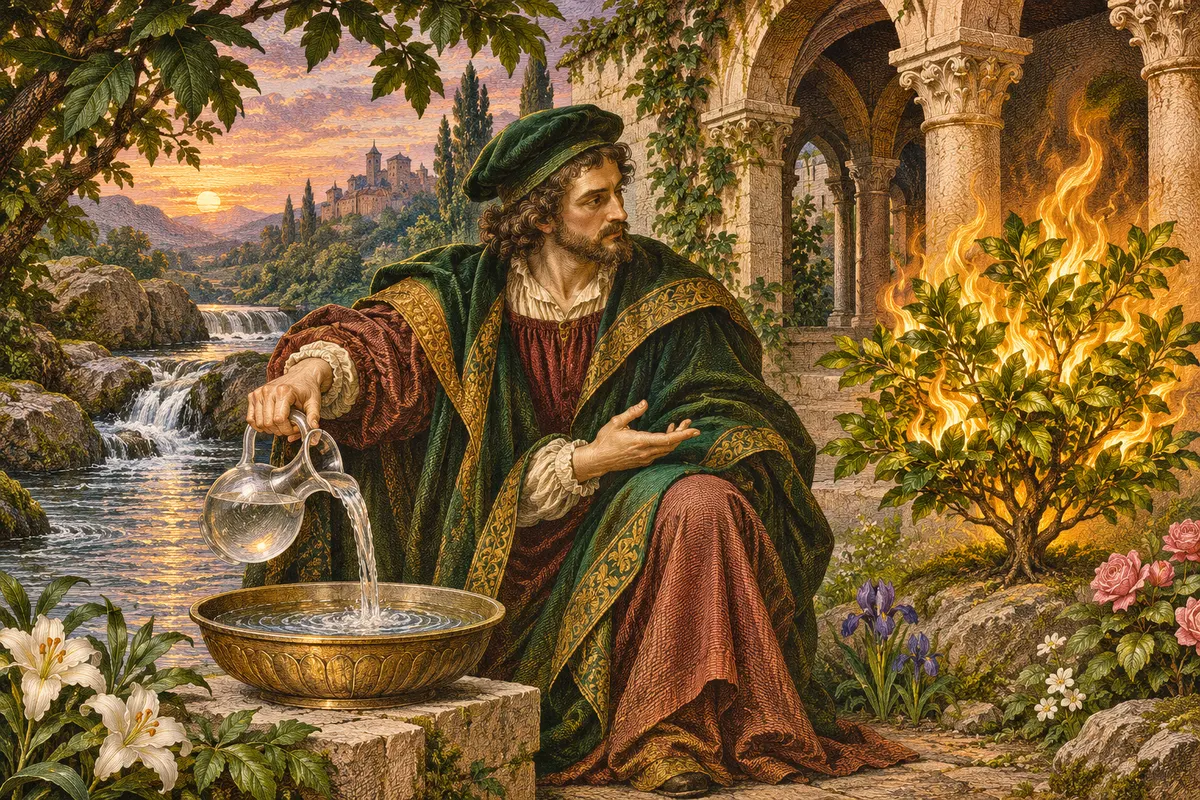
Why bless water with a river story?
Follow the passage from the Red Sea to the burning bush and work out why changing the material changes the prayer.
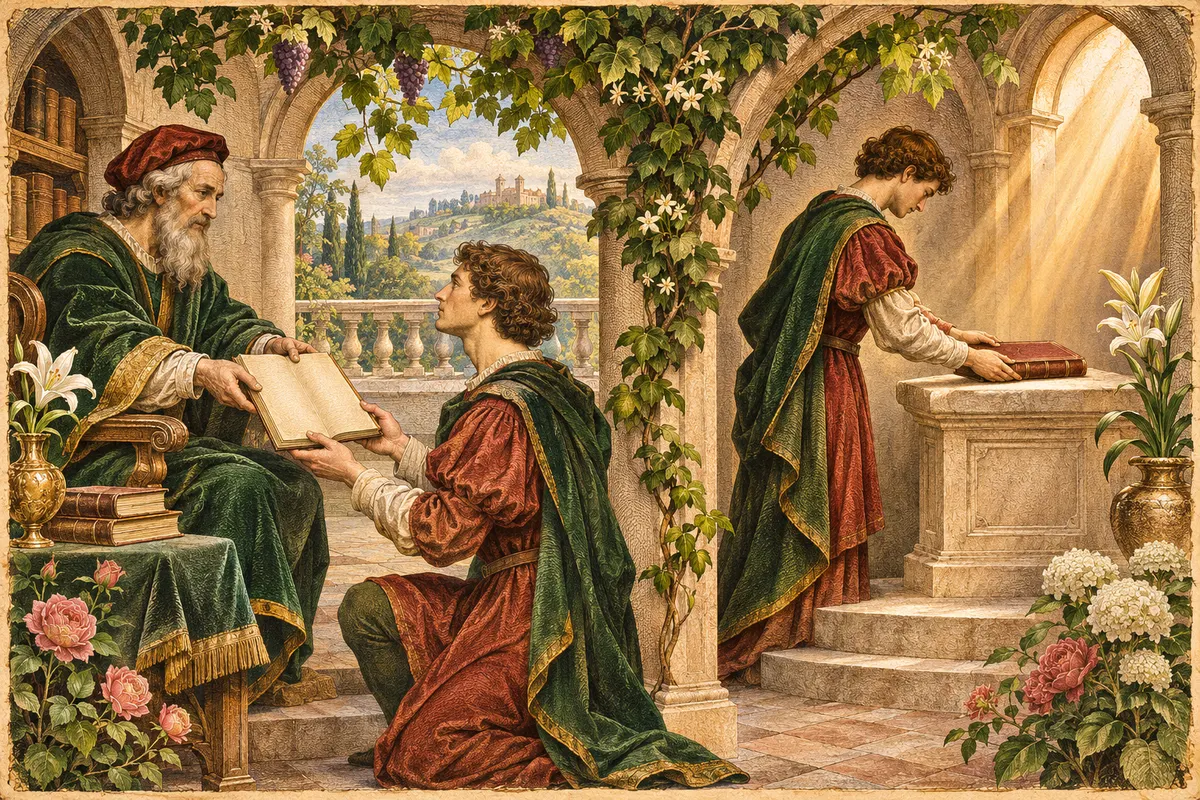
Who dedicates the sacred thing?
Use his examples of the Lord’s Prayer and a vow to trace two ways in which something acquires sacred standing.
The chapter index
Explore the complete contents of the three books, arranged by subject, with English text and both printed editions.